
A song that quietly reminds us that devotion—steady, patient, and enduring—can outlast the restless winds of time.
Few songs from the mid-1970s capture the hopeful spirit of enduring love quite like Love Will Keep Us Together. Written by Neil Sedaka and his longtime lyricist partner Howard Greenfield, the song would eventually become one of the defining pop hits of its era. Although it is most famously associated with the duo Captain & Tennille, whose version topped the Billboard Hot 100 for four consecutive weeks in 1975, the song’s story stretches further—touching the repertoires of many artists, including memorable interpretations and performances by Bette Midler alongside its composer.
When Captain & Tennille released the song in April 1975 as the lead single from their debut album Love Will Keep Us Together, few could have predicted just how deeply it would resonate with listeners. The record quickly climbed the charts, reaching No. 1 on the Billboard Hot 100 and also topping the Adult Contemporary chart. By the end of the year, it had become Billboard’s No. 1 single of 1975, a remarkable achievement that reflected its universal appeal. The song also earned the Grammy Award for Record of the Year in 1976, cementing its place in pop music history.
Yet behind its cheerful piano rhythm and bright harmonies lies a story that began earlier in the career of Neil Sedaka. By the early 1970s, Sedaka was experiencing a creative resurgence after a quieter period in the late 1960s. Working again with Howard Greenfield, his trusted collaborator since the days of “Breaking Up Is Hard to Do,” Sedaka crafted “Love Will Keep Us Together” as a lively declaration of commitment. The lyrics are simple, almost conversational, but they carry a sincerity that feels timeless:
A young and beautiful / But someday your looks will be gone…
It is a line that gently acknowledges the passing of youth, yet it offers reassurance that something deeper—loyalty and affection—can endure beyond it.
Interestingly, Sedaka originally recorded the song himself in 1973. His version had charm, but it was the reinterpretation by Captain & Tennille that transformed the composition into a cultural phenomenon. Toni Tennille’s spirited vocal delivery, paired with Daryl Dragon’s bright, piano-driven arrangement, gave the song a joyful momentum that seemed to leap straight out of the radio speakers.
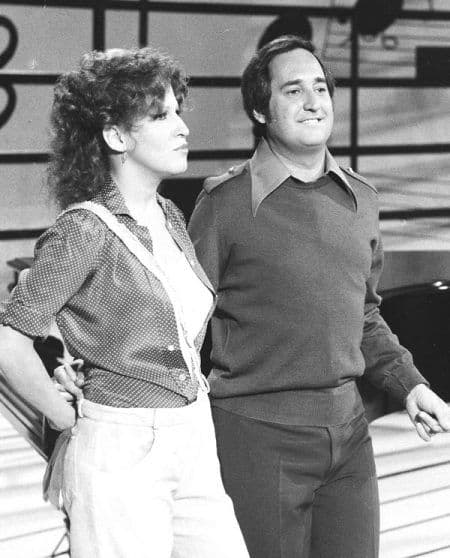
Over the years, Neil Sedaka continued to perform the song in concerts, sometimes sharing the stage with fellow performers who admired his songwriting legacy. Among them, Bette Midler brought her own theatrical warmth to the tune. When Midler sings a song like “Love Will Keep Us Together,” she does not merely perform it—she inhabits it. Her voice, rich with character and emotional nuance, highlights the playful yet heartfelt optimism embedded in the lyrics. In duet settings with Sedaka, the song takes on a slightly different color: less a pop hit, and more a conversation between two seasoned storytellers who understand the passage of time.
What makes “Love Will Keep Us Together” endure is not only its melody—though the melody is wonderfully infectious—but also its message. At its core, the song gently suggests that real affection is not built on fleeting excitement alone. It survives because two people decide, day after day, to remain faithful to the bond they share.
In an era when popular music was filled with grand declarations and dramatic heartbreak, this song offered something quietly reassuring. Its optimism never feels naïve; instead, it feels earned. The cheerful rhythm may invite listeners to tap their feet, but the words carry a deeper promise—that love, when nurtured with patience and trust, can become a steady anchor through the years.
That is why the song continues to be rediscovered decades after its release. Each new performance—whether by Neil Sedaka, Bette Midler, or others—feels like the reopening of an old photo album. The melody returns, familiar and warm, and for a moment it reminds us that some sentiments in music never truly fade.
They simply wait for the right voice to sing them again.