
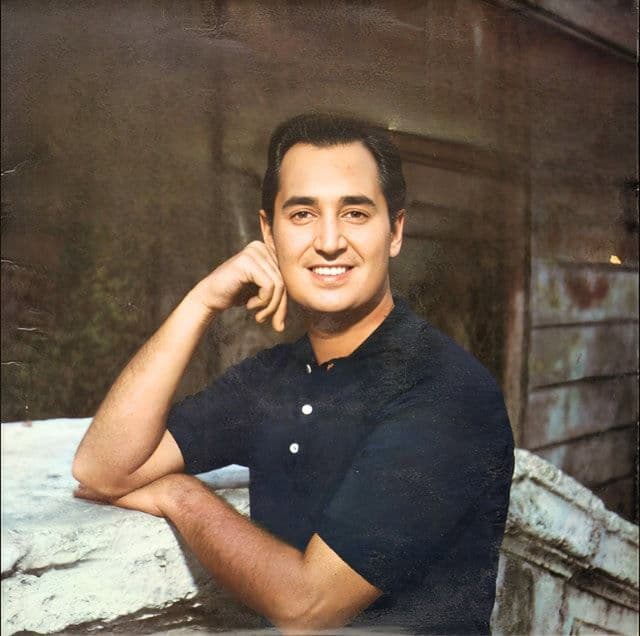
A Tender Portrait of Youthful Love and the Bittersweet Passage from Childhood to Romance
When “Happy Birthday Sweet Sixteen” by Neil Sedaka was released in late 1961, it arrived at a moment when American pop music still shimmered with innocence, just before the British Invasion would change its course forever. The single climbed to No. 6 on the Billboard Hot 100 in early 1962 and reached No. 3 on the UK Singles Chart, confirming Sedaka’s place among the most polished hitmakers of the early ’60s. It followed the enormous success of “Calendar Girl” and further solidified his reputation as one of the era’s most dependable voices of youthful romance.
Written by Neil Sedaka and his longtime songwriting partner Howard Greenfield, the song embodies a kind of emotional clarity that defined the Brill Building sound. Sedaka and Greenfield, who began collaborating as teenagers in New York, had a rare ability to translate adolescent feelings into melodies that felt both intimate and universal. By the time “Happy Birthday Sweet Sixteen” was recorded for Sedaka’s 1962 album “Neil Sedaka Sings His Greatest Hits”, the duo had already penned a string of classics including “Breaking Up Is Hard to Do.”
At first glance, the song appears disarmingly simple: a young man addressing a girl on her sixteenth birthday, acknowledging that she is no longer a child and that his feelings for her have deepened. Yet beneath its buoyant melody and Sedaka’s bright tenor lies a subtle shift in emotional perspective. The lyric—“Tonight’s the night I’ve waited for / Because you’re not a baby anymore”—captures that fragile moment when affection matures into something more serious. It is a celebration, yes, but also a recognition that time moves forward whether we are ready or not.
Musically, the arrangement is quintessential early ’60s pop. The gentle orchestration, the backing vocals that cushion Sedaka’s lead, and the steady, danceable rhythm all create a warm and polished sound. There is no cynicism here. Instead, the song radiates optimism. Sedaka’s voice, clear and earnest, carries a sincerity that feels almost disarming in retrospect. He does not over-sing. He does not dramatize. He simply tells the story with the wide-eyed conviction of someone standing at the threshold of young love.
What makes “Happy Birthday Sweet Sixteen” endure is its emotional honesty. In the early 1960s, popular music often served as a mirror for teenage milestones—school dances, first kisses, birthdays that seemed monumental. Sixteen, in particular, symbolized a crossing over. The song gently acknowledges that transformation without sensationalism. There is no hint of rebellion or heartbreak. Instead, it offers a tender acknowledgment that growth can be beautiful and bittersweet at once.
Historically, this was a period when Sedaka stood shoulder to shoulder with contemporaries like Paul Anka and Bobby Vee, shaping the pre-Beatles pop landscape. Yet Sedaka’s classical piano training gave his compositions a melodic sophistication that elevated even the simplest themes. The chord changes in “Happy Birthday Sweet Sixteen” are deceptively intricate, revealing a composer who understood structure and sentiment equally well.
In later decades, as rock music grew louder and more defiant, songs like this might have seemed quaint. But time has been kind to Neil Sedaka. His catalog has aged not as a relic, but as a reminder of a gentler era in popular music—an era when a birthday song could carry the weight of awakening love without irony.
Listening to “Happy Birthday Sweet Sixteen” today, one cannot help but feel a quiet tug of memory. It recalls a time when a single day—one marked by candles and shy smiles—could feel like the beginning of an entirely new world. Sedaka captured that fleeting threshold with grace and clarity, preserving it in three minutes of melody that still glows with youthful hope.