
A Quiet Prayer in Song: “Sheltered In The Arms Of God” Becomes a Living Tribute to Faith and Legacy
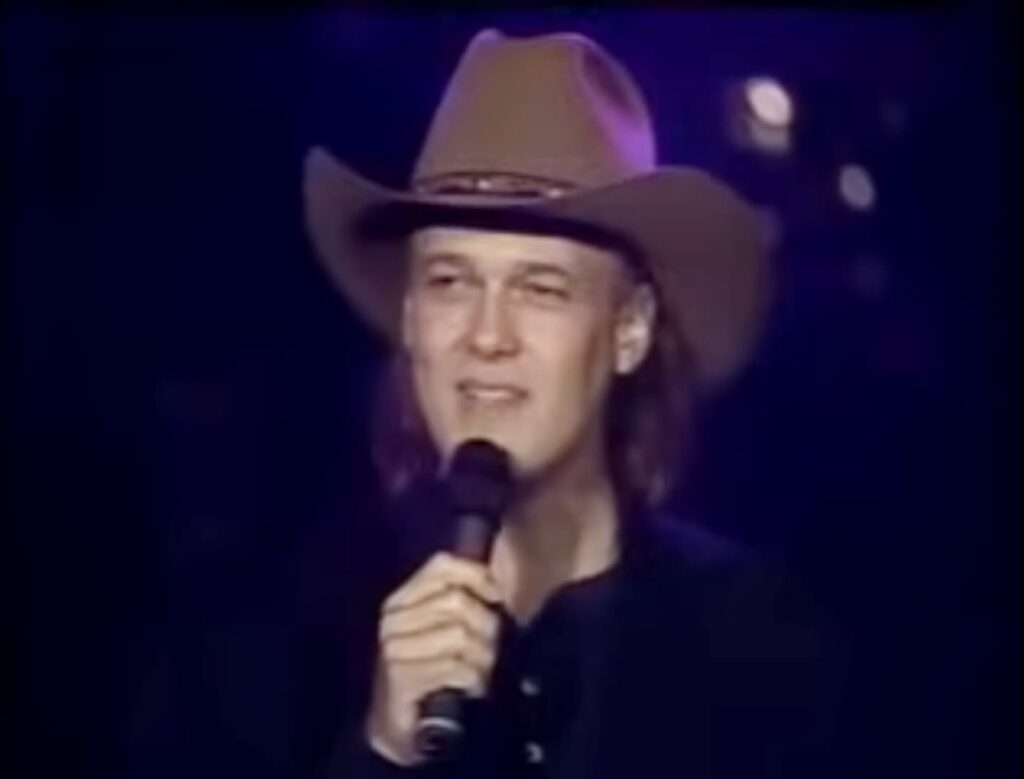
In a heartfelt tribute performance, Ricky Van Shelton delivered a deeply moving rendition of “Sheltered In The Arms Of God”, honoring the enduring legacy of gospel legend Dottie Rambo, the song’s original writer. Known for its message of spiritual comfort and unwavering faith, the hymn has long held a sacred place in gospel music, but on this particular stage, it carried an even greater emotional weight.
From the opening moments, Ricky Van Shelton set a tone of humility and reverence. Before singing a single note, he paused to acknowledge the significance of the occasion, expressing genuine gratitude for being included in the tribute. In a spontaneous and symbolic gesture, he removed his shoes on stage, echoing a quiet act of humility often associated with sacred ground. It was not theatrical. It felt personal, almost like stepping into a prayer rather than a performance.
As the first lines of “Sheltered In The Arms Of God” began, Shelton’s voice carried a warmth that transcended technique. His delivery was steady, unforced, and filled with conviction. The lyrics, which speak of divine protection through life’s storms, resonated with a calm assurance. Each phrase seemed to linger, inviting the audience into a shared moment of reflection.
The simplicity of the arrangement allowed the message to remain at the forefront. There were no distractions, only the quiet strength of a song that has comforted generations. When Shelton reached the chorus, the familiar promise of being sheltered from life’s hardships felt especially poignant, as if the performance itself became a vessel for remembrance and gratitude.
Originally written by Dottie Rambo, one of gospel music’s most influential figures, “Sheltered In The Arms Of God” has been recorded by numerous artists over the decades. Yet, Shelton’s interpretation stood apart for its sincerity. Rather than reimagining the song, he chose to honor its essence, preserving its spiritual core while offering his own voice as a bridge between past and present.
By the final note, the atmosphere in the room had shifted. What began as a tribute had quietly transformed into something more enduring. It was not just a remembrance of Dottie Rambo, but a reaffirmation of the timeless power of gospel music to bring solace, faith, and a sense of home.