
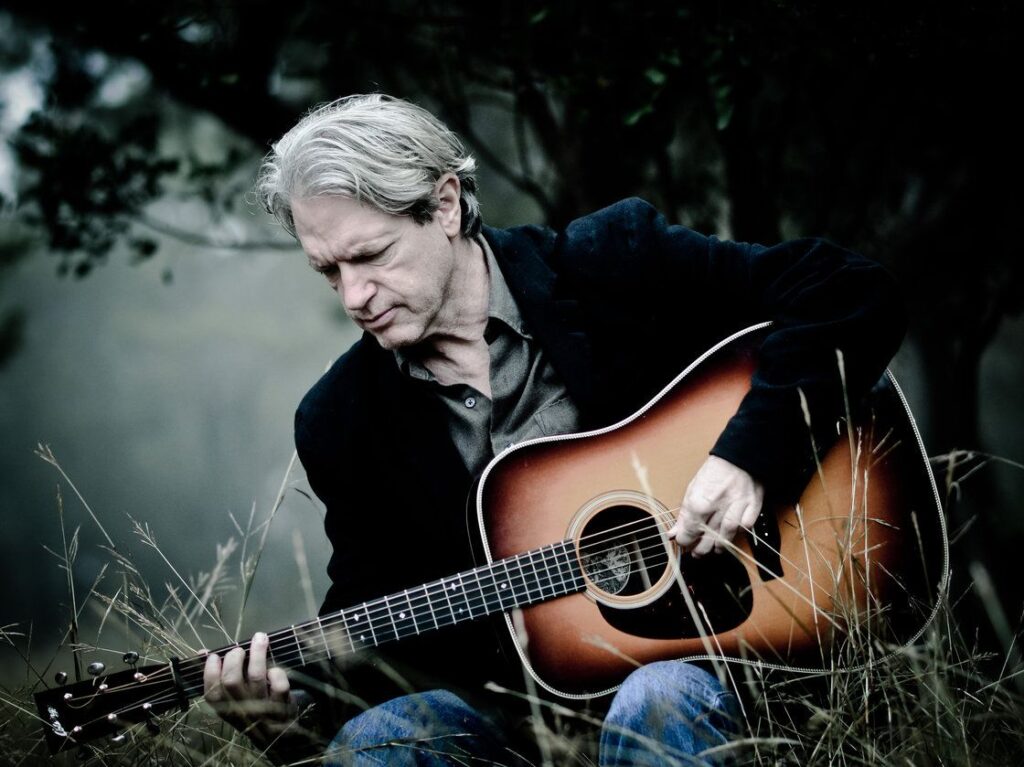
“Do Right Man” — a quiet moral compass, reminding us that decency is a daily choice, not a grand gesture
Few songs announce themselves with noise. “Do Right Man” does the opposite. It walks into the room slowly, takes a seat, and speaks in a low, steady voice that assumes the listener has lived long enough to understand what is being said. Written and performed by Sam Baker, the song is not a hit in the commercial sense, nor was it ever designed to be. It did not enter the major U.S. singles charts at the time of its release. Yet over the years, it has earned something far more enduring than chart positions: trust.
“Do Right Man” appears on Sam Baker’s acclaimed debut album Mercy (2004), a record that quietly announced the arrival of one of America’s most honest modern folk storytellers. Released independently and later championed by folk radio and word of mouth, Mercy never chased mainstream success. Instead, it found its audience among listeners who value truth over polish, and substance over spectacle. In that context, “Do Right Man” stands as one of the album’s moral pillars.
The song’s story is deceptively simple. There is no dramatic plot twist, no cinematic climax. Instead, Sam Baker sketches the life of a man defined not by what he achieves, but by how he behaves when no one is watching. The phrase “do right” carries old-fashioned weight—something you might hear from a parent, a neighbor, or a voice from a different era. Baker leans into that weight, treating it not as nostalgia, but as a living ethic. The song suggests that integrity is not inherited automatically; it is practiced, often quietly, often imperfectly.
Musically, “Do Right Man” is built on restraint. The arrangement is sparse—acoustic guitar, subtle rhythm, and Baker’s unmistakable voice, weathered and intimate. His vocal delivery is not conventionally “pretty,” but it is deeply human. There is a grain in his voice that feels earned, as if each word has passed through experience before reaching the listener. This is folk music in its purest sense: music that speaks with people, not at them.
The deeper meaning of “Do Right Man” lies in its refusal to romanticize goodness. Baker does not present morality as heroic or glamorous. Instead, he frames it as work—sometimes lonely, sometimes unnoticed. The song acknowledges failure without excusing it, and responsibility without sermonizing. In doing so, it resonates strongly with listeners who have seen ideals tested by time, compromise, and loss. It understands that doing the right thing is often less about certainty and more about persistence.
Behind the song is Sam Baker’s own life story, which adds quiet gravity to every line. A survivor of a near-fatal train accident in 1986, Baker lives with chronic pain and partial hearing loss. These experiences do not dominate his songs explicitly, but they inform his worldview. In “Do Right Man,” there is an unspoken awareness of fragility—of how quickly life can change, and how little control we truly have. What remains, the song suggests, is character.
Within the broader landscape of American folk music, “Do Right Man” sits comfortably alongside the works of artists who valued moral clarity over commercial appeal. It recalls the storytelling tradition of Townes Van Zandt and the ethical plainspokeness of John Prine, while maintaining a voice that is unmistakably Baker’s own. Over time, the song has become a quiet favorite among folk audiences, frequently cited as an example of songwriting that respects the listener’s intelligence and lived experience.
Today, “Do Right Man” endures not because it captured a moment, but because it speaks to a lifelong journey. It does not ask the listener to relive youth, nor does it mourn what has passed. Instead, it offers a calm reflection on who we choose to be, even now. In a world that often celebrates noise, speed, and self-promotion, Sam Baker reminds us—gently, firmly—that there is still dignity in simply trying to do right.