
A Joyful Anthem of Loyalty and Longing for a Beloved Team
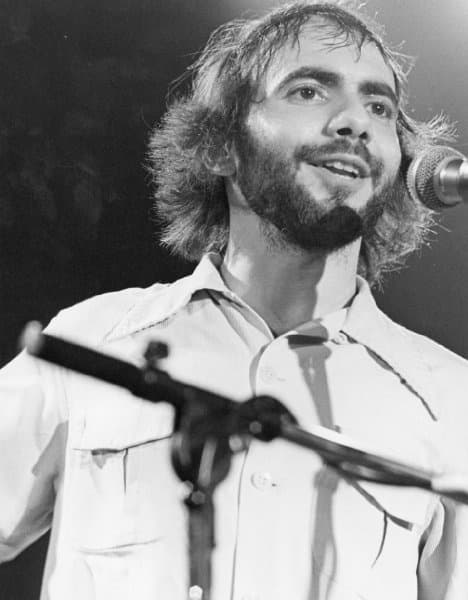
When “Go Cubs Go” was released in 1984, it did not storm the national charts. It did not climb the Billboard Hot 100, nor was it crafted with commercial ambition in mind. Yet in a different, more enduring sense, it reached No. 1 where it mattered most—inside the heart of Chicago baseball culture. Written and performed by Steve Goodman, the song became something far more powerful than a hit single: it became a living ritual.
By the time “Go Cubs Go” appeared as part of Goodman’s final studio album, No Big Surprise (1984), he was already a revered songwriter—known for classics such as “City of New Orleans”, later immortalized by Arlo Guthrie and Willie Nelson. But Goodman was not merely a songwriter; he was a lifelong Chicago Cubs devotee. And that devotion shaped the very soul of this tune.
The Chicago Cubs of the early 1980s were not yet the triumphant club that would finally break their championship drought in 2016. In 1984, the team captured the National League East division title—its first postseason appearance since 1945—but heartbreak followed in the NLCS. It was in this bittersweet atmosphere that Goodman composed “Go Cubs Go.” He was battling leukemia at the time, a fight he had endured since childhood. There is something deeply moving in knowing that this song—so brimming with optimism—was written by a man confronting his own mortality.
Unlike many sports anthems that rely on bombast, “Go Cubs Go” is built on warmth, wit, and community spirit. The arrangement is bright and almost old-fashioned—piano-driven, with a sing-along chorus that feels instantly familiar, as if it had always existed. Goodman even includes a playful spoken introduction inviting listeners to “sing it after every victory.” There is no irony, no cynicism—only uncomplicated loyalty.
Though it did not chart nationally upon release, the song achieved an entirely different form of success. After Goodman’s passing in September 1984—just weeks before the Cubs clinched their division—“Go Cubs Go” was adopted by the team and played at Wrigley Field following every home win. That tradition continues to this day. In a world where so many songs fade into nostalgia playlists, this one remains vibrantly alive, echoing after each Cubs triumph.
The meaning of “Go Cubs Go” lies not in metaphor or poetic complexity, but in steadfast hope. It celebrates endurance. It celebrates believing in something year after year, even when disappointment becomes routine. The lyrics—“Hey Chicago, what do you say? The Cubs are gonna win today”—capture the eternal optimism that defines true fandom. It is optimism against evidence, loyalty without condition.
There is also a poignant subtext. Goodman did not live to see the Cubs win the World Series. When the team finally claimed the championship in 2016, after 108 years, the spirit of his song hovered over the celebration. It is impossible to separate that historic moment from the man who gave Cubs fans their soundtrack of belief.
Musically, the track reflects Goodman’s folk roots—simple chord progressions, conversational phrasing, an unpretentious delivery. There is something timeless in its structure. It recalls an era when songs were crafted around melody and communal singing rather than production spectacle. The chorus rises in a way that invites arms around shoulders, voices slightly off-key but wholehearted.
For those who remember radio before algorithms and stadiums before digital screens, “Go Cubs Go” feels like a bridge back to a more intimate age. It carries the atmosphere of summer afternoons, transistor radios, and scorecards marked in pencil. It reminds us that music does not need complexity to be profound—it needs sincerity.
Steve Goodman once said that songwriting, at its best, connects people. With “Go Cubs Go,” he achieved exactly that. It is not merely a sports song; it is an anthem of persistence, of community, and of joyful defiance in the face of disappointment. It stands as a testament to a songwriter who understood that sometimes the simplest chorus can carry the deepest meaning.
And so, whenever the final out is recorded and the familiar melody begins at Wrigley Field, it is more than celebration. It is remembrance. It is gratitude. It is a reminder that loyalty, like a good song, can outlive us all.