
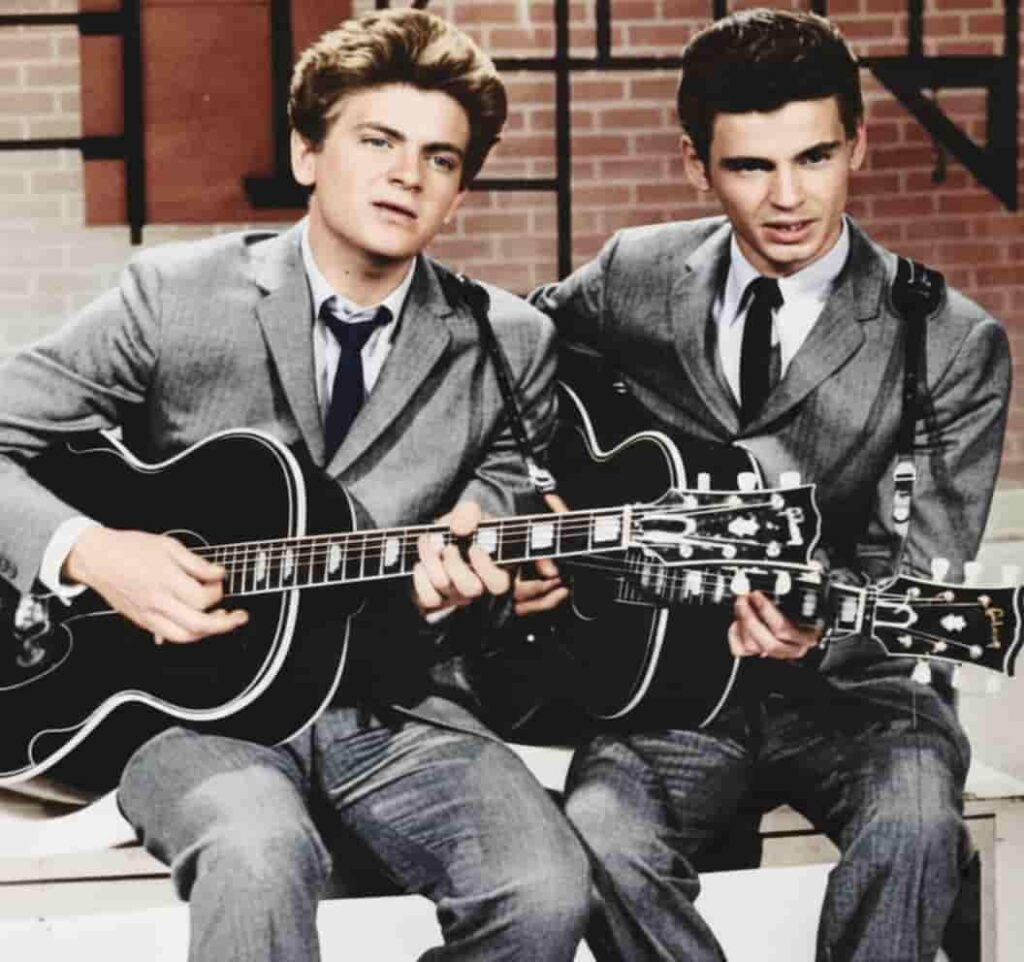
“Don’t Blame Me” A Timeless Plea of Surrendered Heart, Echoing Through Generations
When The Everly Brothers released their rendition of “Don’t Blame Me” in 1961 it stood as both an affectionate homage to a classic standard and a beautifully rendered statement of emotion rooted in love’s irresistible pull. This song penned nearly three decades earlier by Jimmy McHugh and Dorothy Fields and first emerging in the 1932 show Clowns in Clover had already woven itself into the tapestry of American popular music through early versions by artists such as Ethel Waters and Guy Lombardo. In the rock-and-roll era, the Everly Brothers’ ballad version climbed to No. 20 on the Billboard pop chart in the United States and mirrored that same peak position in the United Kingdom, capturing the hearts of listeners on both sides of the Atlantic.
This rendition found its place as a double A-side single with “Muskrat” and was released on Warner Bros. Records in late summer 1961, emerging amidst a shifting musical landscape where rock, pop, and the echoes of earlier jazz standards intersected with fervent teenage passion.
For many fans in later decades the song conjures gentle memories of a time when harmonies were more than vocal layering: they were an emotional language. Don Everly and Phil Everly, already famed for their close, almost telepathic vocal blend on earlier hits like “All I Have to Do Is Dream” and “Let It Be Me,” brought unique sensitivity to Don’t Blame Me. Where the original lyric spoke to the emotional inevitability of falling in love, the Everly Brothers’ performance turned that inevitability into a shared confessionin every rise and fall of harmony, in the warmth and vulnerability of the guitars that frame their voices.
The song’s narrative is straightforward yet profound: a speaker so enraptured by love’s enchantment that restraint no longer feels possible. “Don’t blame me,” they insist, not as an excuse but almost as a tender apology to fate itself. Their voices, so closely matched in timbre, express a kind of shared understanding: love is not rational, nor is it to be denied, and when it arrives with the sweetness of moonlit nights and the soft pull of longing, we are simply carried along. This is not youthful boasting; it is the seasoned recognition that the heart charts its own course, often against our better judgment.
Musically, the Everlys’ version exists at an intersection of styles. Unlike contemporary rock workouts of the early 1960s, this performance is unhurried and introspective. The arrangement leans on acoustic textures and the gentle resonance of Nashville’s session musicians, creating a soft yet rich backdrop for the brothers’ signature vocal interplay. In context, it stood apart from many of their other singles that year; whereas much of their repertoire embodied brisk rock intensity or poignant pop sorrow, Don’t Blame Me offered listeners a reflective moment, a song that asked them not simply to hear the words but to feel them as if spoken in confidence by a trusted friend.
For older listeners who lived through the golden age of vinyl, this track often evokes the tactile memory of flipping a record and finding emotional resonance in every groove. It speaks to a time when pop music was becoming ever more expressive, when young voices could carry melodies that felt ancient and forever new. It survives now not just as a chart statistic but as an enduring expression of heartfelt vulnerability an enduring reminder that some songs, regardless of their era, touch the universal truth of falling irretrievably, irrevocably in love.
In revisiting “Don’t Blame Me” today, one hears not just a recording but a moment captured: two voices in synchronicity with longing itself, inviting us to remember that emotional surrender transcends time, era, and generation.