
A playful teenage misadventure becomes a defining anthem of early rock and roll innocence and anxiety
On October 6, 1957, The Everly Brothers stepped onto the national stage of The Ed Sullivan Show and delivered a performance of “Wake Up Little Susie” that would quietly cement their place in American music history. At the time, the song was already climbing the charts, soon reaching No. 1 on the Billboard charts, but television gave it something more enduring. It gave it a face, a moment, and a memory.
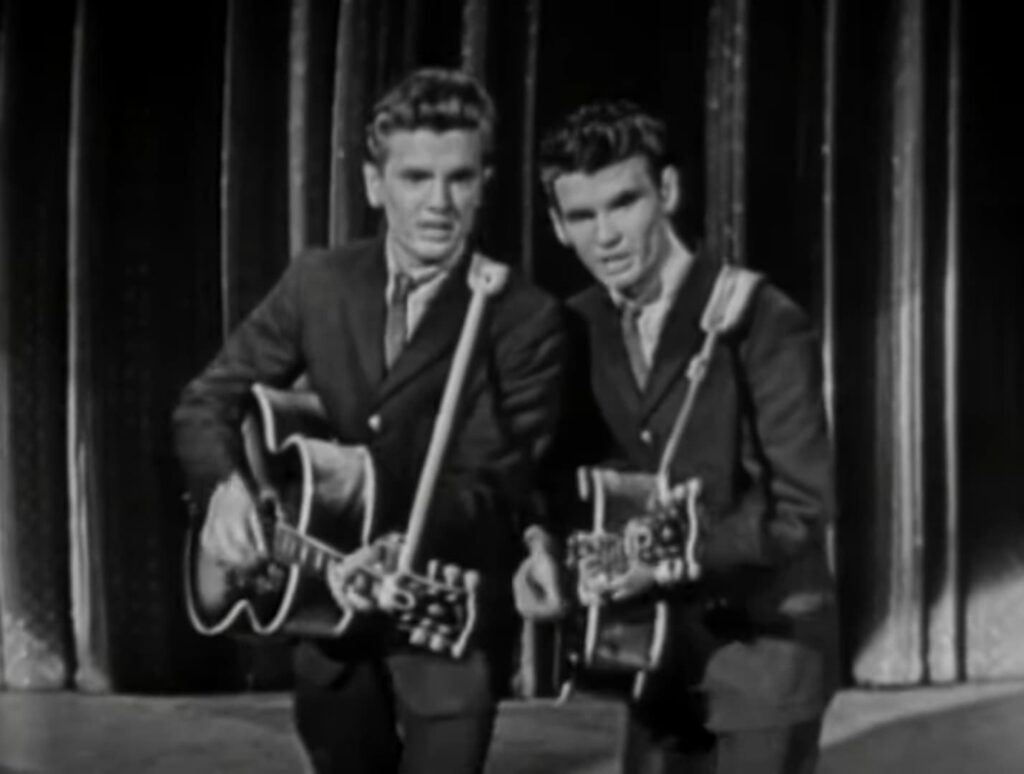
Dressed neatly and standing side by side, Don Everly and Phil Everly relied on little more than their tight harmonies and acoustic rhythm. There was no spectacle, no elaborate staging. Yet as they sang the now familiar lines about two teenagers who had fallen asleep at a drive in movie and awakened to trouble, the room seemed to lean in. Their voices blended with a precision that felt almost effortless, creating a sound both tender and slightly anxious, mirroring the story itself.
The charm of “Wake Up Little Susie” lay in its simplicity. Beneath the lighthearted narrative was a subtle tension about reputation, youth, and the expectations of a more conservative era. Some radio stations had even banned the song, misinterpreting its innocent storyline. But on The Ed Sullivan Show, the brothers’ sincerity softened any controversy. What remained was a portrait of young love caught between innocence and consequence.
That night, millions watching at home witnessed more than a hit song. They saw a new kind of vocal partnership, one rooted in country tradition yet polished for the emerging rock and roll audience. The Everly Brothers did not just perform. They connected, quietly and completely.
Decades later, that brief television appearance still lingers as a reminder of a time when a song could tell a simple story and still carry the weight of a generation’s emotions.