
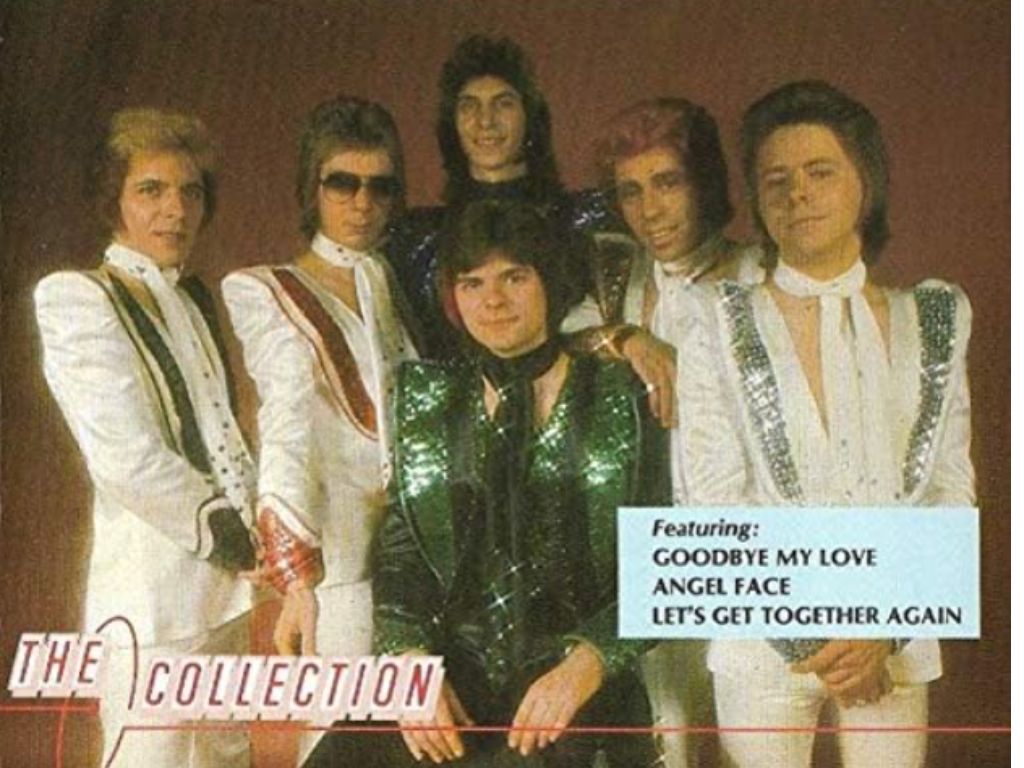
Jukebox Queen — a glittering snapshot of youth, rhythm, and the heartbeat of a restless generation
When “Jukebox Queen” burst onto British radio in 1974, it carried with it the pulse of a particular moment in time — loud, colorful, unapologetically physical, and driven by rhythm more than reflection. Recorded by The Glitter Band, the song climbed confidently into the UK Singles Chart, peaking at No. 7, confirming the group’s place as one of the most recognizable sounds of the early-1970s glam era. This was not a fleeting novelty hit; it was a declaration of identity, energy, and a style of rock music that spoke directly to the body before it ever reached the mind.
By the time “Jukebox Queen” was released, The Glitter Band were already well known to audiences. Originally formed as the backing band for Gary Glitter, they had begun stepping into the spotlight on their own after his legal and personal controversies later reshaped public perception. In the early 1970s, however, the separation was still fresh, and the band was determined to prove that their sound — that unmistakable pounding double-drum beat — belonged to them as much as anyone. “Jukebox Queen” became one of the clearest statements of that independence.
Musically, the song is instantly recognizable. The twin drummers drive the track forward with an almost tribal insistence, creating a relentless rhythm that mirrors the flashing lights and clinking coins of the jukebox itself. Over this foundation, bright guitars and shout-along vocals form a celebration rather than a confession. There is nothing shy here, nothing inward-looking. “Jukebox Queen” is built for dance floors, for crowded rooms, for moments when music is not something you analyze, but something you feel in your legs and chest.
The story within the song is simple yet evocative. The “jukebox queen” is not a distant fantasy figure; she is a presence in a familiar setting — a girl who owns the room not through power or wealth, but through music and movement. She understands the jukebox, knows which records to play, and commands attention simply by being alive in the moment. In that sense, the song captures a particular freedom of youth: the freedom of choosing the next track, of dancing without explanation, of letting the night stretch on without concern for tomorrow.
For listeners who remember those years, the jukebox itself carries powerful symbolism. Before playlists and streaming, the jukebox was democratic and physical. You chose your song, dropped in your coin, and waited — sometimes impatiently — for it to spin. “Jukebox Queen” celebrates that ritual. It honors the communal experience of music, where strangers shared the same sounds and the same beat, even if only for three minutes at a time.
Critically, the song may not have been praised for lyrical depth, but that was never its purpose. The Glitter Band specialized in immediacy. Their success lay in understanding what glam rock did best: blending rock ’n’ roll swagger with pop accessibility and a theatrical sense of fun. “Jukebox Queen” stands as one of their most enduring recordings because it does exactly that — no more, no less.
In hindsight, the track feels like a preserved photograph. It reminds us of a time when music was loud, nights felt endless, and identity could be tried on and discarded as easily as a new single from the jukebox. While tastes have changed and eras have passed, the spirit of “Jukebox Queen” remains intact — a celebration of rhythm, movement, and the simple joy of letting music take control.
For those who lived through that era, the song doesn’t just play — it returns. It brings back the hum of crowded rooms, the glow of colored lights, and the feeling that for one song, one dance, one moment, the world belonged entirely to the music.