
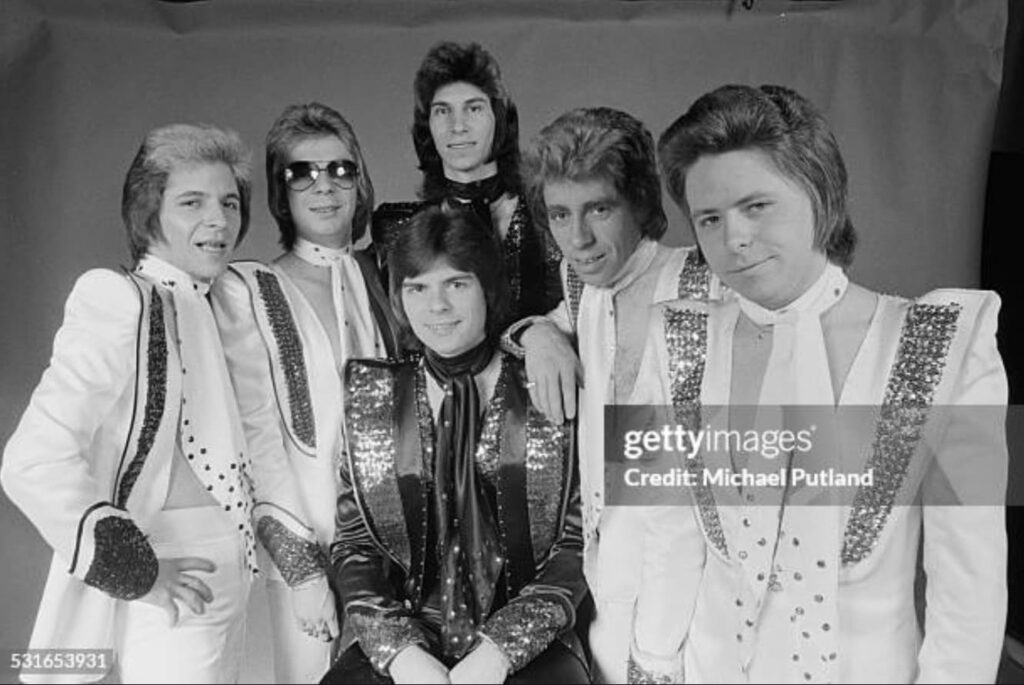
The Tears I Cried — a bittersweet farewell wrapped in harmony, innocence, and the sound of an ending era
When “The Tears I Cried” was released by The Glitter Band in 1975, it carried with it more than a polished pop melody. It felt like a sigh — a quiet emotional release at a moment when British glam pop was beginning to soften, to look inward, and to sense that its brightest days were slowly slipping into memory. The song reached No. 6 on the UK Singles Chart, becoming one of the group’s last major hits and, in many ways, a symbolic closing chapter of their chart-topping years.
By the mid-1970s, The Glitter Band were already a familiar presence on British radio and television. Known for their tight vocal harmonies, buoyant rhythms, and an unmistakable sense of youthful optimism, they had scored a remarkable run of hit singles. Yet “The Tears I Cried” stood apart. Where earlier songs sparkled with carefree joy, this one carried restraint, vulnerability, and reflection — emotions that resonate most deeply with listeners who have learned how fragile happiness can be.
Written and recorded during a period of transition, the song tells a simple but profoundly human story: love remembered after it has slipped away. There is no anger here, no bitterness. Instead, there is quiet acceptance. The narrator looks back not to accuse, but to understand — to acknowledge the tears that once fell, and the lessons they left behind. It is this emotional maturity that gives the song its lasting power.
Musically, “The Tears I Cried” is built on gentle melodies and carefully layered harmonies, allowing the emotion to breathe. The arrangement avoids excess; nothing distracts from the voice or the sentiment. Each note seems to linger just long enough to stir memory. It feels almost conversational, as if the singer is confiding in the listener rather than performing for an audience. That intimacy is rare in pop music — and unforgettable when it appears.
The significance of the song becomes even clearer when viewed in context. Glam rock, once loud and flamboyant, was beginning to fade. Musical tastes were shifting, and audiences were growing older alongside the artists they loved. The Glitter Band, once synonymous with bright stages and youthful energy, now offered something gentler: a reflection on love that had been, and could not be reclaimed. The song did not chase novelty — it embraced honesty.
For many listeners, especially those who had followed the group from their earliest successes, “The Tears I Cried” felt personal. It mirrored life itself: the realization that not every love lasts, not every dream stays untouched, and not every goodbye is dramatic. Some are quiet, tearful, and deeply private.
Today, the song endures not as a relic of glam pop, but as a reminder of emotional truth. It speaks to anyone who has ever looked back on a relationship with tenderness rather than regret — who understands that tears are not signs of weakness, but proof of having loved sincerely.
In that sense, “The Tears I Cried” remains timeless. It does not shout. It does not demand attention. Instead, it waits patiently, ready to be rediscovered — offering comfort, understanding, and the gentle reassurance that even heartbreak leaves behind something meaningful.
And when the song fades, what lingers is not sadness, but gratitude — for love once known, and for music that remembers it so well.