
Dirty Old Town — a song of smoke, iron, and memory, where love survives amid soot and silence
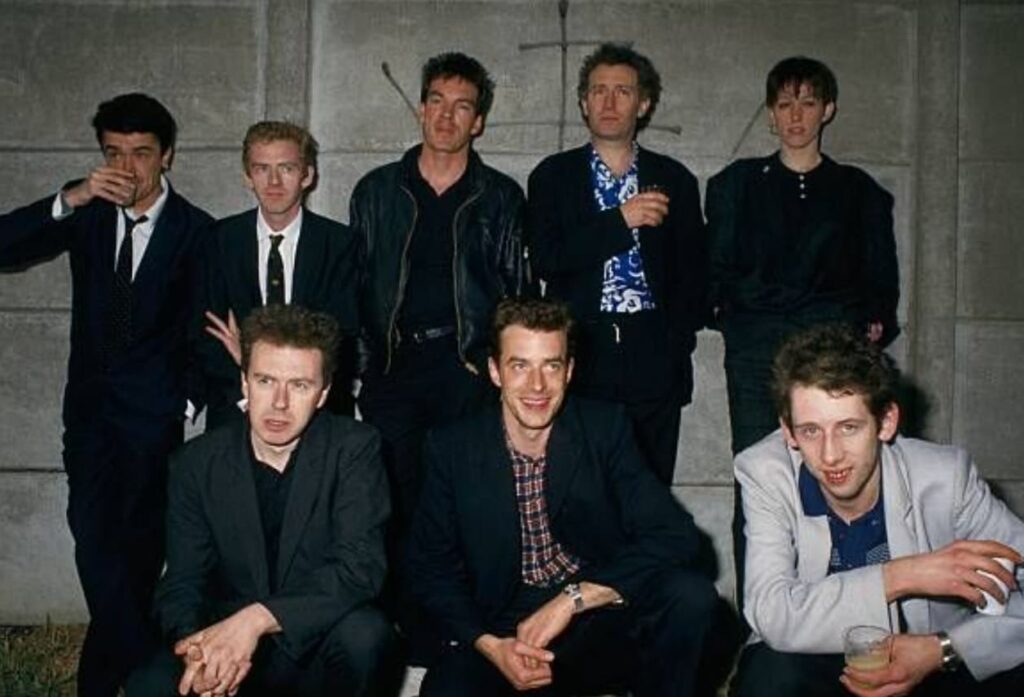
Few songs capture the soul of a place as honestly and tenderly as “Dirty Old Town” in the hands of The Pogues. Released as a single in 1986 from the album Rum, Sodomy & the Lash, the song reached No. 6 on the UK Singles Chart, becoming one of the band’s most enduring and widely loved recordings. Yet its power has never rested on chart success alone. It endures because it speaks to something older, deeper, and profoundly human: the complicated bond between people and the places that shaped them.
The song itself was not born with The Pogues. “Dirty Old Town” was written in 1949 by Ewan MacColl, inspired by the industrial landscape of Salford in northern England. Smoke-filled skies, gasworks, canals, and factories formed the backdrop of his youth, and the song emerged as both a lament and a love letter to a working-class world often dismissed as bleak. When The Pogues recorded it more than three decades later, they did not modernize it — they remembered it.
Their version, sung with restrained emotion by Shane MacGowan, strips the song of sentimentality while deepening its feeling. The arrangement is spare and deliberate: a gentle, almost hypnotic melody led by tin whistle and steady rhythm, allowing the lyrics to breathe. MacGowan does not romanticize the town, nor does he condemn it. He simply stands within it, acknowledging its scars and its strange, enduring pull.
This balance is the heart of the song’s meaning. The “dirty old town” is not just a place of smoke and rust — it is a place of first loves, long walks by canals, quiet dreams formed beneath factory chimneys. When MacGowan sings of “smelling the spring on the smoky wind,” the line carries both hope and resignation. Life is harsh, but it continues. Beauty survives, even here.
By the mid-1980s, when The Pogues released their version, Britain was undergoing enormous social and economic change. Traditional industries were vanishing, communities were fracturing, and many people felt unmoored from the landscapes that had once defined their lives. In this context, “Dirty Old Town” resonated deeply. It became not just a folk song revived, but a mirror held up to collective memory.
What makes the Pogues’ interpretation so powerful is its quiet dignity. Unlike their more raucous drinking songs, this performance is reflective, almost hushed. It invites listeners to pause and remember — not just cities and streets, but versions of themselves that once existed there. Youth, labor, love, disappointment, endurance — all linger between the lines.
Over time, the song has taken on a life beyond its origins. It is sung at pubs, funerals, reunions, and quiet moments at home. It belongs equally to those who left their hometowns behind and to those who stayed, watching the world change around them. Its emotional truth does not fade, because it speaks to an experience shared across generations: the ache of belonging to a place that both nurtured and confined you.
For many listeners, hearing “Dirty Old Town” today feels like opening an old photograph — the edges worn, the image slightly faded, but the feeling intact. The Pogues did not simply cover a folk classic; they carried it forward, allowing it to speak anew to people who understand that love is not always clean, and home is not always kind.
In the end, “Dirty Old Town” is not about grime or decay. It is about memory. About standing still long enough to admit that even the hardest places can leave the deepest marks on the heart — and that sometimes, those marks are the ones we cherish most.