
Fairytale of New York — a bruised Christmas dream where love survives its own ruins
Few songs have ever captured the raw, contradictory spirit of the holidays quite like “Fairytale of New York” by The Pogues. Released in late 1987, the song reached No. 2 on the UK Singles Chart, famously held back from the top spot, yet destined to become something far greater than a chart-topping hit. Year after year, it returned to the charts, embraced by new generations, until history finally caught up with it decades later. But numbers alone cannot explain its power. This song lives where statistics fail — in memory, in heartbreak, and in the complicated tenderness of love that refuses to die quietly.
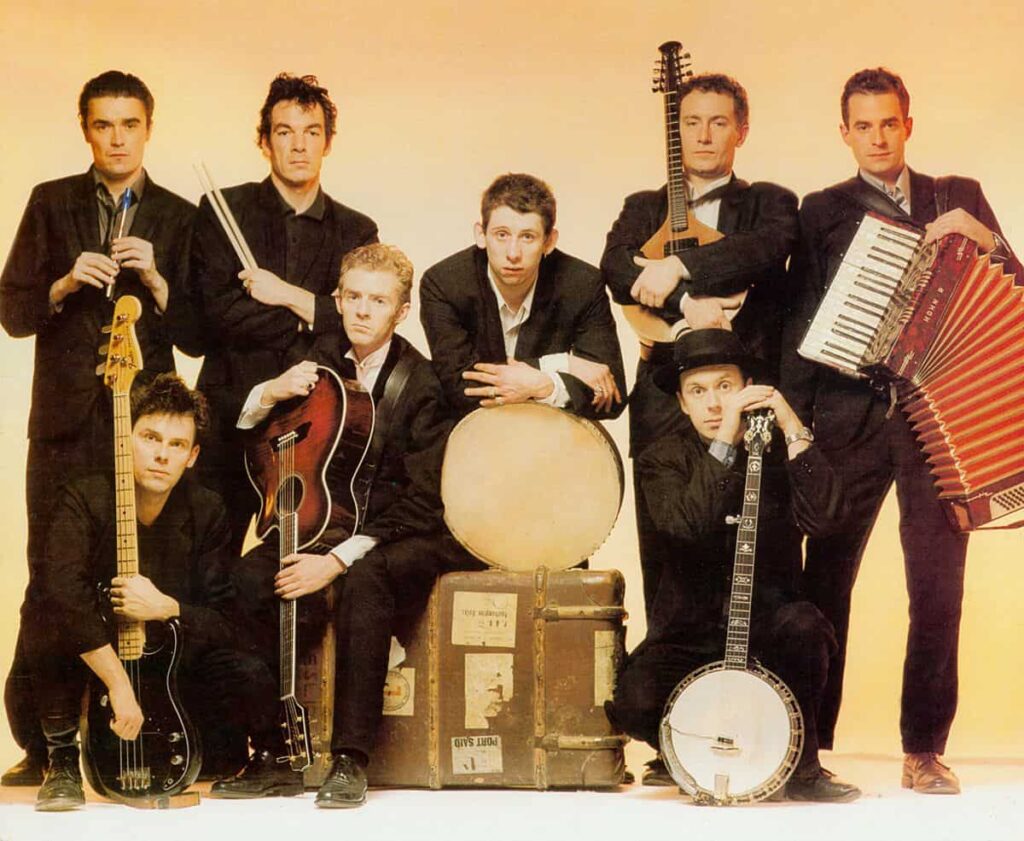
Appearing on the album If I Should Fall from Grace with God, the song marked a defining moment for The Pogues, a band that fused traditional Irish folk with the raw nerve of punk. At its center stood Shane MacGowan, whose songwriting here reached a rare peak of emotional honesty. What makes “Fairytale of New York” extraordinary is that it is not a sentimental Christmas song at all. It is a winter song — cold, sharp, and unafraid to show what love looks like after the dream has cracked.
The story unfolds in New York City, far from the cozy glow of fireplaces and carols. It tells of two Irish immigrants, once full of hope, now worn down by time, disappointment, and unmet promises. Their dialogue — sung by MacGowan and the late Kirsty MacColl, whose voice brings both steel and compassion — cuts deeply. They argue, insult, wound each other. Yet beneath the bitterness lies something unmistakable: devotion that endures even when the fantasy has collapsed.
This is where the song finds its meaning. “Fairytale of New York” does not romanticize youth or success. Instead, it honors survival. The couple’s love is flawed, scarred, and painfully real, but it is still love. In the quiet moments — when the orchestra swells and the insults fade — we hear the ghost of who they once were, and who they might still be. It is a reminder that many lives do not unfold as planned, yet still hold dignity, memory, and grace.
For listeners who have lived long enough to see dreams bend, change, or break, the song feels uncomfortably honest. It speaks to those who once believed the world would open effortlessly, only to learn that endurance is its own form of victory. The Christmas setting only sharpens the contrast: joy against despair, hope against regret, warmth against the cold streets outside.
Musically, the song mirrors this tension. Traditional Irish melodies intertwine with grand orchestration, giving the track a sweeping, almost cinematic feel. Yet MacGowan’s voice remains rough, weathered, unapologetically human. It sounds like someone who has lived every word he sings — and that authenticity is impossible to fake.
Over the years, “Fairytale of New York” has become a ritual. Not because it offers comfort in the conventional sense, but because it tells the truth many holiday songs avoid. It acknowledges that love can be messy, that life can disappoint, and that even so, there is beauty in having loved at all. That is why it returns every December, why it refuses to fade, why it feels timeless.
In the end, this is not a song about Christmas. It is a song about memory, resilience, and the fragile hope that survives even when everything else has been stripped away. And perhaps that is the greatest gift it offers — the permission to feel both the ache and the warmth at once, and to recognize ourselves somewhere in between.