
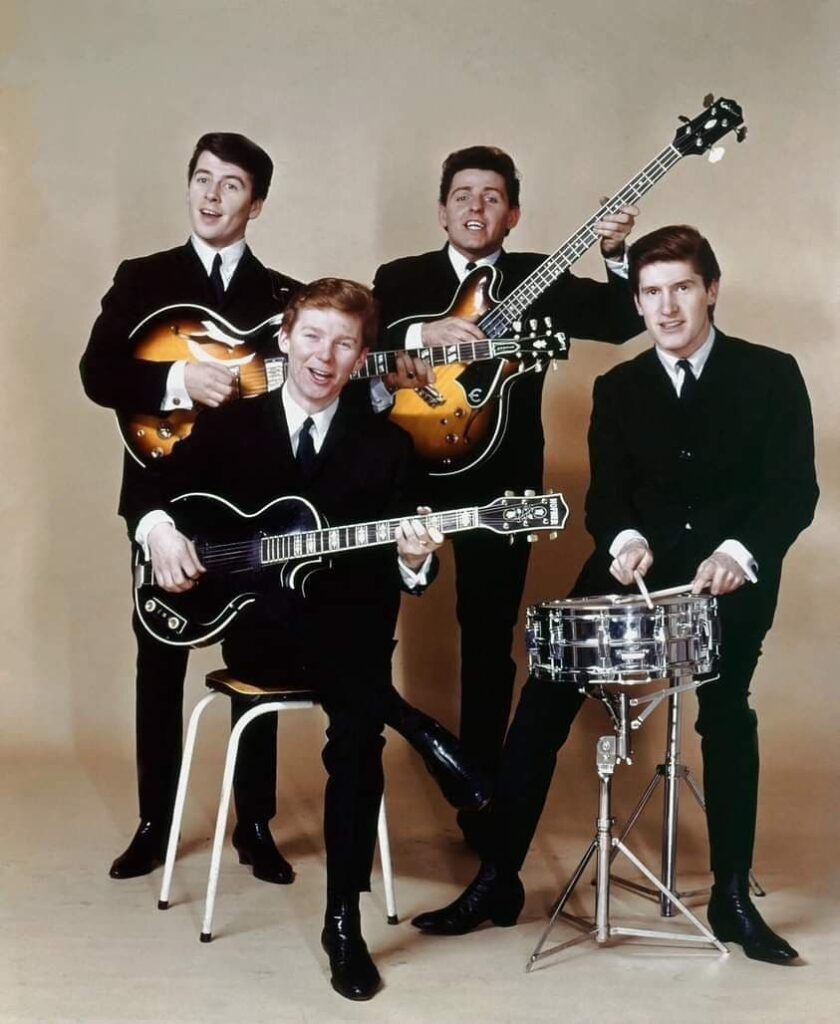
A Gentle Lament for Lost Innocence and the Quiet Cost of War
Few songs in popular music carry the quiet gravity and timeless reflection of “Where Have All the Flowers Gone.” When the British Merseybeat group The Searchers recorded their version in 1964, they transformed an already poignant folk composition into a haunting pop meditation that resonated deeply with listeners on both sides of the Atlantic. Their recording appeared on the album It’s The Searchers (1964), and while it was not released as a major chart-dominating single in the way some of their other hits were, the track became one of the most memorable interpretations of the song during the folk revival era, standing alongside famous renditions by artists such as Peter, Paul and Mary and Joan Baez.
The song itself was written by American folk singer Pete Seeger in 1955, though its inspiration came from an unexpected place: a line in the novel Mikhail Sholokhov’s book And Quiet Flows the Don. Seeger noticed a fragment of a Russian folk lyric describing girls picking flowers and soldiers going off to war. That fragment stayed with him, and over time he shaped it into the cyclical, almost hypnotic structure of “Where Have All the Flowers Gone.” The final verses were later completed by folk singer Joe Hickerson, giving the song its now-famous circular ending—where the question returns to the flowers again.
By the early 1960s, the song had become a quiet anthem of reflection within the folk revival. When The Searchers approached it, they were already known for jangling guitar pop hits like “Needles and Pins” and “When You Walk in the Room.” Yet their version of “Where Have All the Flowers Gone” showed another side of the Liverpool group. The arrangement was simple but deeply evocative: clean electric guitars, gentle rhythm, and a restrained vocal delivery that allowed the song’s melancholy message to breathe.
What makes The Searchers’ interpretation particularly memorable is its balance between folk sincerity and the melodic clarity of the British Invasion sound. Rather than dramatizing the anti-war message, they let the song unfold like a quiet conversation with memory itself. Each verse poses the same question in a slightly different form:
Where have all the flowers gone?
Where have all the young girls gone?
Where have all the young men gone?
The answers form a tragic circle: flowers are picked by girls, girls fall in love with young men, young men become soldiers, and soldiers end up in graveyards—where flowers grow again. It is a lyrical structure so simple that it feels almost like a nursery rhyme, yet the meaning grows heavier with each repetition.
In the early 1960s, as the Cold War loomed and memories of World War II were still fresh, the song’s quiet warning about the endless cycle of war carried deep emotional weight. By the time the decade progressed and the conflict in Vietnam War intensified, “Where Have All the Flowers Gone” had become one of the most recognizable peace songs of the era.
The version by The Searchers fits beautifully into that historical moment. While folk purists often gravitated toward acoustic interpretations, the group’s gentle electric arrangement made the message accessible to the broader pop audience of the British Invasion era. It reminded listeners that the anxieties of the time were shared across continents—that questions about war, youth, and loss belonged to everyone.
Listening to the song today feels like opening a faded photograph album. The melody moves slowly, almost reluctantly, as if aware that each verse brings us closer to an uncomfortable truth. Yet there is also a strange comfort in its circular ending. The flowers return. The question returns. History repeats, but so does the human impulse to remember.
In that sense, “Where Have All the Flowers Gone” is less a protest song than a meditation. Through the voices of The Searchers, it becomes a soft echo from another era—a reminder that behind every decade’s bright pop melodies, there were also moments of reflection, songs that asked difficult questions and trusted listeners to sit quietly with the answers.
And perhaps that is why the song still lingers. Not because it shouts its message, but because it whispers it—again and again—like a memory that refuses to fade.