
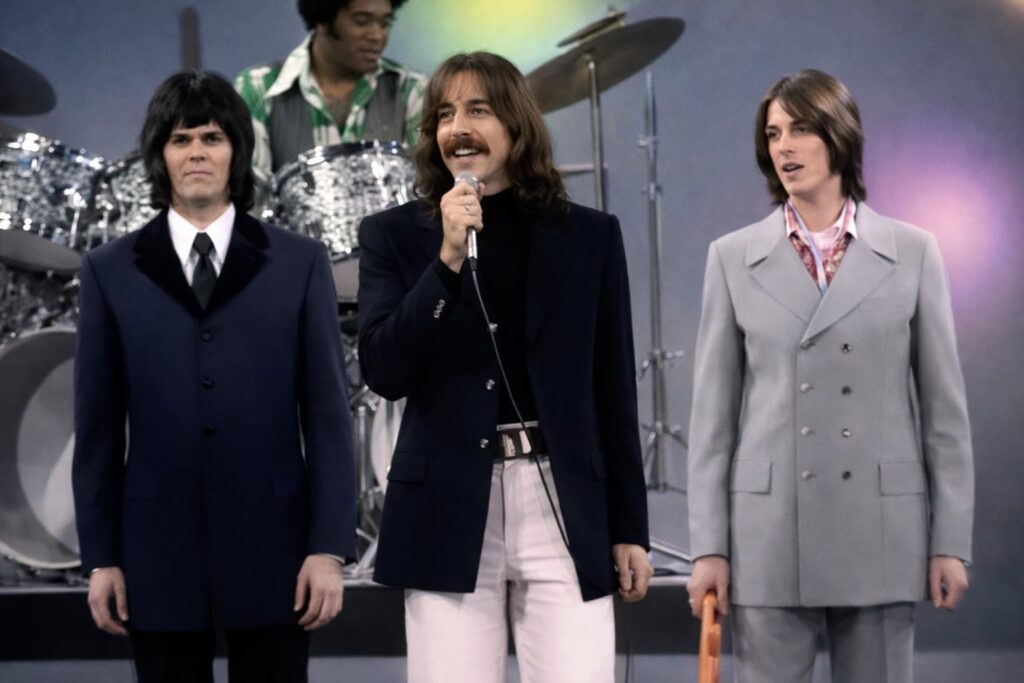
A Cry of Betrayal Wrapped in Rock Power and Soulful Fury
Few songs in the early 1970s captured the sting of deception with as much raw intensity as “Liar” by Three Dog Night. Released in 1971 as the second single from their album Naturally, the song rose to No. 7 on the Billboard Hot 100 and reached No. 6 in Canada, marking another major success in a streak that made the band one of the most reliable hitmakers of their era. By the time “Liar” climbed the charts, Three Dog Night had already built a formidable reputation for turning outside compositions into definitive performances. Yet “Liar” felt different—it wasn’t just another hit; it was an emotional confrontation set to music.
Originally written and first recorded by Russ Ballard of Argent, “Liar” was a strong piece of British rock craftsmanship. However, it was Three Dog Night—with the unmistakable lead vocal of Chuck Negron—who transformed it into something more theatrical, more visceral, and arguably more enduring. Negron’s performance stands as one of the most impassioned of the band’s career. He does not merely sing the accusation; he inhabits it. Each repetition of the word “liar” grows heavier, more wounded, more explosive—until the listener feels the emotional rupture as if it were their own.
The early 1970s were a time when rock music was becoming more polished, more ambitious, sometimes even more detached. But “Liar” cut through with stark simplicity. Its message is direct: betrayal leaves scars. There is no poetic camouflage here, no metaphors hiding the pain. The song confronts deception head-on, and perhaps that is why it resonated so deeply. The instrumentation—driving drums, muscular guitar lines, and dramatic dynamic shifts—creates a mounting tension that mirrors the emotional escalation in the lyrics. The arrangement builds like a storm cloud gathering weight before finally breaking.
Within the context of the album Naturally, “Liar” served as a powerful counterbalance to the softer, more introspective tones of tracks like “Joy to the World”, which had already become a No. 1 smash earlier that year. If “Joy to the World” was celebratory and communal, “Liar” was intimate and confrontational. Together, they showcased the extraordinary range of Three Dog Night—a band defined not by a single lead singer but by three distinctive voices: Chuck Negron, Cory Wells, and Danny Hutton. That shared-vocal identity gave the group remarkable versatility, but in “Liar,” Negron’s emotional ferocity takes center stage.
There is something timeless about the song’s theme. Trust, once broken, alters everything. The repetition of the title word feels almost ritualistic, as if saying it again and again might lessen the hurt—or at least clarify it. And in that repetition lies the song’s enduring power. It speaks not only of romantic betrayal but of the broader human experience of disappointment. It is not subtle, and it does not need to be.
Listening to “Liar” today, one can almost feel the atmosphere of AM radio in 1971—the crackle of speakers, the anticipation between songs, the way certain choruses seemed to linger in the air long after the record ended. Three Dog Night were masters of that era. From 1969 to 1974, few bands placed more songs in the Top 40 or sold more concert tickets. They did not always write their own material, but they possessed a rare instinct: they knew a great song when they heard one, and they knew how to inhabit it completely.
“Liar” remains a testament to that instinct. It is not merely a cover; it is a reclamation. In the hands of Three Dog Night, the song became a defining statement of emotional rock performance. And for those who remember hearing it when it first climbed the charts, it is more than a hit single—it is a moment in time, preserved in harmony and heartbreak.
 Oldies Songs