
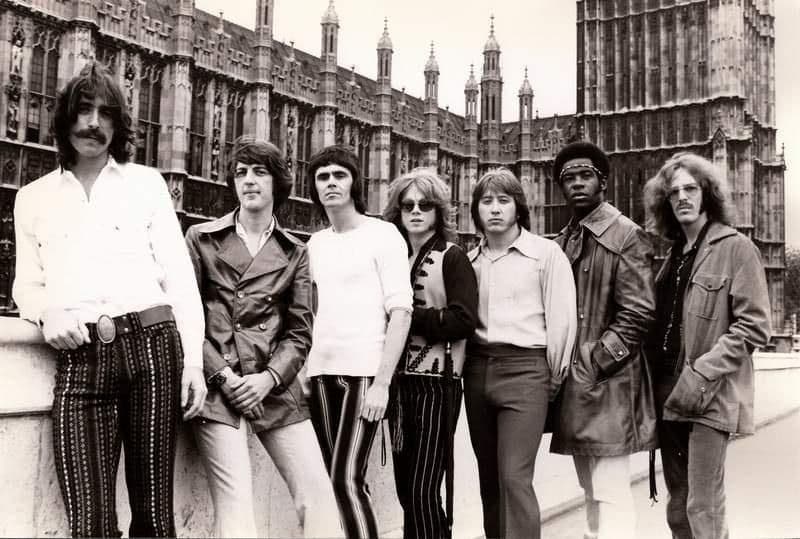
A Gentle Escape to Simplicity, Where the Noise Fades and the Soul Breathes Again
Few songs from the early 1970s capture the longing for peace and pastoral refuge quite like “Out in the Country” by Three Dog Night. Released in 1970 as a single from the album It Ain’t Easy, the song climbed to No. 15 on the Billboard Hot 100 in the United States and reached No. 10 in Canada. At a time when America was wrestling with social upheaval, urban unrest, and the emotional toll of the Vietnam War, this gentle, reflective track became a quiet anthem for those yearning to step away from the noise and rediscover something pure and grounding.
Interestingly, “Out in the Country” was written not by members of Three Dog Night, but by the husband-and-wife songwriting duo Paul Williams and Roger Nichols—the same creative team behind classics like “We’ve Only Just Begun” and “Rainy Days and Mondays” for The Carpenters. Williams, known for his introspective lyricism and delicate melodies, crafted a song that felt almost like a whispered prayer for cleaner air and clearer skies. In 1970, environmental awareness was beginning to take root in the public consciousness—Earth Day had just been inaugurated that April—so the imagery of fresh air, open fields, and spiritual renewal struck a deep chord.
What made Three Dog Night so compelling was their unusual structure: three distinct lead vocalists—Chuck Negron, Cory Wells, and Danny Hutton—each capable of carrying a song with a different emotional color. On “Out in the Country,” it is Cory Wells who delivers the lead vocal, his voice tinged with both weariness and hope. Wells doesn’t oversing the message. Instead, he leans into the vulnerability of the lyrics, allowing the melody to unfold naturally, almost conversationally. There is a softness in his phrasing, as if he truly believes that somewhere beyond the smog and sirens, peace is still possible.
Musically, the arrangement is deceptively simple. Gentle acoustic guitar lines frame the verses, while subtle orchestration swells underneath, courtesy of producer Richard Podolor. The instrumentation never overwhelms; it breathes. The rhythm section maintains a steady, unobtrusive pulse, reinforcing the song’s reflective tone. Unlike the band’s more bombastic hits such as “Mama Told Me (Not to Come)” or “Joy to the World,” this track avoids theatrical flair. Instead, it feels intimate—almost meditative. That restraint is precisely what gives it lasting power.
The lyrics speak plainly: “Before the breathin’ air is gone / Before the sun is just a bright spot in the nighttime.” In hindsight, those lines feel almost prophetic. Long before environmental crises became headline fixtures, the song expressed a quiet anxiety about pollution and industrial excess. But it is not a protest song in the traditional sense. It is a personal plea. A reminder that the countryside—real or metaphorical—represents more than geography. It represents sanity, balance, and the chance to hear one’s own thoughts again.
For listeners who experienced the early 1970s firsthand, “Out in the Country” often evokes a particular kind of memory: driving along open highways, radio turned up just enough, the horizon stretching endlessly ahead. It recalls a time when stepping away from the city felt like reclaiming something essential. And even now, decades later, that sentiment remains relevant. The song does not age because the longing it expresses is timeless.
Within the broader catalog of Three Dog Night, this track stands as one of their most thoughtful and understated achievements. It may not have reached the very top of the charts, but its emotional resonance far outweighs its numerical ranking. While the band is often remembered for high-energy, crowd-pleasing singles, “Out in the Country” reveals their capacity for nuance and introspection.
More than fifty years on, the song still feels like an open window. It reminds us that sometimes the most powerful musical statements are not the loudest ones, but the quiet invitations—to slow down, to breathe deeply, and to remember that somewhere beyond the clamor, the countryside is waiting.
 Oldies Songs