
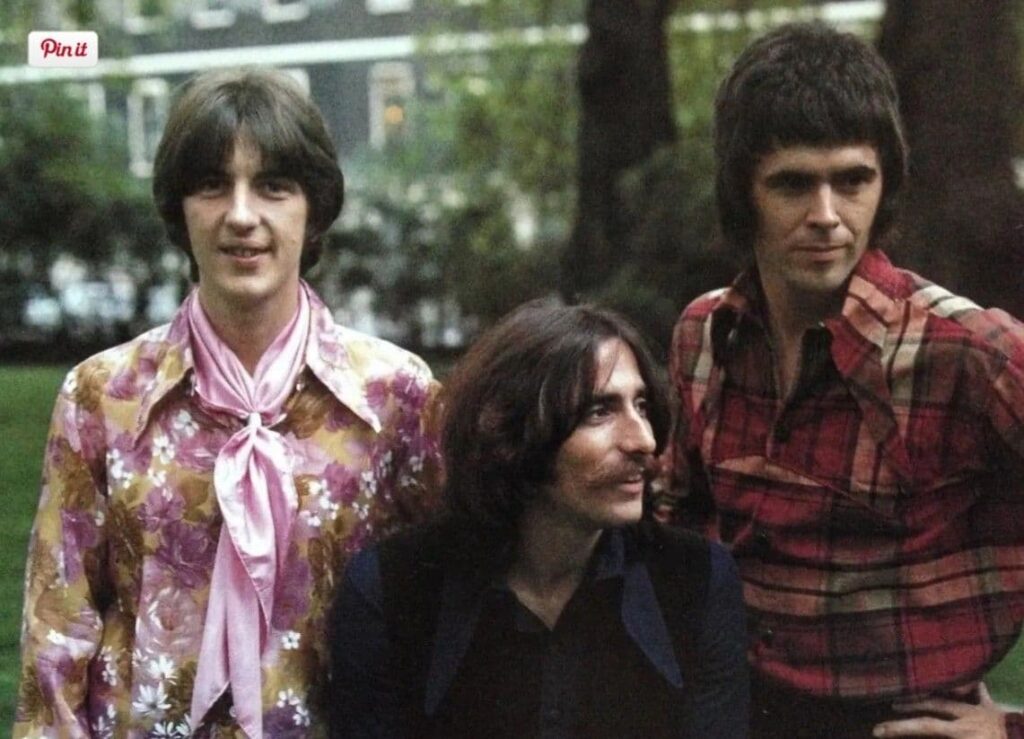
A Soulful Plea for Compassion in a Turbulent Era
When Three Dog Night released their electrifying rendition of “Try a Little Tenderness” in 1969, they were not simply reviving an old standard—they were reshaping it for a restless generation. Issued as a single from their self-titled debut album, Three Dog Night (1968), the song climbed to No. 29 on the Billboard Hot 100 in early 1969. Though not their highest-charting hit, it became one of the group’s most emotionally charged performances and remains a defining showcase for lead vocalist Chuck Negron.
The origins of “Try a Little Tenderness” reach far deeper into American popular music history. Written in 1932 by Jimmy Campbell, Reg Connelly, and Harry M. Woods, it was first recorded by Ray Noble Orchestra featuring Val Rosing. Over the decades, it evolved from a genteel orchestral ballad into a gospel-infused soul anthem—most memorably interpreted by Otis Redding in 1966. Redding’s version, with its slow burn and explosive climax, left an indelible mark on popular music.
It was precisely that soulful architecture that Three Dog Night drew upon. Yet their interpretation was neither imitation nor simple homage. Produced by Gabriel Mekler, the track opens with a hushed vulnerability—Negron’s voice almost conversational, restrained, aching. Then gradually, as the rhythm section tightens and the brass punches through, the performance swells into something urgent, almost cathartic. The transformation mirrors the emotional message of the song itself: that tenderness is not weakness, but strength.
By 1969, the American music landscape was in upheaval. Rock music had grown louder, heavier, and more politically charged. Amid the turbulence of the Vietnam War era and shifting cultural values, the plea embedded in “Try a Little Tenderness” felt unexpectedly profound. The lyrics speak of patience, understanding, and quiet compassion—“She may be weary… women do get weary.” It is not a protest song, yet it carries moral weight. It suggests that empathy is revolutionary in its own subtle way.
For Three Dog Night, a band known for their powerful three-lead-vocalist format—Chuck Negron, Danny Hutton, and Cory Wells—this song gave Negron the spotlight in a way few others did. His performance is both muscular and wounded. There is grit in his phrasing, but also fragility. The gradual crescendo, culminating in that impassioned, almost pleading repetition of the title line, remains one of the most stirring vocal builds in late-1960s rock recordings.
Commercially, while it did not break into the Top 20, the song strengthened the band’s early reputation as masters of reinterpretation. Three Dog Night would soon dominate the charts with hits like “One” (No. 5, Billboard Hot 100) and later “Joy to the World” (No. 1 in 1971). But “Try a Little Tenderness” signaled something crucial: this was a band capable of emotional depth, not merely radio-friendly hooks.
The arrangement itself deserves careful listening. The brass section does not merely decorate the melody—it drives the narrative arc. The rhythm section builds tension with disciplined restraint before unleashing that climactic surge. And Negron’s voice—raw, slightly frayed at the edges—sounds as though it is carrying not just a melody, but an appeal.
Looking back now, the song carries a quiet nostalgia. It reminds us of a time when rock bands freely borrowed from soul traditions, when genres were porous, and when emotion was allowed to unfold gradually over three unhurried minutes. There is something almost theatrical about the performance, yet never artificial. The message remains startlingly relevant: in a world often quick to judge and slow to understand, a little tenderness still goes a long way.
In the broader story of Three Dog Night, this track stands as an early testament to their interpretive power. They did not write it. They did not originate it. But they made it resonate in their own time—and in doing so, ensured its survival for generations who would hear in it not just a melody, but a reminder.
Sometimes, amid the noise of history, the simplest message echoes longest: try a little tenderness.
 Oldies Songs