
Ride Me Down Easy — A Road-Worn Prayer from the Heartland, Echoing Through Time
When “Ride Me Down Easy” was first released in 1973 on Waylon Jennings’ landmark album Honky Tonk Heroes, it did not emerge as a Top 10 single on the country charts, yet it carries a legacy that has only deepened with the passing decades. The album itself climbed to No. 14 on the Billboard Top Country Albums chart, a formidable achievement for a work that defied Nashville conventions and helped define the outlaw country movement.
At its core, “Ride Me Down Easy” is a song about a life lived at full tilt a life marked by hard miles, flawed choices, indomitable spirit, and an almost spiritual plea for peace at the end of the road. Penned by Billy Joe Shaver, a songwriter whose bare-knuckled honesty became a cornerstone of outlaw country, the song resonates with the weary, the wandering, the unvarnished seekers in all of us.
Waylon Jennings recorded the track as part of the Honky Tonk Heroes project at a time when he was asserting full artistic control over his music after years of being boxed into the polished Nashville sound. The album produced with Tompall Glaser and dominated by Shaver’s compositions was a deliberate departure into something rawer, honest, and closer to the soul of the American road. Critics and listeners alike now regard Honky Tonk Heroes as a defining record of 1970s country, not least because of songs like “Ride Me Down Easy” that embraced vulnerability as much as bravado.
Lyrically, the song reads like a reflection at the end of a long journey. The narrator recounts months and Sundays gone by with a guitar and a tall drink of “yesterday’s wine,” friends left scattered like “sheets in the wind,” and lovers who came and went. It is a catalogue of lived experience the good, the bad, the wild yet there is no bitterness here, only a weary acceptance and an earnest request: “Hey ride me down easy, Lord, ride me on down.” This refrain, simple yet profound, has touched generations of listeners who hear in it their own echoes of fatigue, freedom, and hope.
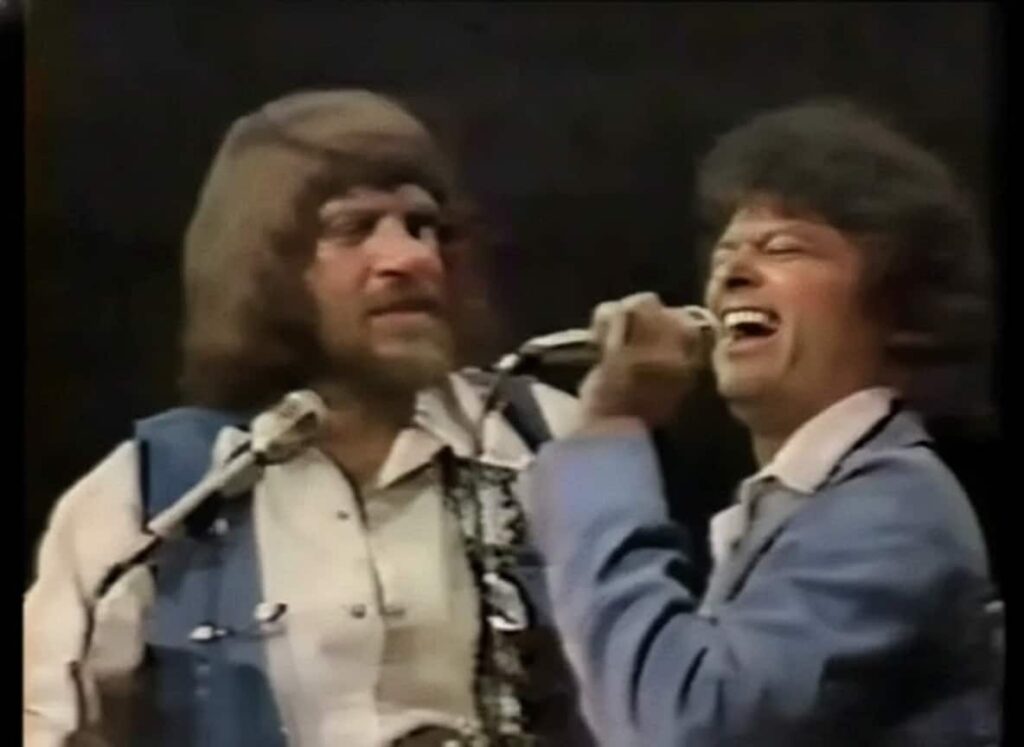
Many fans remember hearing the song in live performances, notably from concerts such as the 1975 “Soundstage” TV Special featuring Waylon Jennings with guest appearances that highlighted the depth of country’s outlaw spirit. While exact chart positions for that live version are elusive, the emotional weight of hearing Jennings often joined by contemporaries like Johnny Rodriguez sing this song in a live setting impresses upon older audiences the sense of shared experience: a smoky stage, the clink of glasses in the back room, and the sunset bleed of highway lights passing by. The special captured not just a performance, but a moment in time when country music was redefining itself.
The composition itself is deceptively straightforward. Shaver’s lyricism is rooted in a folk tradition that marries storytelling and philosophy. There are no dramatic twists, no sweeping metaphors; instead, the song unfolds like a conversation with an old friend or a prayer whispered into the wind. The narrator’s acceptance of life’s dust “leave word in the dust where I lay” reads as both surrender and triumph. To fans who grew up with radio and tape decks and long highway nights, these words have always felt like home.
Over time, “Ride Me Down Easy” has been covered and revered by other artists, a testament to its enduring resonance. Yet it is the original recording the version steeped in Waylon Jennings’ rich baritone and the collective knowing of an audience that has lived the lines rather than just heard them that remains etched most deeply in the hearts of those who came of age with its lament. There is a timelessness to this song, a sense that its plea is universal: to be remembered kindly, to be eased into rest after the long ride, and to hold fast to the simple grace of a life well-ridden.
In the great tapestry of country music, “Ride Me Down Easy” stands as a quiet monument to endurance, authenticity, and the poetic grit of the American spirit. Its words linger like the dust on a back-country road long after the last chord has faded.