
A Conversation That Feels Like a Song, Where Stories, Humor, and Memory Sit Side by Side
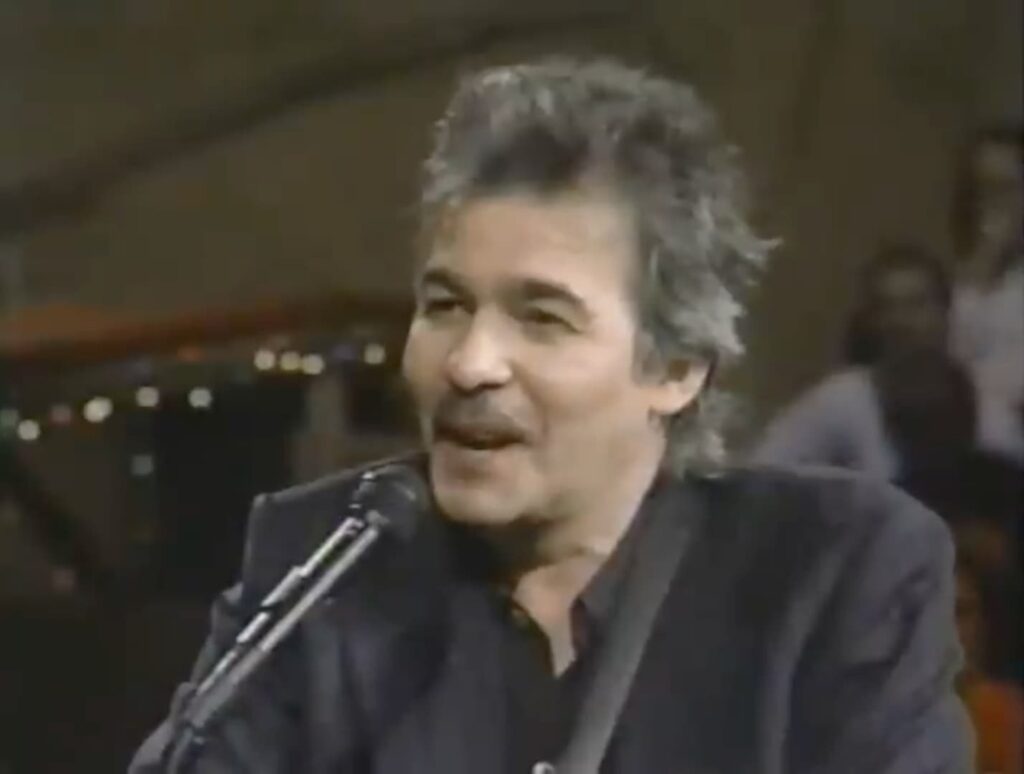
In this rare on-stage exchange, John Prine sits down with Jerry Jeff Walker and offers something far more revealing than a performance. What unfolds is a conversation that drifts between memory, music, and the quiet humor that defined Prine’s songwriting. Set against the backdrop of the American folk revival, the interview becomes a window into the roots of a voice that would later shape an entire generation of songwriters.
From the outset, John Prine reflects on his upbringing in Maywood, Illinois, describing a world where country music traveled north with working families seeking opportunity. It is a detail that explains much about his sound. Though often associated with folk, Prine’s music carried the storytelling traditions of country, shaped not by geography alone, but by inheritance. A father from Kentucky, a household filled with radio music, and an older brother teaching him his first guitar chords. These are the quiet beginnings behind the songs.
When Jerry Jeff Walker brings up the Chicago folk scene of the 1960s, the conversation shifts into something more communal. Coffeehouses, traveling musicians, and names like Steve Goodman emerge, painting a picture of a time when songwriting was shared, traded, and refined in small rooms rather than large stages. It was an environment built on craft rather than spectacle.
There is a moment when Prine is asked to play, and he offers a brief, almost offhand performance. The song carries his signature blend of humor and melancholy, where even a story about a cat can reveal something deeper about loss and perception. That balance, light on the surface yet heavy underneath, becomes the defining trait of his work.
What stands out most is Prine’s humility. He speaks of his limitations with a kind of quiet acceptance, joking about learning only a few chords, yet those same limitations became the foundation of a style that felt accessible and honest. There is no attempt to present himself as exceptional. Instead, he leans into simplicity.
As the conversation turns to folk festivals, there is a sense of continuity. Music as gathering, as shared experience, as something that lives between people rather than above them.
Looking back, this exchange between John Prine and Jerry Jeff Walker is more than an interview. It is a reflection of an era when songs were built from lived experience, and when the line between speaking and singing was often barely there at all.