
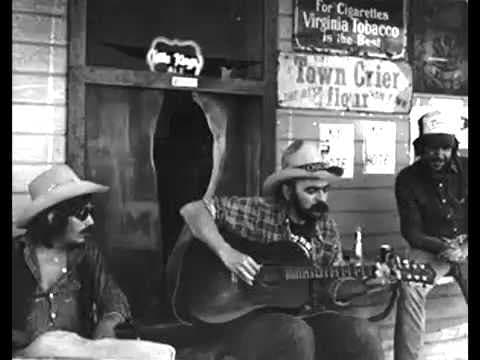
A Quiet Song Written for the Night, Where Loneliness and Mercy Meet Beneath the Moon
Few songs in American folk music feel as unguarded and intimate as The Moonlight Song, a tender composition by Blaze Foley, the legendary Texas songwriter whose reputation was built not on commercial success, but on emotional truth. Recorded during Foley’s early years and later preserved on The Dawg Years (1975–1978), this song stands as a clear distillation of his artistic soul. It did not appear on any major music chart upon release, nor did it receive radio promotion in its time. That absence, however, is not a shortcoming. It is part of the song’s identity. The Moonlight Song belongs to the long tradition of folk music that lives quietly, passed from listener to listener, rather than measured by sales or rankings.
Blaze Foley was never a chart artist in the conventional sense. During his lifetime, his recordings were sparse, often informal, and rarely distributed widely. The Moonlight Song was captured as a home recording, likely in the mid 1970s, during a period when Foley was living hand to mouth, playing small gatherings, and writing songs with no expectation of recognition. These recordings were later compiled and released posthumously as The Dawg Years, a collection that documents Foley’s creative life with remarkable honesty. The song also gained renewed attention through its inclusion on the Duct Tape Messiah soundtrack, the 2016 documentary that chronicled Foley’s life and tragic death.
What makes The Moonlight Song so affecting is its emotional restraint. There is no dramatic crescendo, no lyrical excess, no attempt to impress. Instead, the song unfolds gently, almost hesitantly, like a thought spoken aloud after midnight. Foley’s voice is fragile but steady, carrying a warmth that feels earned rather than performed. He sings as though he is alone, unaware of any audience, allowing the listener to feel less like a spectator and more like a quiet companion.
Thematically, the song centers on solitude, longing, and the small grace found in human closeness. The moonlight in Foley’s writing is not romanticized spectacle. It is a shared presence, a soft witness to moments of vulnerability. In this way, The Moonlight Song reflects Foley’s broader philosophy as a songwriter. He believed that songs should tell the truth, even when that truth was uncomfortable, lonely, or unresolved. There is no promise of redemption here, only understanding, and for many listeners, that understanding is enough.
Blaze Foley’s life story adds an unavoidable layer of meaning to the song. Born Michael David Fuller in Arkansas in 1949, he adopted the name Blaze Foley and became a fixture of the Texas folk scene. He was admired by fellow musicians, including Townes Van Zandt, yet struggled with poverty, alcoholism, and instability. In 1989, Foley was shot and killed at the age of 39, a senseless act of violence that ended a life still rich with unwritten songs. In hindsight, The Moonlight Song feels almost prophetic in its quiet acceptance of impermanence.
Musically, the song is built on simple acoustic guitar lines, with no ornamentation to distract from the voice and words. This simplicity is intentional. Foley understood that folk music does not demand perfection. It demands sincerity. His phrasing is conversational, his timing loose, his delivery human. These qualities allow the song to age gracefully. Decades later, it still sounds current, because emotional honesty does not belong to any era.
Today, The Moonlight Song endures as one of Blaze Foley’s most quietly powerful works. It may never have climbed a chart, but it has secured something far more lasting. A place in the hearts of listeners who value reflection over noise, depth over polish, and truth over recognition. In the stillness of this song, one hears not only Foley’s voice, but the echo of countless unspoken nights, when music was not entertainment, but companionship.