
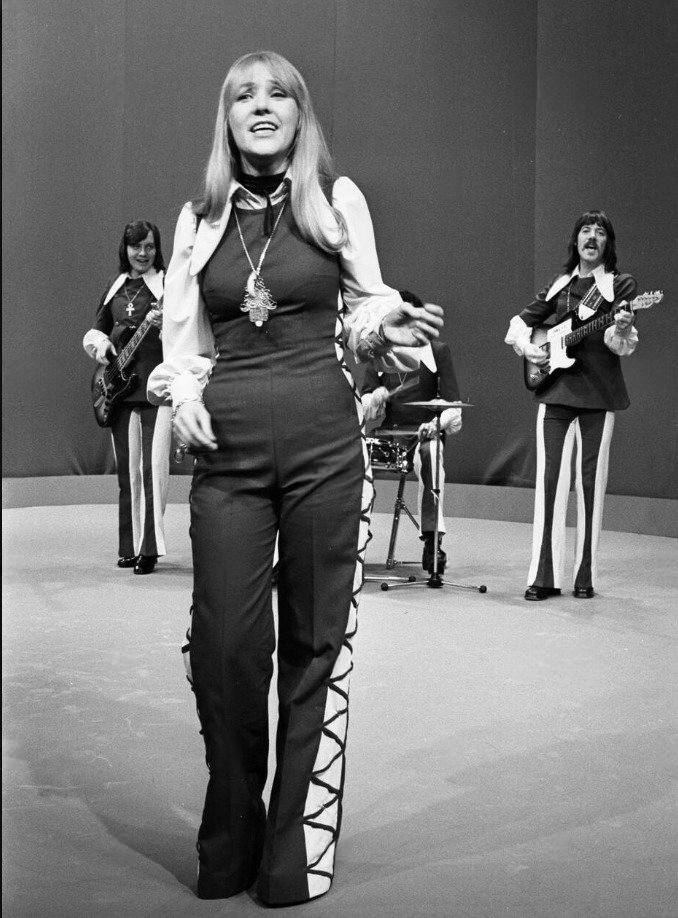
A gentle pop tale about the “queen bee” who gathers life’s sweetness — a light melody carrying a deeper reflection on work, care, and the quiet rhythms of everyday life.
In the early 1970s, when cheerful pop melodies drifted from transistor radios and vinyl turntables around the world, the Scottish pop group Middle of the Road had already carved out a warm and recognizable place in the international charts. Their sound—bright, melodic, and instantly singable—was a hallmark of the European bubblegum-pop era, a style that favored simple joys, memorable choruses, and melodies that lingered long after the record stopped spinning.
Among the lesser-known gems in their catalog is “Queen Bee,” a charming track released in the early 1970s and included on compilations such as “Best of Middle of the Road.” The song was written by Giosy Capuano, Mario Capuano, and Harold Stott, a songwriting partnership that played an important role in shaping the band’s early repertoire.
While “Queen Bee” was never promoted as a major standalone single and therefore did not achieve notable chart placements like some of the group’s bigger hits, it arrived during the same fruitful period that produced worldwide successes such as “Chirpy Chirpy Cheep Cheep,” which reached No. 3 on the UK Singles Chart in 1971 and topped charts across Europe and beyond. Those triumphs created the musical environment in which songs like “Queen Bee” quietly flourished—tracks that may not have dominated the charts but helped shape the emotional texture of the band’s catalog.
Musically, “Queen Bee” reflects the unmistakable DNA of Middle of the Road: light percussion, a buoyant rhythm, and a melody built for easy sing-along moments. The arrangement is uncomplicated but effective—just under three minutes of cheerful pop that captures the optimistic spirit of the early seventies. At a time when rock music was becoming louder and more experimental, songs like this offered something different: a small, melodic world where life seemed gentler, and worries felt a little further away.
But beneath its playful imagery lies a subtle metaphor. The song tells a simple story about bees gathering honey while a “queen bee” ultimately takes the harvest back to the hive. The lyrics paint a pastoral picture of buzzing gardens, sweet honey, and the constant motion of life’s tiny workers. Yet within that simplicity is a quiet reflection on responsibility and the natural order of things.
The queen bee in the song can be heard as a symbol—perhaps of leadership, perhaps of someone who quietly carries the burden of providing for others. The bees gather, the honey is shared, and the hive continues to thrive. It is a gentle reminder that life, much like a beehive, depends on patience, cooperation, and unseen effort.
There is also something charmingly domestic about the imagery. Honey in the kitchen, children waiting for sweetness from the comb, the hum of activity in the background—it evokes a small world where everyday labor leads to simple rewards. In that sense, “Queen Bee” reflects a theme often found in early-1970s pop: celebrating the beauty hidden inside ordinary routines.
The production style of the song also deserves attention. During this period, many European pop recordings embraced bright acoustic guitars, layered vocal harmonies, and crisp rhythm sections designed to sound clear on both radio and jukebox speakers. “Queen Bee” fits neatly into that sonic tradition. The melody is cheerful but not hurried; the chorus floats along with a childlike warmth that feels almost timeless.
For listeners revisiting the song today, the experience can feel like opening an old photograph album. It is not a grand anthem or a dramatic ballad. Instead, it belongs to that quieter corner of pop history—songs that accompanied everyday moments: a drive through the countryside, an afternoon with the radio playing softly, or a memory of a simpler season in life.
And perhaps that is the true charm of “Queen Bee.” It reminds us that music does not always need to roar to be meaningful. Sometimes it simply hums, like a garden full of bees on a warm afternoon—steady, gentle, and quietly full of sweetness.
 Oldies Songs