
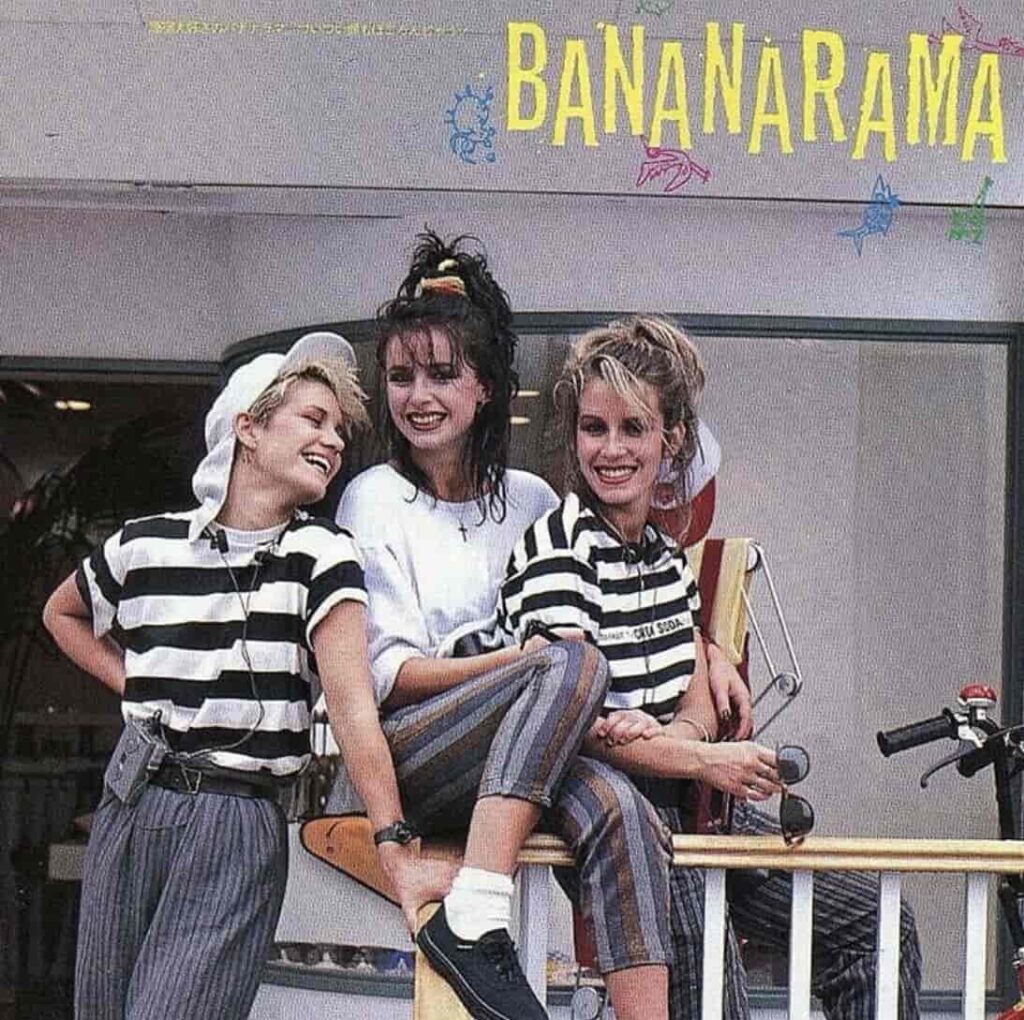
“Cruel Summer” — When a Bright Pop Melody Carries the Quiet Loneliness of a Hot, Empty City
Released in 1983, “Cruel Summer” by Bananarama quickly became one of the most memorable pop records of the decade. The song reached No. 8 on the UK Singles Chart in the summer of 1983, establishing the trio as a major presence in British pop. A year later, after being featured in the hit film “The Karate Kid” (1984), the track was re-released in the United States and climbed to No. 9 on the Billboard Hot 100 in 1984. It also performed strongly internationally, reaching No. 4 in Canada and becoming a staple of early-1980s radio. The song would later appear on the group’s U.S. album “Bananarama” (1984), further cementing its place in pop history.
Behind the infectious rhythm and shimmering synthesizers lies a story that is surprisingly reflective. “Cruel Summer” was written by the members of Bananarama — Sara Dallin, Siobhan Fahey, and Keren Woodward — together with their producers Steve Jolley and Tony Swain. The inspiration came during an unusually hot summer in London. According to the band, they noticed a lonely man walking through the sweltering streets, clearly uncomfortable and isolated while the rest of the city seemed to be enjoying the sunshine. That small moment sparked the idea for a song about the emotional side of summer—the side rarely mentioned in cheerful seasonal pop songs.
Most summer songs celebrate sunshine, freedom, and romance. “Cruel Summer,” however, flips that image on its head. The song speaks from the perspective of someone trapped in the city while others escape to holidays and beaches. The lyrics — “Leaving me here on my own / It’s a cruel summer” — capture the quiet disappointment that can accompany the season when companionship is missing. In that sense, the song’s emotional core is not about heat at all, but about loneliness in the middle of brightness.
Musically, the track captures the sound of early-1980s pop at its most vibrant. The production by Jolley and Swain combines crisp drum programming, bright keyboards, and a rhythm that feels almost restless. Yet the arrangement leaves enough space for the vocals to carry the song’s emotional weight. Sara Dallin, Siobhan Fahey, and Keren Woodward deliver the lines with a blend of cool detachment and subtle vulnerability, creating a striking contrast between the upbeat groove and the melancholy lyrics.
The visual presentation of the song also helped it endure. The music video shows the trio wandering through a summer city landscape, surrounded by heat, graffiti, and urban life. Rather than the typical imagery of beaches and palm trees, the setting feels gritty and real. It mirrors the song’s message perfectly: summer can be beautiful, but it can also magnify feelings of isolation.
The timing of the song’s American breakthrough is also an interesting part of its story. When “The Karate Kid” became a cultural phenomenon in 1984, its soundtrack introduced “Cruel Summer” to a much wider audience. The film’s success pushed the single back onto the charts, giving Bananarama their first major hit in the United States. For many listeners, the song became inseparable from the film’s atmosphere of youthful struggle and determination.
Over the decades, “Cruel Summer” has remained one of the defining songs of Bananarama’s career. While the group later achieved even bigger chart success with hits like “Venus” in 1986, this earlier single holds a special place because it captures the band at a moment of creative authenticity. It was written from observation, shaped by real feeling, and delivered with a sincerity that continues to resonate.
Listening to “Cruel Summer” today still brings back a vivid sense of time and place. The sharp drum beats, the shimmering keyboards, and the echoing vocals instantly evoke the soundscape of the early 1980s. But beyond nostalgia, the song survives because its message is universal. Seasons change, cities evolve, and music styles shift—but the experience of feeling alone in the middle of a crowd is something every generation understands.
And perhaps that is the quiet brilliance of “Cruel Summer.” Beneath its bright pop exterior lies a small, thoughtful reminder: even under the hottest sun, the human heart can still feel the chill of solitude.