
A Quiet Kind of Heartbreak, Hidden Behind Harmony and Pride
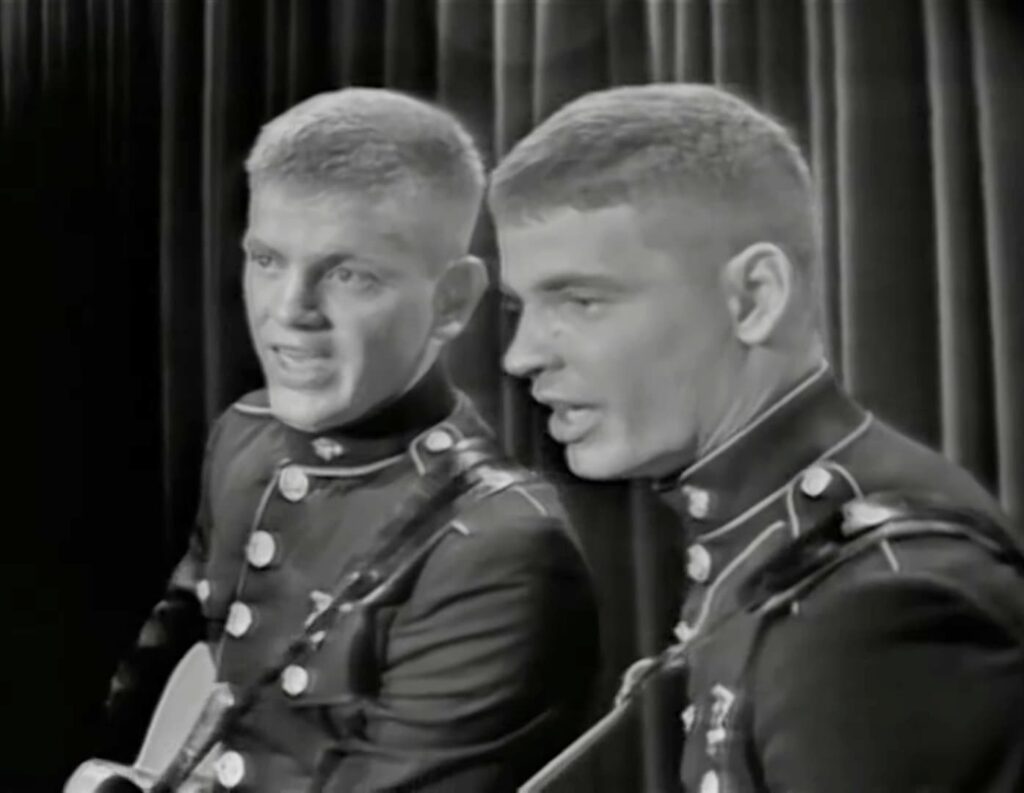
In the early 1960s, at the height of their popularity, The Everly Brothers appeared on The Ed Sullivan Show, delivering a performance of “Crying In The Rain” that would linger far beyond its brief runtime. The timing was notable. Fresh from completing Marine Corps training, Don and Phil Everly stepped onto the stage not just as chart-topping artists, but as young men returning to a different kind of spotlight.
Introduced with warmth and curiosity, their presence carried a subtle weight. There was a light exchange with the host, a passing mention of military life, even a touch of humor. Yet the mood shifted the moment the first gentle notes of “Crying In The Rain” began. Written by the legendary duo Carole King and Howard Greenfield, the song had already found success on the charts, but this televised rendition revealed something more intimate.
Their trademark close harmony was precise, almost fragile, as if holding together emotions that threatened to surface. The lyrics spoke of quiet suffering, of choosing solitude over vulnerability, of hiding tears where no one could see. On that stage, under soft lighting and before a national audience, those words felt less like performance and more like confession.
There was no dramatic gesture, no theatrical flourish. Instead, the power came from restraint. The brothers stood nearly still, letting their voices carry the burden of the song. Each line unfolded with careful control, especially the refrain, where pride and heartbreak intertwined. It was the kind of delivery that invited listeners to remember their own moments of silent endurance.
As the final note faded and applause filled the studio, the performance left behind a lingering stillness. In just over two minutes, The Everly Brothers had transformed a simple melody into something deeply human. Decades later, that appearance on The Ed Sullivan Show remains a quiet testament to their ability to turn personal emotion into shared memory, a reminder that sometimes the most powerful stories are the ones never fully spoken.