
A Quiet Lesson in Love and Loss, Told in a Barroom Confession That Still Echoes Decades Later
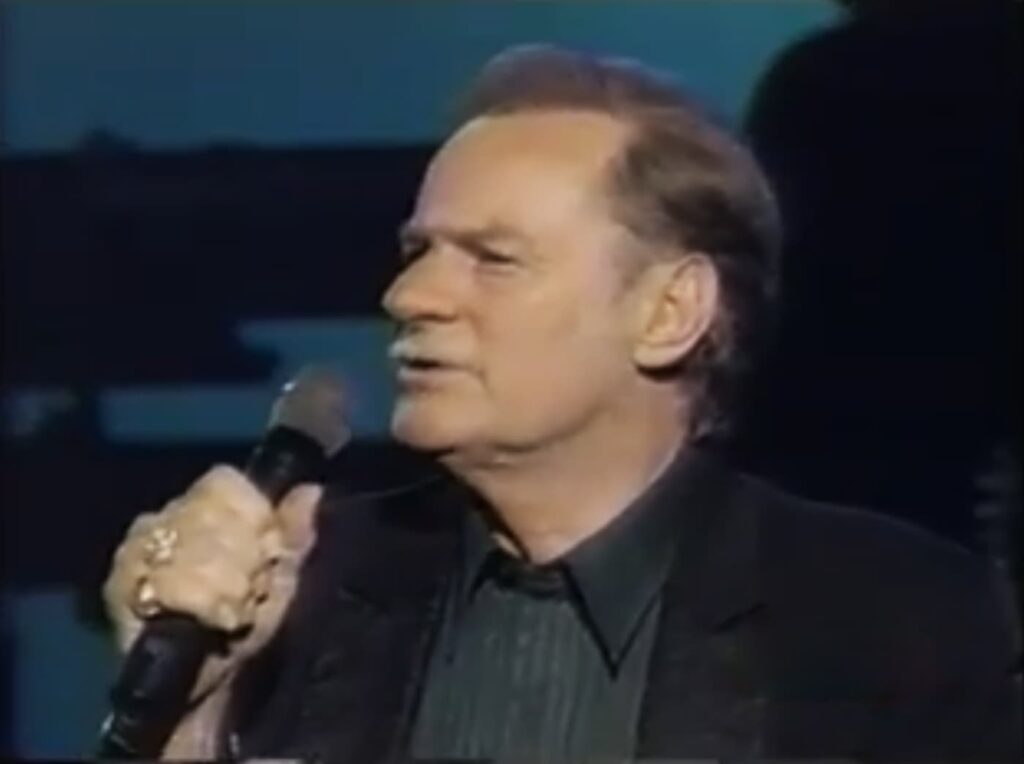
In 1999, Vern Gosdin delivered a live performance of “Chiseled in Stone” that felt less like a concert moment and more like a lived confession set to music. Originally released in 1988 as part of the album “Chiseled in Stone,” the song had already earned its place as one of country music’s most emotionally devastating narratives, even winning Song of the Year at the CMA Awards. Yet, in this later performance, Gosdin’s voice carried an even deeper weight, shaped by time, memory, and the quiet authority of experience.
The setting was simple, the arrangement understated, but the impact was unmistakable. As the opening lines unfolded, the familiar story emerged. A man, wounded by harsh words, escapes to a bar, only to encounter an older stranger whose life has been permanently marked by loss. What follows is not just advice, but a reckoning. Through Gosdin’s restrained delivery, every lyric seemed to settle slowly, allowing the listener to absorb the gravity of what was being said.
By 1999, Vern Gosdin was widely regarded as “The Voice” for a reason. His phrasing in “Chiseled in Stone” did not rely on vocal theatrics. Instead, it leaned into stillness, into the pauses between lines, where the truth of the song quietly lived. When he reached the chorus, the words about loneliness and long nights no longer sounded like lyrics. They felt like memories being recalled in real time.
What distinguished this performance was its sense of reflection. The song’s central message, that one rarely understands the depth of love until faced with its absence, resonated with a quiet clarity. The older man’s warning within the story became something larger, almost universal, as if Gosdin himself was passing along a lesson earned over a lifetime.
The applause at the end was warm but measured, as though the audience understood they had witnessed something intimate rather than simply entertaining. In that moment, “Chiseled in Stone” remained what it has always been: a song not just heard, but carried, long after the music fades.
 Oldies Songs