
A Quiet Ache Carried on Airwaves Where Distance Speaks Louder Than Words
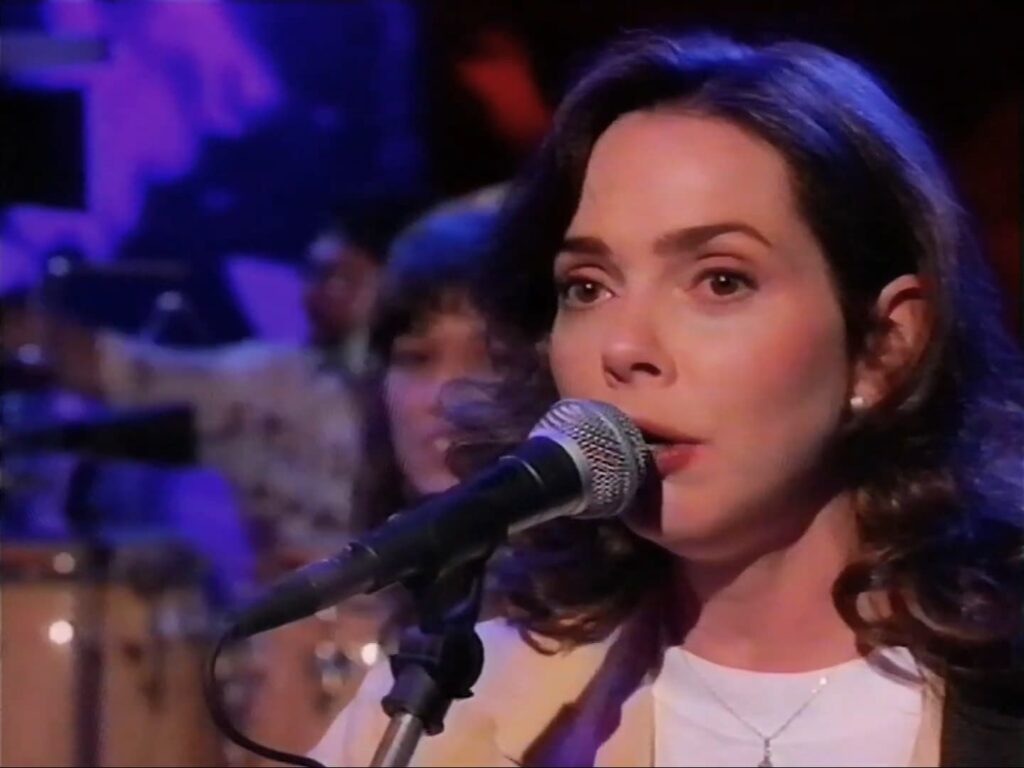
In 1993, during an intimate session on Later with Jools Holland, Nanci Griffith delivered a performance of “Speed of the Sound of Loneliness” that distilled everything essential about her artistry. Originally written by John Prine and released on his 1986 album German Afternoons, the song had already earned quiet reverence. Yet in Griffith’s hands, it became something more fragile, almost weightless, as if each note might disappear the moment it was sung.
From the opening line, her voice carries a soft clarity that feels both present and distant. There is no theatrical buildup, no dramatic framing. Instead, she steps into the song as if stepping into a memory already in progress. The question at its core, “Why you been gone so long,” is not asked with anger, but with a kind of weary acceptance, as though the answer has been known all along.
Griffith’s interpretation leans into restraint. Where others might emphasize heartbreak, she allows silence and space to do the work. Each pause between phrases feels deliberate, echoing the emotional distance the song describes. It is this control, this refusal to overstate, that gives the performance its enduring power.
The arrangement remains minimal, almost transparent, allowing her phrasing to guide the listener. There is a subtle interplay between voice and accompaniment, but nothing distracts from the central feeling of absence. In that studio setting, surrounded by quiet attention, the performance feels less like a broadcast and more like a private confession shared with whoever happens to be listening.
By the final lines, there is no resolution, only recognition. The loneliness has not been solved, only understood. And that, perhaps, is why this performance lingers. “Speed of the Sound of Loneliness” is not about reunion or closure. It is about the space in between, the long stretch where love still exists, but no longer reaches the other side.
In retrospect, this 1993 appearance stands as one of those rare moments where interpretation and composition meet perfectly. Nanci Griffith does not try to change the song. She simply inhabits it, and in doing so, reveals just how quietly devastating it has always been.