
A Rare Conversation Where Legends Share the Road and a Controversial Song Reveals Its True Heart
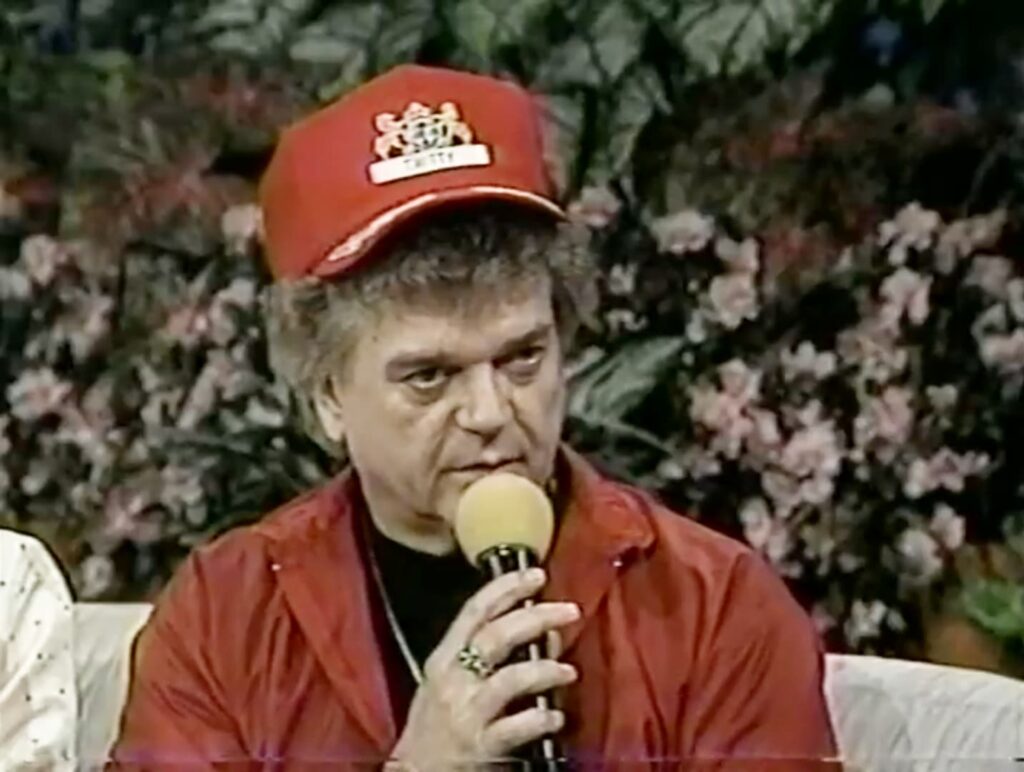
In 1989, on the widely watched program Nashville Now, Conway Twitty stepped into the spotlight not just as a performer, but as a reflective voice at the height of his career. Introduced with warm applause, he appeared relaxed, even playful, yet what followed offered a revealing glimpse into a pivotal moment in country music history.
At the forefront was his ongoing tour with Merle Haggard and George Jones, a lineup so powerful it was fittingly referred to as a “country explosion.” Twitty spoke with quiet pride about sharing stages with two of the genre’s most respected figures. The tour was not just a series of concerts, but a gathering of distinct voices, each carrying their own legacy, coming together for audiences who understood the weight of that moment.
Beyond the road, the conversation turned to an unexpected subject. Twitty addressed the controversy surrounding his song “Saturday Night Special.” What some critics had interpreted as casting a negative light on pawnshops was, in his view, something entirely different. Calmly and clearly, he explained the story behind the song. A man on the edge, a woman in despair, and a chance encounter inside a pawnshop that could have ended in tragedy, but instead became the beginning of something hopeful.
For Conway Twitty, the song was never about criticism. It was about redemption. He emphasized that even in a place often associated with hardship, there could still be a turning point, a moment where two lives shift direction. His decision to write directly to those who felt misrepresented reveals a side of him often unseen, thoughtful, accountable, and deeply aware of how his work resonated beyond music.
The interview also captured lighter moments, from stories of past performances to his involvement in minor league baseball. Yet beneath the humor and ease, there was a clear sense of a man fully engaged in both his craft and his world.
Looking back, this 1989 appearance stands as more than a television segment. It is a portrait of Conway Twitty as both artist and individual, navigating success, collaboration, and controversy with the same steady voice that made his songs endure.
 Oldies Songs