
Youth, Fame, and Harmony: The Everly Brothers at the Height of Their Early Stardom
In 1961, at a moment when rock and roll was still defining itself, The Everly Brothers appeared in a relaxed yet revealing interview on ABC during their Australian tour. Having just arrived from Manila for a week of performances, Don and Phil Everly carried with them not only the excitement of international fame, but also the unmistakable calm of artists who had already learned how to navigate success. This brief conversation captures them in a fascinating in-between space. They were no longer newcomers, yet still young men adjusting to the speed and scale of their own popularity.
From the outset, there is a sense of ease in their demeanor. When asked about returning to Sydney, their response is warm and unpretentious. They speak not like distant stars, but like familiar visitors reconnecting with an audience that had embraced them wholeheartedly. That connection with fans, especially in places far from home, was one of the defining features of their early career. Their harmonies may have been rooted in American tradition, but their appeal was undeniably global.
The discussion soon turns to their latest record, “The Everly Brothers”, a release featuring fourteen tracks that reflect both their evolving artistry and their deep respect for musical standards. They mention “Muskrat” as a likely single for Australia, paired with the classic “Don’t Blame Me”, a song that echoes the tender, ballad-like quality of earlier hits such as “All I Have to Do Is Dream”. This pairing reveals an important aspect of their musical identity. They were never confined to one tempo or mood. Instead, they balanced upbeat rhythms with soft, introspective melodies, always anchored by their signature vocal blend.
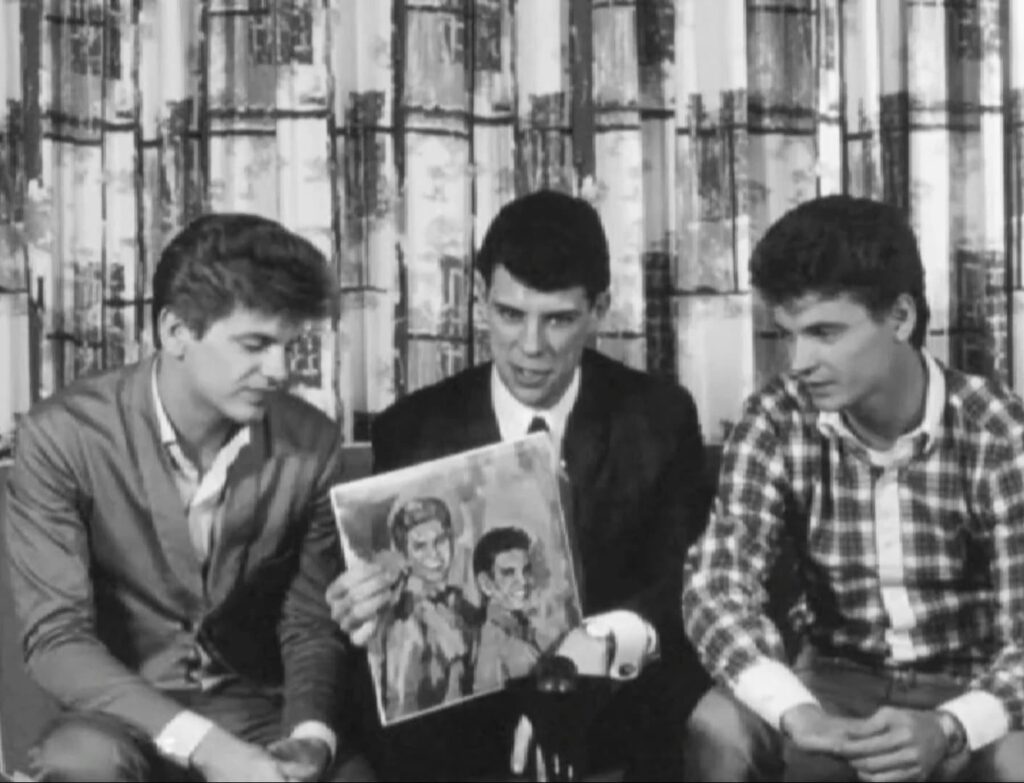
What also emerges in this interview is their growing awareness of the business side of music. Don casually notes that he was not responsible for the album’s artwork, crediting a designer from Warner Brothers, but then quickly shifts to something more significant. The brothers had just begun establishing their own record company, a move that signals both ambition and a desire for creative control. Mentioning a new artist they had signed, Larry Barnes, they hint at a future where they are not only performers, but mentors and producers shaping the next wave of talent.
Yet, despite these professional strides, the interview never loses its lightness. When asked about beaches and social life, Phil responds with a quiet humor that underscores the reality of their schedule. Fame, in this case, comes with constant movement and very little time for leisure. The playful question about meeting girls is met with a charmingly diplomatic answer. “They’re all pretty special,” Phil says, a line that reflects both youthful politeness and an instinctive understanding of their public image.
Looking back, this interview feels almost like a snapshot of innocence before the complexities of later years. The Everly Brothers appear grounded, focused, and quietly aware of their trajectory. Their voices had already changed the sound of popular music, but here, they are simply two brothers, traveling the world, singing songs, and learning, step by step, what it means to carry harmony across continents.