
When Love Stays Even After the Questions: Nanci Griffith and the Quiet Truth of “It’s Too Late”
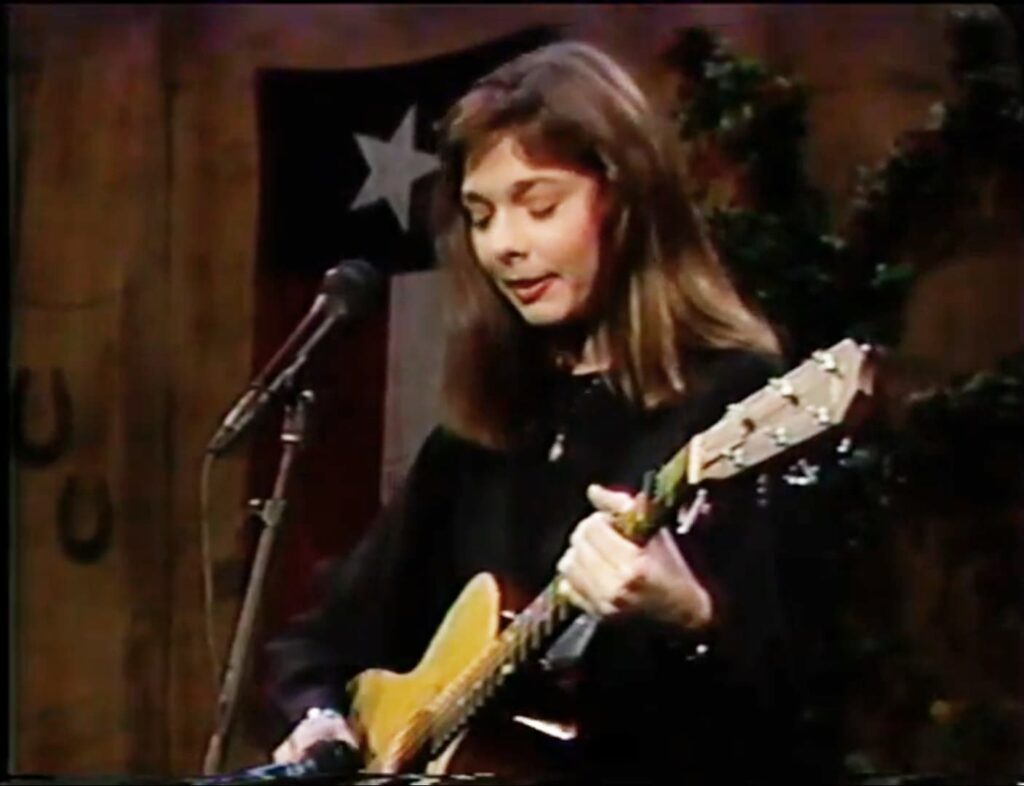
In an intimate stage moment shared with Eric Taylor, Nanci Griffith introduced “It’s Too Late” not as a simple love song, but as a confession many rarely speak aloud. With a gentle, almost playful remark, she dedicated it to long-married couples, those who have chosen to stay, yet still find themselves, on certain days, asking a difficult question: why am I still here?
That disarming honesty set the tone for what followed. Griffith’s performance unfolded with the fragile clarity that defined much of her work. There was no attempt to dramatize the emotion. Instead, she leaned into understatement, allowing each lyric to carry the quiet weight of lived experience. The song does not describe a love that burns brightly. It describes one that endures, even when understanding fades.
“It’s too late to leave you,” she sings, not as resignation, but as recognition. The line lands softly, yet it holds an entire history within it. This is not the language of beginnings. It is the language of time, of shared seasons that have shaped two people in ways they can no longer separate. The paradox at the heart of the song is unmistakable. To stay does not always mean to fully know. To love does not always mean to feel close.
What gives the performance its enduring resonance is Griffith’s ability to balance tenderness with truth. She does not idealize commitment. Instead, she acknowledges its contradictions. There is distance in the relationship she describes, a sense of two lives running parallel rather than intertwined. And yet, beneath that distance, something remains unbroken.
The imagery deepens as the song moves forward. Changing weather, falling leaves, the quiet passage of years. These are not just poetic details, but markers of time’s steady influence on love. The couple in the song may not fully understa
Looking back, this performance stands as a reminder of Nanci Griffith’s rare gift. She could take what is often left unsaid and give it a voice that feels both personal and universal. “It’s Too Late” does not offer resolution. It offers recognition. And sometimes, recognition is the most honest form of connection that remains.