
A Song for the Absent: John Prine and the Quiet Roll Call of “Souvenirs”
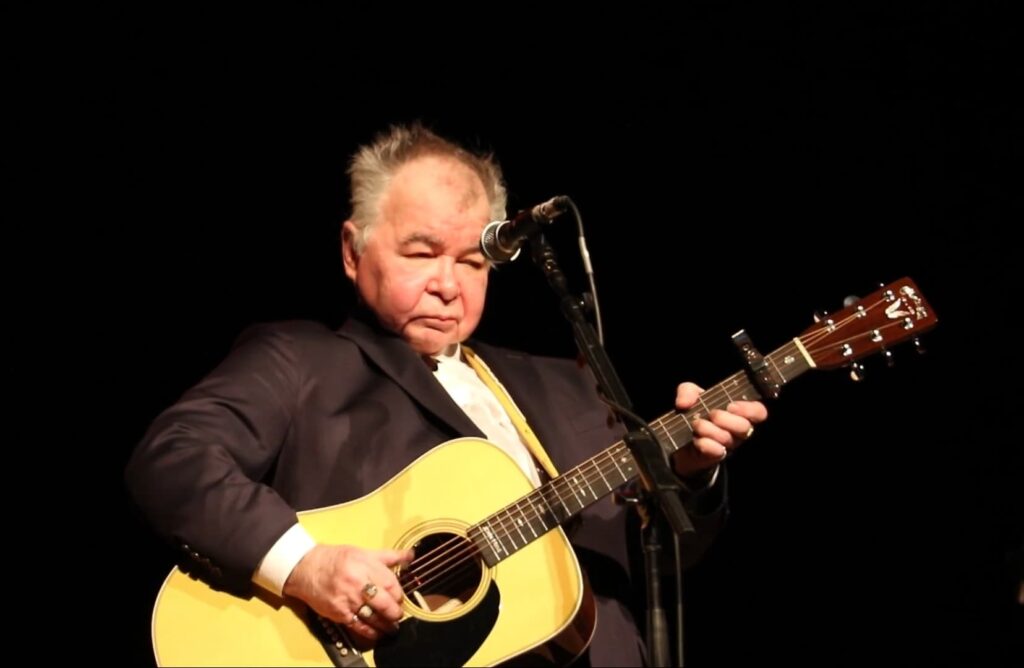
On May 12, 2017, inside the Convocation Hall at Mount Allison University, John Prine stood before an attentive audience and offered more than a performance. Before singing “Souvenirs,” he paused to dedicate the song to a circle of names that shaped his life and songwriting: Steve Goodman, Guy Clark, Leonard Cohen, and Merle Haggard. In that moment, the song shifted from memory into memorial.
Originally written in the early 1970s and closely associated with his longtime friend Steve Goodman, “Souvenirs” has always carried the feeling of looking back. But in this performance, the weight of time is unmistakable. Prine’s voice, worn yet steady, carries each line with a quiet acceptance. These are not just memories anymore. They are absences.
The lyrics themselves are deceptively simple. They speak of photographs, moments, and the small fragments people leave behind. Yet when Prine sings them here, they feel heavier. Each word seems to hold a face, a conversation, a shared road that no longer continues. The mention of Goodman, Clark, Cohen, and Haggard is not ceremonial. It is personal. These were not distant influences. They were companions in the long journey of American songwriting.
What defines the performance is its restraint. There is no attempt to turn grief into spectacle. Prine does not linger on the losses. He lets the song carry them quietly. That approach has always been central to his artistry. He trusted the listener to feel what was not explicitly said.
For those in the room, and for those who have followed John Prine across decades, the moment carries an added layer of meaning. By 2017, he himself had become one of the last remaining voices of a particular generation. A storyteller still standing, singing for those who no longer could.
“Souvenirs” ends without resolution, just as it always has. Memories remain, but they do not answer back. And yet, there is something comforting in that. The act of remembering becomes its own form of presence.
Looking back, this performance feels like a quiet gathering. Not of an audience alone, but of voices carried forward through one man and one song. And in that space, John Prine does what he always did best. He makes absence feel human, and memory feel alive.