
A Songwriter Who Fought His Way In, Then Told the Truth No One Else Would
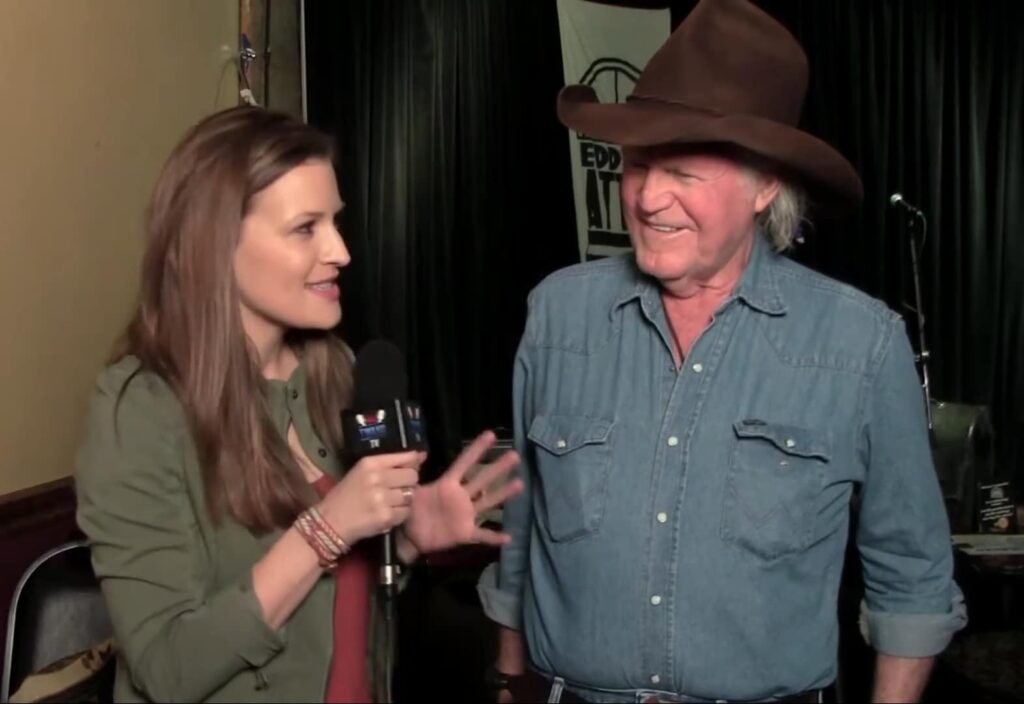
In an episode of All Twang TV, filmed at the intimate Eddie’s Attic in Decatur, Georgia, Billy Joe Shaver sits down with interviewer Greer Howard and reminds us why his name still carries weight in the deepest corners of country music. By the time of this conversation, Shaver had already spent more than four decades shaping what would come to be known as outlaw country, though he himself gently reframes it. Not outlaw, he suggests, but outcast. It is a distinction that reveals everything about the man. He never set out to rebel. He simply never fit anywhere else.
Born into hardship and raised during the Depression by his grandmother in Texas, Billy Joe Shaver began writing early, not as a career move, but as a necessity. Poems, songs, fragments of feeling. Whatever he could put down to make sense of the world around him. Those beginnings were not glamorous. Selling newspapers on street corners, scraping together a living, learning life the hard way. And yet, in those early struggles, you can already hear the voice that would later define his songwriting. Plainspoken, direct, and unafraid of the truth.
The turning point, as he recounts with a kind of rough-edged humor, came through his connection with Waylon Jennings. Their first real collaboration did not begin with admiration, but confrontation. Shaver chasing a promise, Jennings trying to avoid it. The story unfolds almost like folklore. A crumpled hundred-dollar bill offered as a dismissal. Shaver refusing it, demanding to be heard. And then, in a small room, one song leading to another until Jennings finally recognized what stood in front of him. The result was the landmark album “Honky Tonk Heroes”, built largely from Shaver’s songs, a record that helped redefine country music in the 1970s.
Yet what makes this interview resonate is not just the history. It is the philosophy that has remained unchanged. Billy Joe Shaver speaks about country music with a clarity that feels increasingly rare. To him, it is meant to be simple. Honest. Unpolished. He contrasts it with what he hears in modern country, suggesting that somewhere along the way, the music drifted from its foundation. Not with bitterness, but with the quiet conviction of someone who knows where it began.
His approach to songwriting is equally revealing. He describes it as a form of therapy, the cheapest kind, as he puts it. Songs arrive in their own time. Sometimes in minutes, sometimes over years. But when they come, they are written as if addressed to someone he loves. Nothing hidden. Nothing softened.
And when he takes the stage to perform “I Been to Georgia on a Fast Train”, the room comes alive in a different way. The years fall away, replaced by rhythm, grit, and that unmistakable sense of motion that has always defined his music. It is not just a performance. It is a continuation of a life lived without compromise.
In the end, Billy Joe Shaver does not present himself as a legend. He presents himself as a man who wrote what he felt, stood his ground when it mattered, and trusted that the truth, told plainly, would find its way to those who needed to hear it.