
Harmony Against the Times: How The Everly Brothers Held On While the World Moved On
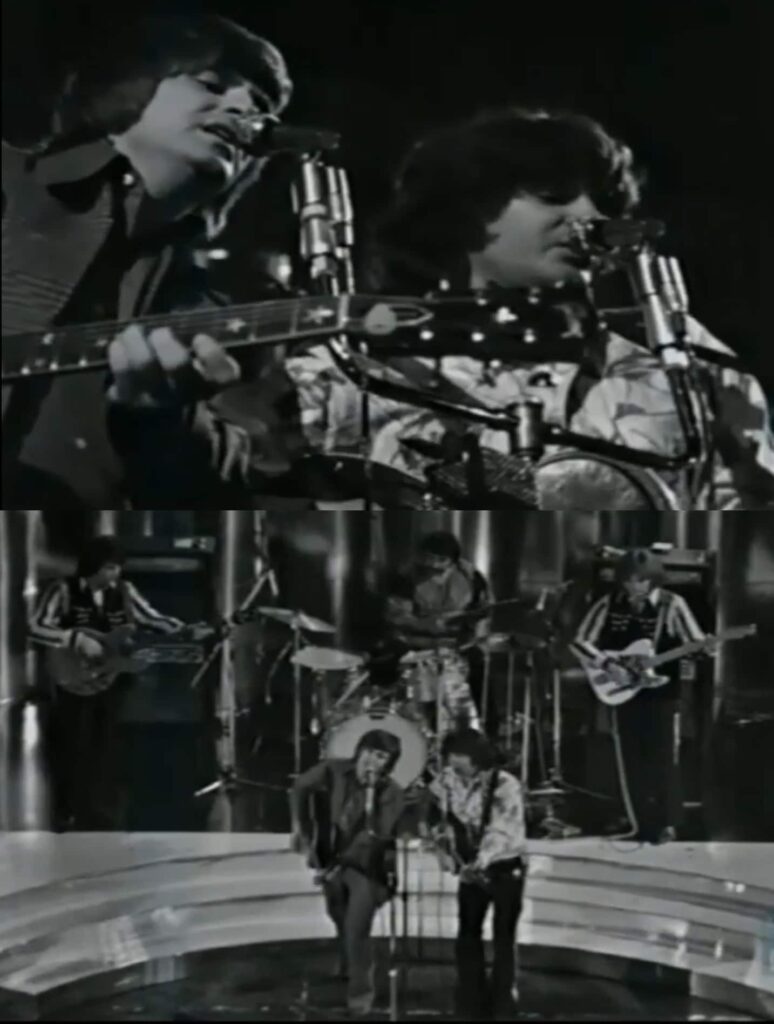
On August 20, 1971, during an Australian television appearance, The Everly Brothers delivered a performance that felt less like a comeback and more like quiet persistence. Opening with “Bowling Green,” then moving through a set that included “Wake Up Little Susie,” “All I Have to Do Is Dream,” and “Bye Bye Love,” the duo revisited the songs that had once defined a generation. But this was no simple exercise in nostalgia. It was something more revealing.
By 1971, the musical landscape had changed dramatically. The rise of rock bands, protest music, and shifting cultural attitudes had pushed early pioneers like the Everlys into a different space. And yet, standing on that stage, Don Everly and Phil Everly did not attempt to compete with those changes. They simply remained themselves.
Their harmonies, still remarkably precise, carried the same emotional clarity that had made them influential in the first place. When they performed “Wake Up Little Susie,” a song once considered controversial, there was a subtle awareness in the delivery. Time had softened its edge, but not its charm. The audience responded with recognition rather than surprise, as if reconnecting with something long familiar.
Between songs, the interviews added another layer to the evening. Phil Everly spoke candidly about responsibility, fame, and the role of an artist in society. There was no posturing, no attempt to align with prevailing trends. His reflections suggested a grounded perspective, one rooted in personal accountability rather than public performance. It revealed an artist aware of change, yet unwilling to chase it.
Musically, the set moved fluidly between styles. A rendition of “Honky Tonk Women,” originally by The Rolling Stones, showed their ability to adapt without losing identity. Meanwhile, songs like “Let It Be Me” brought the focus back to their signature strength: harmony that feels effortless, almost inevitable.
What makes this performance significant is not any single song, but the continuity it represents. In an era defined by reinvention, the Everly Brothers offered consistency. They did not reinvent their sound to fit the moment. They trusted that their music still had a place.
Looking back, this 1971 appearance stands as a document of endurance. It captures two artists navigating change not by resisting it, but by standing firmly within what they knew to be true.
And that is why it resonates. Because sometimes, longevity in music is not about evolution or reinvention. It is about holding on to a voice so distinct that time itself learns to make room for it.