
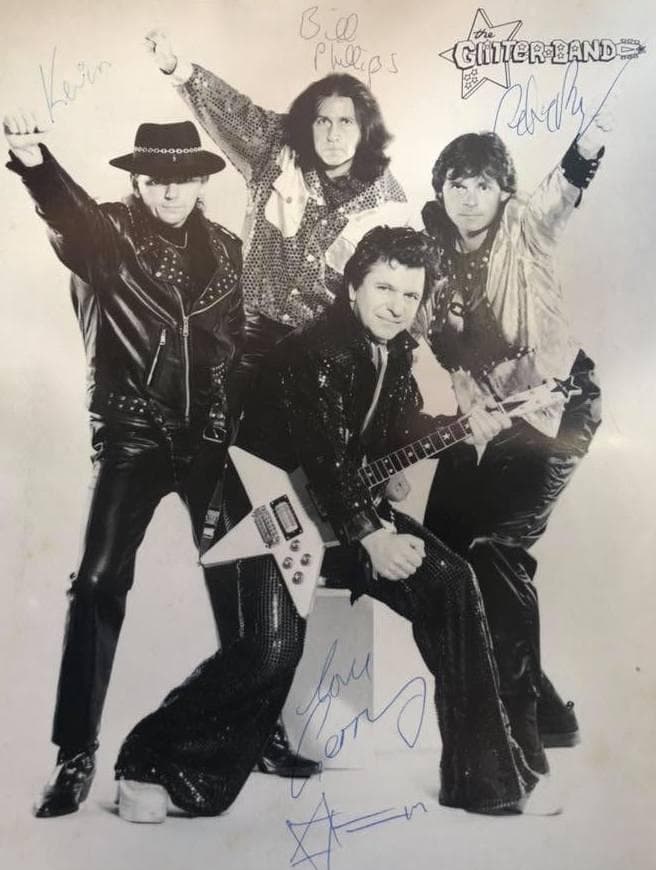
A Glam Rock Farewell Wrapped In Heartbreak And Memory
When The Glitter Band released “Tell Him” in 1974, the song arrived like a bittersweet echo from the fading glow of the glam rock era — full of longing, vulnerability, and the kind of emotional honesty that often hides beneath bright melodies and pounding drums.
There is something deeply touching about “Tell Him” because it reveals another side of The Glitter Band that many casual listeners sometimes overlook. While the group became famous for thunderous stomp beats, glitter-covered stage energy, and the explosive spirit of early-1970s British glam rock, this song carried a quieter ache beneath its polished surface. It was not simply a dance-floor anthem or a rebellious youth record. It was a song about regret, emotional distance, and the painful realization that love can slip away before pride allows someone to speak honestly.
The Glitter Band first emerged from the enormous success surrounding Gary Glitter’s backing group before eventually establishing their own identity. By the mid-1970s, they had already scored major UK hits including “Angel Face”, “Just For You”, and “Let’s Get Together Again.” Yet “Tell Him” stood apart because it leaned more heavily into emotional storytelling rather than pure glam spectacle.
Released as a single in 1974, “Tell Him” became another successful chart entry for the band in the United Kingdom, reaching the Top 40 of the UK Singles Chart, peaking around No. 25. At a time when glam rock was beginning to soften and audiences were slowly drifting toward more polished pop and melodic rock sounds, the song captured a transition period in British music. The heavy stomping drums remained, but the emotional center felt more mature, almost weary — as though the glitter itself had begun to fade under real human emotion.
Musically, the track still carried the unmistakable rhythmic stamp of The Glitter Band. Those pounding tribal-style drums, layered harmonies, and singalong choruses remained intact. But unlike many glam records built around swagger and celebration, “Tell Him” sounded vulnerable. The narrator does not demand love back. Instead, he pleads through distance, asking someone else to deliver the message he himself cannot fully say. That emotional hesitation becomes the song’s real heartbeat.
There is a timeless sadness hidden inside the lyrics. The phrase “tell him” or “tell her” in popular music often suggests emotional separation — people unable to communicate directly, trapped by pride, fear, or lost opportunity. In this song, that silence feels painfully human. The narrator seems to stand outside the relationship already, almost watching it disappear while still hoping some fragment of feeling might survive.
For listeners who lived through the 1970s, songs like this often carry memories far beyond the music itself. They recall radio evenings, dance halls, dimly lit pubs, old record sleeves, and the strange emotional contradictions of youth — when life felt endless, yet heartbreak somehow felt permanent. That is one reason “Tell Him” continues to resonate decades later. Beneath the glam production lies something fragile and familiar.
Another fascinating aspect of the song is how it reflects the changing emotional tone of British pop music during the mid-1970s. Earlier glam hits were often larger-than-life, theatrical, and rebellious. But by 1974, audiences increasingly responded to songs with more emotional realism. Bands that survived the transition were often the ones willing to show vulnerability alongside style. The Glitter Band managed that balance remarkably well here.
Although the group would never quite regain the enormous cultural momentum of glam rock’s peak years, their catalog remains an important chapter in British pop history. Too often, discussions about glam rock focus only on outrageous fashion, platform boots, or tabloid personalities. Yet many songs from that era carried genuine emotional craftsmanship. “Tell Him” is a perfect example. Behind the stomping beat and catchy chorus lives a deeply melancholy song about communication, regret, and emotional distance.
Today, revisiting “Tell Him” feels almost like opening an old photograph album. The sound instantly transports listeners back to a very particular musical age — one filled with transistor radios, vinyl singles, television variety shows, and nights when songs seemed capable of carrying entire emotions that ordinary conversation never could. The production may belong to 1974, but the feeling inside the song belongs to every generation that has ever struggled to say what truly mattered before it became too late.
That lingering emotional truth is ultimately why “Tell Him” still matters. Not because it was the biggest hit of its era, nor because it changed music history overnight, but because it captured a deeply human moment hidden beneath the sparkle of glam rock. And sometimes, those are the songs that stay with people the longest.