
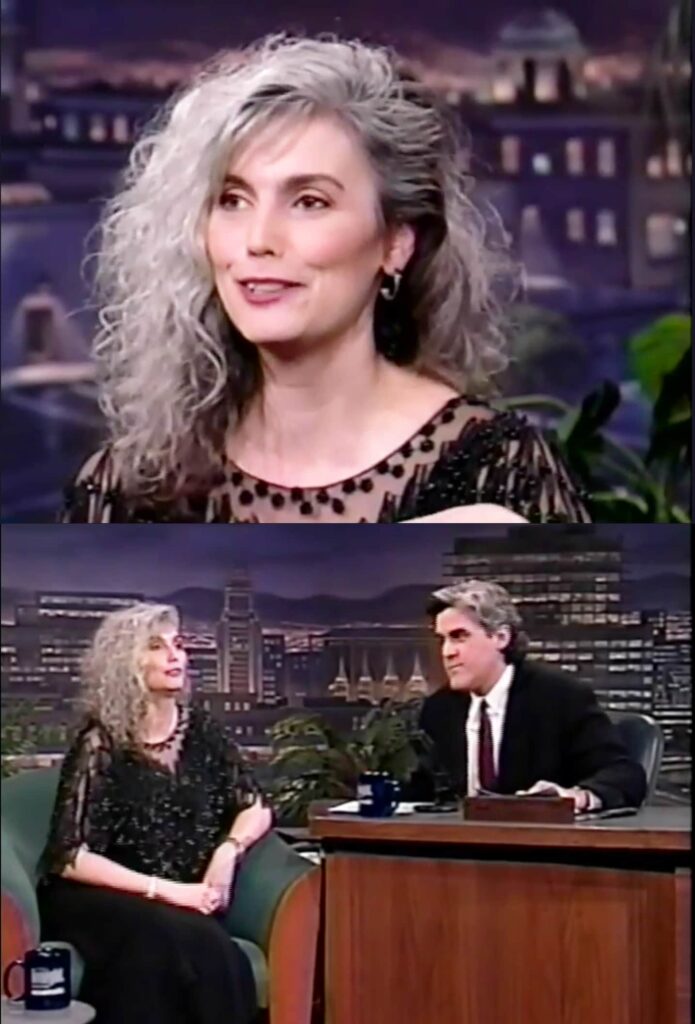
Emmylou Harris Turned A Late Night Television Performance Into A Quiet Testament Of Grace And Survival
In 1994, Emmylou Harris appeared on late night television to perform “Thanks to You” from her deeply reflective album Cowgirl’s Prayer. At first glance, the moment seemed simple. No giant production. No dramatic spectacle. Just Emmylou standing beneath soft studio lights beside pianist Kenny Kirkland, singing with the kind of emotional honesty that had already made her one of the most revered voices in American roots music.
But watching the performance today feels almost hauntingly intimate.
By the mid 1990s, Emmylou Harris was no longer the young singer audiences first discovered beside Gram Parsons in the early 1970s. She had already endured heartbreak, artistic reinvention, personal loss, and the constant uncertainty of the music business. Yet all of that life experience seemed to flow gently through her voice during “Thanks to You.”
The song itself carries the emotional warmth of gratitude mixed with quiet spiritual searching. Emmylou sings not with flashy power, but with tenderness and humility, almost as though she is speaking privately to someone she deeply trusts. Her phrasing drifts softly across the melody while the piano wraps around her voice like conversation between old friends.
For longtime listeners, performances like this explain why Emmylou Harris has always occupied a unique place in American music. She never sings merely to impress. She sings to reveal something human.
There was also something beautifully mature about the atmosphere that evening. In an era increasingly dominated by louder commercial country productions, Emmylou continued moving toward introspective songwriting and emotional subtlety. Cowgirl’s Prayer, released in 1993, reflected an artist growing older without losing curiosity or vulnerability. The record explored themes of longing, faith, loneliness, redemption, and emotional endurance with remarkable grace.
And on television that night, those themes felt entirely real.
Her voice carried the weathered softness of someone who had truly lived every word. Older audiences especially could recognize that quality instantly because it cannot be manufactured. It only arrives through time, heartbreak, resilience, and self-awareness.
Yet the interview following the performance revealed another side of Emmylou Harris entirely: her humor and quiet resilience as a touring musician.
When the host mentioned difficult winter travel conditions, Emmylou casually launched into one of the most charming road stories imaginable. She recalled a brutal twenty five hour journey from Los Angeles to Cork, Ireland involving multiple flights, endless delays, a bus ride across the countryside, and eventually the horrifying discovery that all of the band’s equipment had been stranded back in New York.
For many artists, it could have become a disaster.
Instead, Emmylou told the story with laughter and affection, almost like an old traveler remembering one more absurd chapter from life on the road. Local musicians opened a music shop for the band, allowing them to rent replacement instruments. But there was still one major problem: they desperately needed a pedal steel guitar.
What followed sounded almost like a scene from an old folk movie.
Her road manager stood outside a soccer stadium searching through crowds of departing fans for the one man in Cork who owned a pedal steel guitar. Eventually they found him, and he graciously loaned the instrument for the concert. Emmylou laughed while describing how the homemade steel guitar even had spark plugs serving as tuners.
“But it worked,” she smiled.
That tiny sentence captured the spirit of musicians from her generation perfectly. Before luxury tours and corporate perfection, live music often depended on improvisation, kindness, and determination. Artists survived through community and sheer love of performing.
Looking back now, the entire appearance feels like a beautiful snapshot of who Emmylou Harris truly is.
A singer capable of extraordinary emotional depth. A storyteller shaped by endless highways and hard-earned wisdom. A woman who could sing about spiritual longing one moment and laugh about broken tour equipment the next.
Most importantly, she carried herself with authenticity.
Nothing about Emmylou Harris has ever felt artificial. Whether discussing grief, faith, failed marriages, country harmony singing, or homemade pedal steel guitars in Ireland, she always sounds unmistakably human.
And perhaps that is why performances like “Thanks to You” continue to resonate decades later.
They remind listeners that sometimes the most powerful artists are not the loudest voices in the room. Sometimes they are simply the truest.