
Before Life’s Cruelest Tragedies Arrived, Roy Orbison Stood on a London Stage and Sang as if the World Belonged to Him
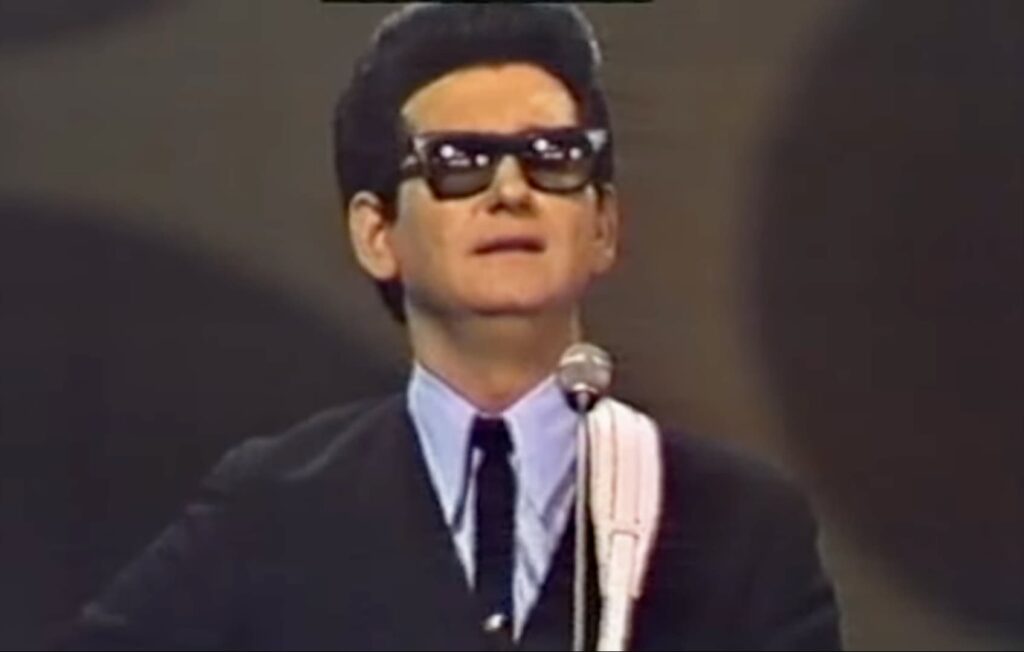
In 1966, Roy Orbison stepped onto the stage of London’s famous Palladium Theatre and delivered a performance that today feels frozen in time. Captured in a rare color recording, the appearance featured unforgettable renditions of “Oh, Pretty Woman,” “In Dreams,” “Twinkle Toes,” and “It’s Over.” At the time, neither ITV nor the BBC had begun regular color broadcasting, making the footage a remarkable historical document. What was originally filmed as a technical color test has since become one of the most moving visual records of Orbison at the height of his powers.
The show opened with an enthusiastic introduction, describing Orbison as one of America’s most beloved chart stars. Moments later, the unmistakable opening lines of “Oh, Pretty Woman” filled the theater. Dressed in his trademark dark suit and sunglasses, Orbison appeared calm, confident, and completely in command. The audience witnessed a performer who had already conquered both sides of the Atlantic with a voice capable of combining rock and roll energy with operatic emotion.
What makes this performance especially fascinating is the contrast between the songs themselves. “Oh, Pretty Woman” showcased Orbison’s ability to create excitement and drama, while “In Dreams” revealed the vulnerable, dreamlike side of his artistry. As he sang about a world where love survives only in sleep, the audience sat captivated by a voice that seemed capable of turning heartbreak into something beautiful.
The performance also offered a glimpse of Orbison’s newer material. “Twinkle Toes,” released in 1966, brought a lighter and more playful atmosphere to the stage. Backed by an energetic band, Orbison demonstrated that he was more than the melancholy balladeer many remembered. He could shift effortlessly between emotional storytelling and upbeat pop without losing his distinctive identity.
The set concluded with “It’s Over,” one of the most dramatic songs in Orbison’s catalog. His soaring vocal delivery transformed the song into a powerful farewell, filling the theater with emotion. Even decades later, the performance remains a masterclass in vocal control and emotional expression.
Viewed today, however, the London Palladium appearance carries an even deeper significance. When these cameras rolled in 1966, Claudette Orbison, Roy’s beloved wife, was still alive. His family was still intact. The unimaginable tragedies that would later define much of his personal life had not yet occurred. Just two years later, Claudette would be killed in a motorcycle accident. In 1968, two of his sons would perish in a devastating house fire while Orbison was away on tour.
Knowing what lay ahead changes the way modern audiences experience this footage. They are not simply watching a legendary singer perform a series of hits. They are witnessing Roy Orbison during one of the last chapters of an unbroken life, before grief reshaped his world forever.
Perhaps that is why the recording continues to resonate so strongly. Beyond the historic songs, beyond the rare color footage, there is something profoundly human in seeing Orbison standing beneath the bright stage lights, smiling between performances and thanking the crowd. For a brief evening in London, the future remained unwritten. The losses were still unknown. The sorrow had not yet arrived.
And there he stood, singing with all the confidence, grace, and wonder of a man who believed tomorrow would look very much like today.