
The Night Gene Vincent Brought Raw Rockabilly Energy to America’s Living Rooms
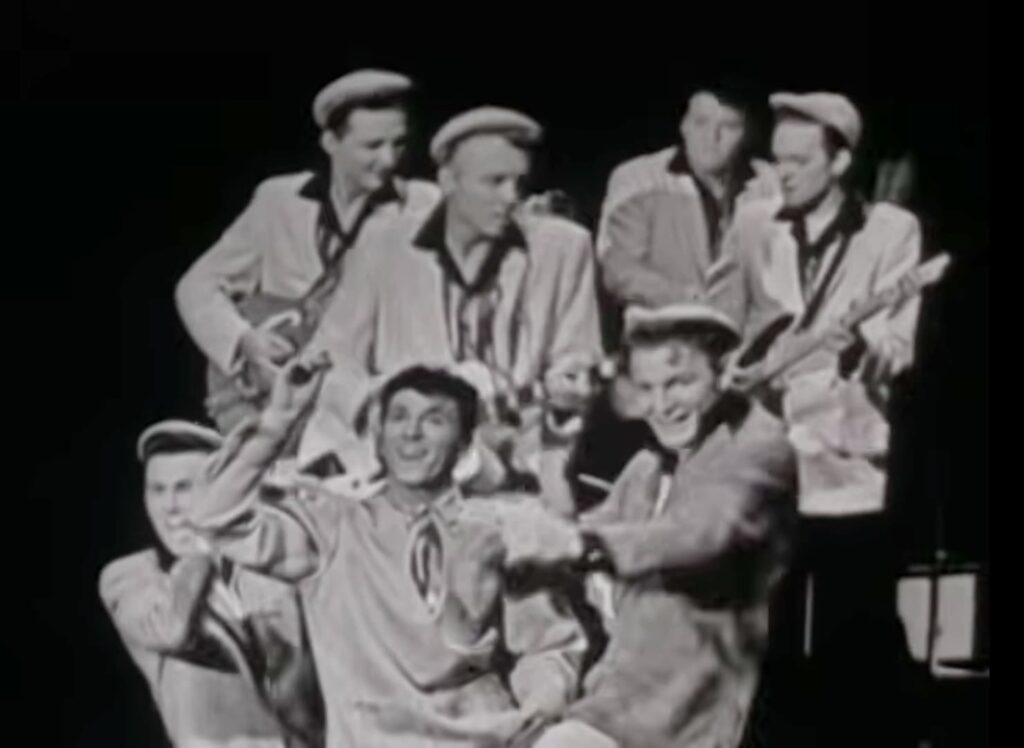
On November 17, 1957, Gene Vincent & His Blue Caps stepped onto the stage of The Ed Sullivan Show and delivered a performance that captured the restless spirit of a new generation. Their explosive rendition of “Dance To The Bop” lasted only a few minutes, yet it perfectly showcased why Vincent had become one of the most exciting figures in the early days of rock and roll.
Released during a period when rock music was rapidly transforming popular culture, “Dance To The Bop” was not a song built around heartbreak, nostalgia, or elaborate storytelling. Instead, it was a celebration of youth, movement, and the irresistible urge to dance. From the opening line about a little juke joint on the edge of town, listeners were transported into a world where the week’s worries disappeared the moment the music started playing.
The performance on The Ed Sullivan Show arrived at a crucial moment in American music history. Television had become the most powerful way for artists to reach audiences, and a national appearance could introduce a performer to millions overnight. While many viewers already knew the smooth charm of other rock and roll stars, Gene Vincent offered something different. There was an edge to his voice, a rawness in his delivery, and an untamed energy that felt closer to the spirit of the dance halls and roadside clubs where rockabilly had first taken root.
As Vincent sang about couples gathering to dance and have a good time, the song moved with relentless momentum. The repeated chorus, urging everyone to “dance a little bit to the bop,” felt less like a lyric and more like an invitation. The rhythm pushed forward without pause, driven by the unmistakable blend of rockabilly guitar, pounding beats, and youthful enthusiasm that defined the era.
Watching the performance today is like opening a window into late-1950s America. The music feels spontaneous and alive. There are no elaborate stage effects, no giant video screens, and no carefully choreographed spectacle. The excitement comes entirely from the musicians and the song itself. That simplicity is part of what makes the performance so enduring. It reminds viewers of a time when a singer, a band, and a great song were enough to electrify a room.
For many fans, Gene Vincent remains one of rock and roll’s most underrated pioneers. While artists such as Elvis Presley often dominated headlines, Vincent helped shape the sound and attitude that influenced countless musicians who followed. Songs like “Be-Bop-A-Lula” established his reputation, but performances such as “Dance To The Bop” revealed his remarkable ability to transform a television studio into something that felt much closer to a Saturday-night dance party.
Nearly seven decades later, the excitement of that November evening has lost none of its spark. The audience cheers, the band drives forward, and Vincent attacks every line with conviction. It is more than a vintage television clip. It is a snapshot of a moment when rock and roll was still young, unpredictable, and full of possibility.
Long after the cameras stopped rolling, “Dance To The Bop” remains a joyful reminder of an era when music invited people to forget their troubles, get out on the dance floor, and simply enjoy the thrill of the beat.