
At 70, Guy Clark Was No Longer Singing About the Old Man. He Had Become Him.
There are performances that preserve a great song, and there are performances that completely transform its meaning. Guy Clark’s rendition of “Desperadoes Waiting for a Train” during his 70th Birthday Concert at Austin’s Long Center on November 2, 2011 belongs firmly in the second category. Written nearly four decades earlier, the song had once been a remembrance of childhood. By the time Clark stood before the audience to sing it at age 70, it had quietly become a reflection of his own life.
Originally inspired by Jack Prigg, a retired oil field worker who befriended Clark when he was a boy, “Desperadoes Waiting for a Train” has long been regarded as the songwriter’s most autobiographical work. Prigg was not a relative, but he became a mentor who introduced young Guy to hard work, storytelling, dignity, and the quiet wisdom that comes with age. When Clark wrote the song in the early 1970s, he was looking backward through the eyes of the child he had once been.
That perspective had changed forever by 2011.
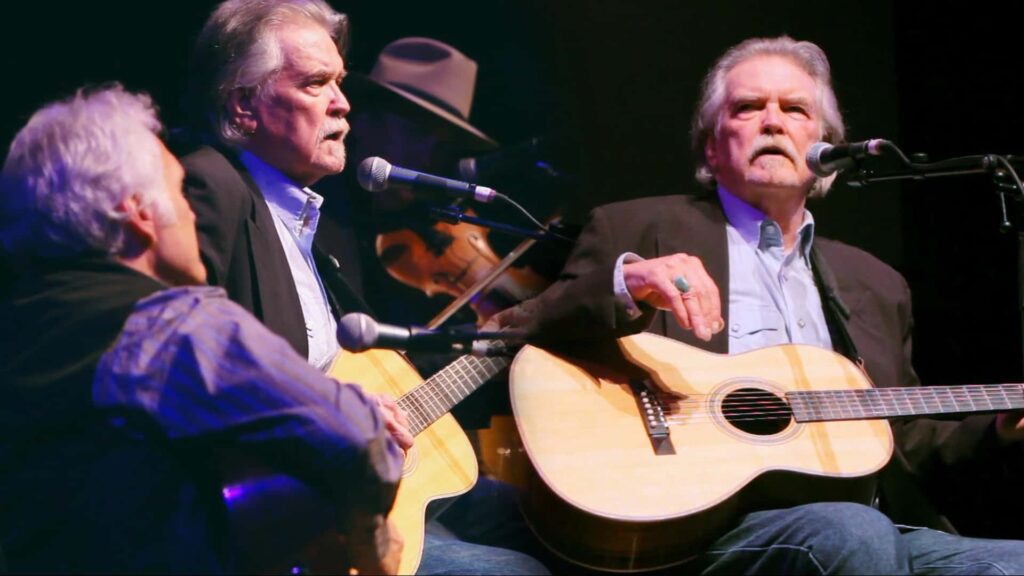
Standing onstage during a concert celebrating his seventieth birthday, Clark was no longer the curious boy watching an old friend grow older. He had become the aging man himself. Every verse carried the weight of lived experience, making the performance feel less like entertainment than a conversation with time itself.
The song’s unforgettable closing line, “Like desperadoes waiting for a train,” has often been misunderstood. It is not about outlaws literally waiting beside railroad tracks. It is a gentle metaphor for people who have traveled almost the entire journey of life, fully aware that the final train will eventually arrive. Clark delivered those words without sorrow or fear. There was acceptance in his voice, and perhaps even gratitude. After his passing in 2016, many listeners returned to this performance and discovered that the lyric now sounded almost prophetic.
The evening itself carried extraordinary historical significance. Clark’s birthday celebration gathered many of the finest songwriters and musicians from Texas and Nashville onto one stage. Looking back today, the concert has become more than a birthday tribute. It serves as a remarkable document of a generation whose voices shaped American songwriting. Several of the artists who shared that stage are no longer here, giving the performance an emotional resonance that has only deepened with time.
What made Clark such an extraordinary artist was what he refused to do. He never chased dramatic gestures or vocal showmanship. He did not overpower audiences with technique. Instead, he simply told stories. Listening to him perform “Desperadoes Waiting for a Train” feels like sitting on a front porch while an old friend recalls someone who changed his life forever. That understated honesty became the blueprint for countless songwriters who followed.
Perhaps the greatest achievement of “Desperadoes Waiting for a Train” is that it grows older alongside its listeners. Young audiences often identify with the curious boy. Later in life, they begin to understand the older man. Eventually, many realize they have quietly become the desperado waiting for the train themselves.
That is why this performance remains so powerful. It was not merely a celebration of Guy Clark’s seventieth birthday. It was the rare moment when a songwriter stepped inside his own masterpiece, proving that the greatest songs do not simply survive the passage of time. They become richer because of it.
Video:
