
A Young Guy Clark Sang About an Old Man in 1977. Today, “Desperados Waiting for a Train” Feels Like a Farewell to Them Both.
Some songs tell stories.
Some songs preserve memories.
And then there are songs like “Desperados Waiting for a Train,” where the line between memory, biography, friendship, and farewell becomes almost impossible to separate.
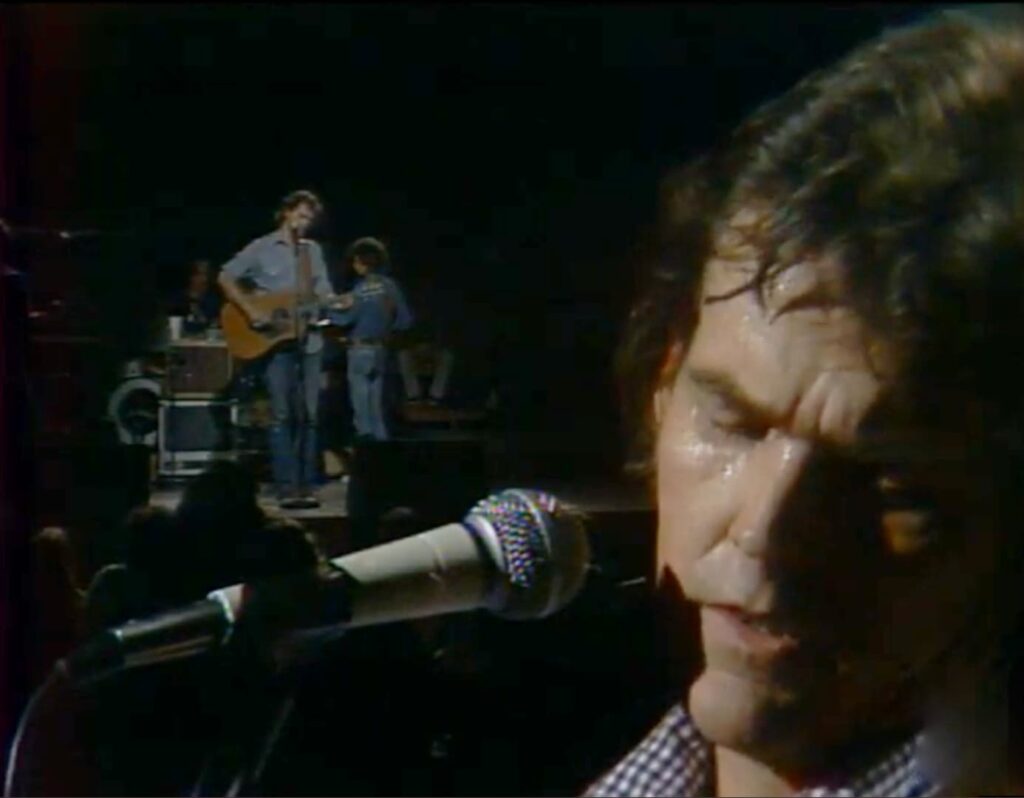
When Guy Clark stepped onto the stage of Austin City Limits in 1977, he was not performing a fictional tale crafted for dramatic effect. He was revisiting one of the most important relationships of his life.
The song was inspired by Jack Prigg, the colorful Texas oil-field worker who became the grandfather figure of Guy Clark’s childhood. Tough, stubborn, hard-drinking, and larger than life, Jack left a lasting impression on the young boy who would later become one of America’s greatest songwriters.
Clark often described the song as a tribute to Jack.
Listening today, it feels even deeper than that.
It feels like a living elegy.
One of the reasons this Austin City Limits performance remains so special is timing. In 1977, Clark was still at the beginning of his recording career. His landmark debut album, Old No. 1, had been released only a couple of years earlier. He was respected among songwriters, but the legendary reputation he enjoys today had not yet been fully established.
In many ways, this is Guy Clark before the world knew exactly who Guy Clark was.
That alone makes the footage remarkable.
Yet another layer of history quietly unfolds in the background.
Austin City Limits itself was still young.
The television program that would eventually become one of the most important showcases in American music history was only a few years into its journey. Looking back now, there is something almost magical about seeing two future institutions sharing the same stage before either had fully entered the cultural landscape.
A legendary songwriter.
A legendary television series.
Both still finding their footing.
What makes “Desperados Waiting for a Train” endure, however, is not its historical significance.
It is its humanity.
Many listeners initially assume the song is about aging. Others hear it as a meditation on mortality. Some view it as a portrait of a surrogate father and son.
The truth is that it somehow manages to be all of those things at once.
At its heart lies one of the most beloved lines in country songwriting:
“We’s friends, me and this old man.”
With those few words, Clark captures something rarely explored in popular music: a genuine friendship between two people separated by generations.
A boy and an old man.
One standing at the beginning of life.
The other approaching its final chapters.
The song never sentimentalizes their relationship. Instead, it honors the simple bond they shared, the conversations, the admiration, and the quiet understanding that developed between them.
Perhaps the most haunting aspect of this 1977 performance only became visible decades later.
When Clark sang the song that night, he was remembering Jack.
Today, many listeners find themselves thinking about Guy Clark himself.
After his passing in 2016, the perspective shifted in a way no one could have anticipated. The young songwriter who once sang about an aging mentor eventually became the elder statesman of Texas songwriting. The roles seemed to reverse.
Jack had once been the desperado waiting for a train.
Now Guy Clark occupies that place in the imagination of countless fans.
That unintended transformation gives the performance an emotional weight that grows stronger with every passing year.
There is another fascinating irony as well.
In 1977, Guy Clark was still younger than the man he was singing about.
He was writing about old age before he had experienced it himself.
He was composing a musical remembrance for another man’s life before history would one day write a similar remembrance for him.
That is why this performance remains so powerful.
It is not merely a song.
It is a conversation across generations.
A memory preserved in melody.
A portrait of friendship.
And now, nearly half a century later, it stands as a touching farewell to two men whose stories became forever intertwined.
When Guy Clark sang “Desperados Waiting for a Train” in 1977, he was remembering Jack Prigg.
When we hear it today, we remember them both.