
“They Said We’d Never Make It.” Shania Twain Turned Doubt Into One of Country Music’s Greatest Love Songs.
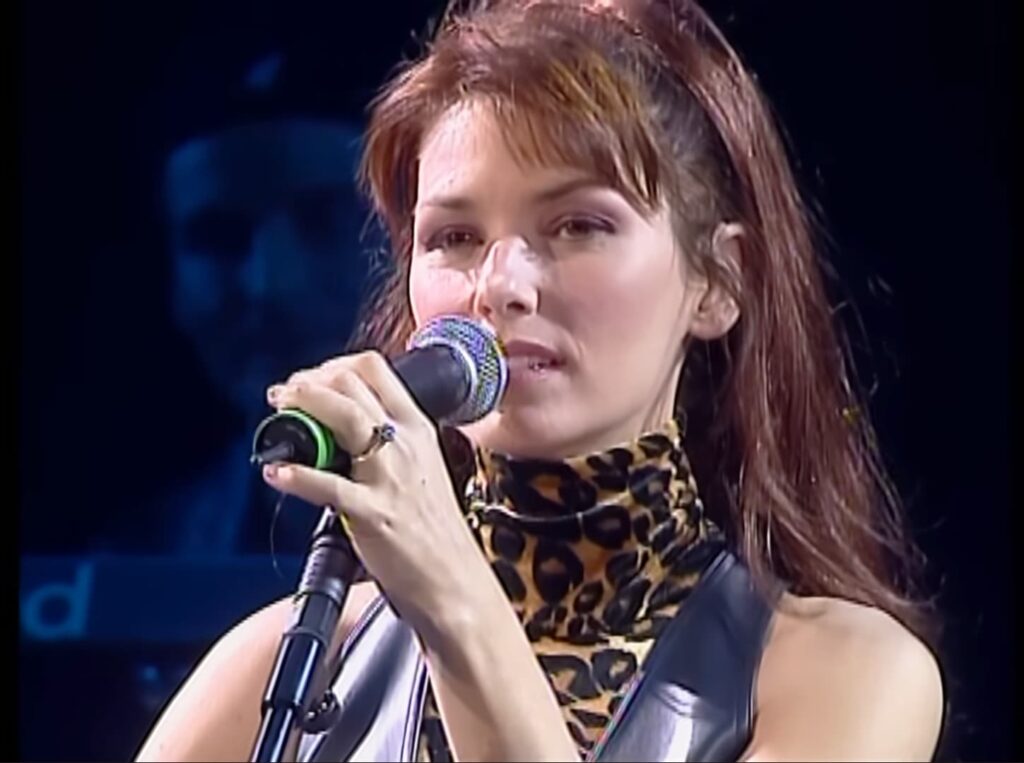
Before singing “You’re Still the One,” Shania Twain offered the audience a simple introduction: “The first song that I’m gonna do is a song that I wrote for my husband and I.” It was a brief remark, yet it revealed the deeply personal heart behind one of the defining love songs of the 1990s. Performed at a concert supporting the cause of human rights, the song became more than a chart-topping hit. It was a public celebration of a relationship that had overcome years of skepticism.
Released in 1998 from the landmark album Come On Over, “You’re Still the One” was co-written by Shania Twain and her husband and producer, Robert John “Mutt” Lange. At the time, many doubted their marriage would last. Twain was a rising Canadian country singer, while Lange was one of the music industry’s most successful producers. Their relationship attracted constant scrutiny, and critics openly questioned whether they could withstand the pressures of fame.
Instead of responding through interviews, Twain answered with a song.
The opening line, “Looks like we made it,” immediately sets the tone. This is not a fairy tale about effortless romance. It is a reflection on a love that survived outside expectations. The lyric, “They said, ‘I bet they’ll never make it,'” acknowledges the doubts directly, while the chorus quietly celebrates perseverance rather than triumph. The song never sounds defensive. It simply lets the years speak for themselves.
That honesty helped “You’re Still the One” become far more than a country hit. The single crossed over to pop audiences around the world, reaching No. 2 on the Billboard Hot 100 and winning two Grammy Awards, including Best Country Song and Best Female Country Vocal Performance. It remains one of the signature recordings from Come On Over, the best-selling studio album by a female artist in history.
During this live performance, Twain’s delivery feels especially sincere. There is little need for dramatic vocal flourishes because the strength of the song lies in its authenticity. She sings with warmth and gratitude, allowing the lyrics to carry the emotional weight. Surrounded by an audience gathered for a humanitarian cause, the performance also reminds listeners that songs about enduring love often resonate most deeply when they celebrate hope rather than heartbreak.
Looking back today, the song carries an added layer of complexity. Twain and Lange eventually divorced in 2010 after one of the most publicized personal chapters of her life. Knowing what followed has changed the way many listeners hear “You’re Still the One.” Yet rather than diminishing the song, that history highlights an important truth. A song captures a genuine moment in time, not necessarily an entire lifetime. When Twain wrote these lyrics, they reflected exactly what she believed and felt.
That honesty is why the recording continues to endure. Listeners do not return to “You’re Still the One” because they expect every love story to last forever. They return because they recognize the universal desire to find someone worth believing in despite the odds. The emotions remain real, even when life later takes an unexpected turn.
More than twenty-five years after its release, “You’re Still the One” stands as one of Shania Twain’s finest achievements. It transformed public doubt into quiet confidence, proving that the most powerful love songs are rarely about perfection. They are about choosing each other through uncertainty, celebrating the journey instead of the destination, and believing, if only for that precious moment, that love really can outlast the voices saying it never will.
 Oldies Songs