
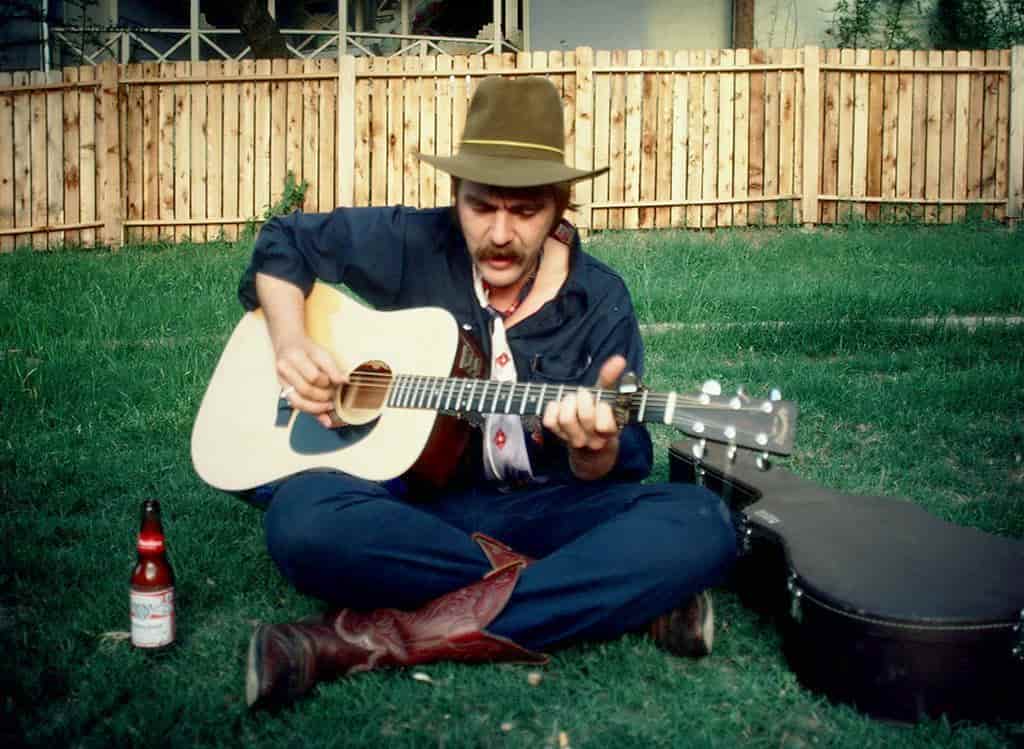
A Stark Folk Testament About Moral Reckoning and the Invisible Lives Left Behind
Few songs in the American folk canon confront social injustice with the unfiltered bluntness of “You’ll Get Yours Aplenty” by Blaze Foley. Written and performed far from the machinery of the commercial music industry, the song arrived without radio support, without a chart campaign, and without any presence on the Billboard charts at the time of its creation. It did not chart upon release, and that absence is itself part of its story. This was music made for truth, not for rankings. Yet decades later, its moral weight has proven heavier than many chart-topping records of its era.
Blaze Foley, born Michael David Fuller in 1949, belonged to the inner circle of the Texas outlaw country and folk movement. He was a contemporary and close friend of Townes Van Zandt, and like Van Zandt, he wrote songs that refused comfort. “You’ll Get Yours Aplenty” is one of his most confrontational compositions, a raw folk narrative that reads like a street sermon delivered without amplification. The song is included in the posthumous compilation The Dawg Years, released in 2011, which documents Foley’s songwriting during the late 1970s and early 1980s, the most fertile and troubled period of his life.
What makes “You’ll Get Yours Aplenty” endure is not melody or polish but moral clarity. The song unfolds as a series of stark urban images. Broken glass, winos in the street, children scavenging for coins, women trapped by exploitation, and lawmakers insulated from consequence. Foley does not romanticize poverty, nor does he sentimentalize suffering. His language is observational and accusatory. The repeated refrain, “One of these days you’ll get yours a-plenty”, functions as a warning rather than a promise. It suggests an inevitable reckoning, ethical rather than religious, rooted in human consequence.
The meaning of the song rests in its inversion of power. Foley speaks not to the victims of the system but to those who benefit from it. The line about lawmakers and high-rise diners is not metaphorical excess. It reflects Foley’s lived experience as a homeless musician who slept on couches, floors, and occasionally the streets. He saw firsthand how policy decisions translated into human ruin. This song is not protest folk in the tradition of slogans. It is closer to a ledger, a list of debts that society prefers not to acknowledge.
Musically, the song adheres to traditional folk structure. Simple chord progressions, an unadorned vocal delivery, and a cadence that feels closer to spoken testimony than performance. That restraint amplifies its impact. Foley understood that embellishment would dilute the message. The power lies in the words and in the weary conviction behind them.
The story behind the song is inseparable from Foley’s life. He never achieved commercial success while alive. He was shot and killed in 1989 in a violent dispute, dying at the age of 39. His recognition came later, championed by fellow musicians and preserved through archival releases like The Dawg Years. In retrospect, “You’ll Get Yours Aplenty” reads almost like a final statement of belief. A conviction that injustice may persist, but it does not vanish without consequence.
For listeners who have lived long enough to see cycles of hope and disappointment repeat, the song resonates deeply. It does not offer solutions. It offers memory and warning. It asks the listener to remember what was seen, what was ignored, and what remains unresolved. In that sense, Blaze Foley was not merely writing songs. He was documenting moral history.
Long after the charts have forgotten, “You’ll Get Yours Aplenty” continues to speak. Quietly. Relentlessly. With the patience of truth that knows time is on its side.
 Oldies Songs