
A Young Man’s Plea for Love, Set to the Bright Pulse of Early Rock and Roll
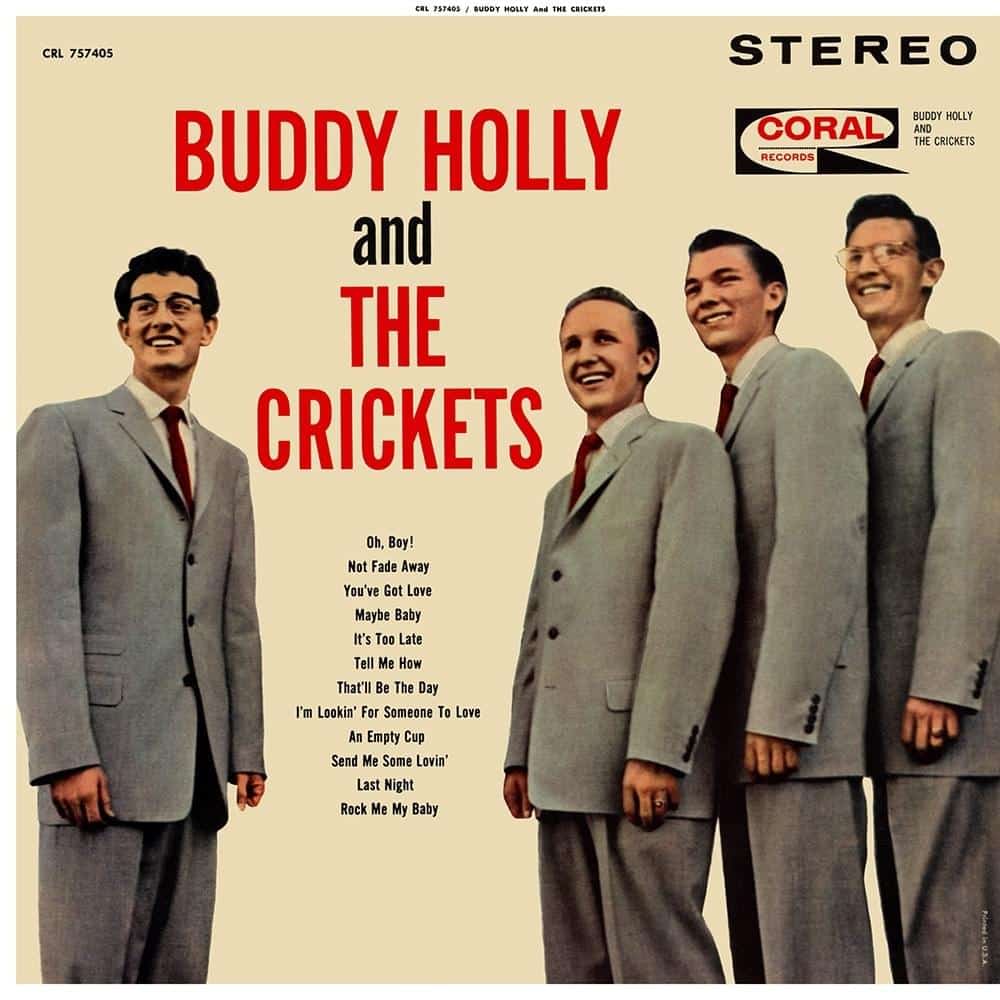
When Buddy Holly and The Crickets released “Tell Me How” in November 1957 on their landmark debut album The “Chirping” Crickets, rock and roll was still in its adolescence. The album itself climbed to No. 5 on the UK Albums Chart and became one of the most influential rock records of its era. Although “Tell Me How” was not issued as a standalone A-side, it gained further exposure in 1958 as the B-side to the hit single “Maybe Baby”, which reached No. 17 on the Billboard Top 100. In that context, “Tell Me How” stands as more than just an album track. It is a vital piece of the Holly songbook, co-written by Buddy Holly, Jerry Allison, and producer Norman Petty, and recorded in Clovis, New Mexico at Petty’s modest yet now-legendary studio.
Listening to “Tell Me How” today, one hears not simply a buoyant rock tune but the sound of a young songwriter refining the emotional vocabulary of popular music. The track carries the unmistakable Crickets rhythm, that tight, forward-driving beat shaped by Allison’s drumming and Joe B. Mauldin’s steady bass lines. Over it all floats Holly’s hiccuping vocal phrasing and crisp Fender Stratocaster tone, elements that would soon influence generations of musicians from The Beatles to countless garage bands who learned their craft from these grooves.
Lyrically, “Tell Me How” captures a theme that defined much of Holly’s early work: the vulnerability of a young man unsure of how to secure the affection he already feels slipping through his fingers. The opening line, “Tell me how to keep your love,” is at once simple and disarmingly honest. There is no bravado here, no swagger typical of some contemporaries. Instead, Holly offers earnest longing. He does not command love. He asks how to preserve it. That distinction matters. In the late 1950s, when rock and roll was often associated with rebellion, Holly brought introspection.
The song’s structure reflects the efficient craftsmanship of the era. Built around a classic 12-bar progression with subtle melodic shifts, it wastes no time. The verses move briskly, the chorus repeats with insistence, and the bridge offers a brief emotional pivot. “If you would say to me today the time for love is now…” Those lines reveal a deeper undercurrent. Beneath the cheerful tempo lies anxiety about timing, about missed chances, about whether devotion can be reciprocated in equal measure.
It is worth remembering that by late 1957, Holly had already endured early career setbacks. Before forming The Crickets, he struggled with record label disagreements and production conflicts. His partnership with Norman Petty in Clovis allowed him greater creative autonomy, which is evident in songs like “Tell Me How.” Unlike the more polished productions emerging from larger studios in New York or Los Angeles, these recordings retain a directness and clarity. You can almost hear the room. That intimacy contributes to the song’s enduring charm.
Within the broader narrative of Holly’s brief but transformative career, “Tell Me How” may not command the same cultural spotlight as “That’ll Be the Day” or “Peggy Sue,” yet it reveals the consistency of his songwriting voice. He specialized in articulating uncertainty without surrendering hope. Even as he questions how to “keep your love within your heart from me,” the melody remains buoyant. It is the sound of optimism wrestling gently with doubt.
In retrospect, knowing that Buddy Holly’s life would be tragically cut short in February 1959, songs like “Tell Me How” carry added poignancy. They preserve the voice of a young artist who was still experimenting, still learning how to frame emotional complexity within the compact form of a rock single. The innocence is real, but so is the craftsmanship.
For those who remember the first stirrings of rock and roll, “Tell Me How” feels like a window into a simpler yet deeply sincere era. Its modest chart association as a B-side does not diminish its significance. Instead, it underscores how even the so-called secondary tracks of Holly’s catalog were built with care, melody, and emotional truth. The song endures because it captures something timeless: the fragile uncertainty that accompanies genuine love. In less than two and a half minutes, Buddy Holly managed to make that uncertainty sing.
 Oldies Songs