
A man confronts the quiet ruin he left behind, where love turns into regret and memory refuses to fade
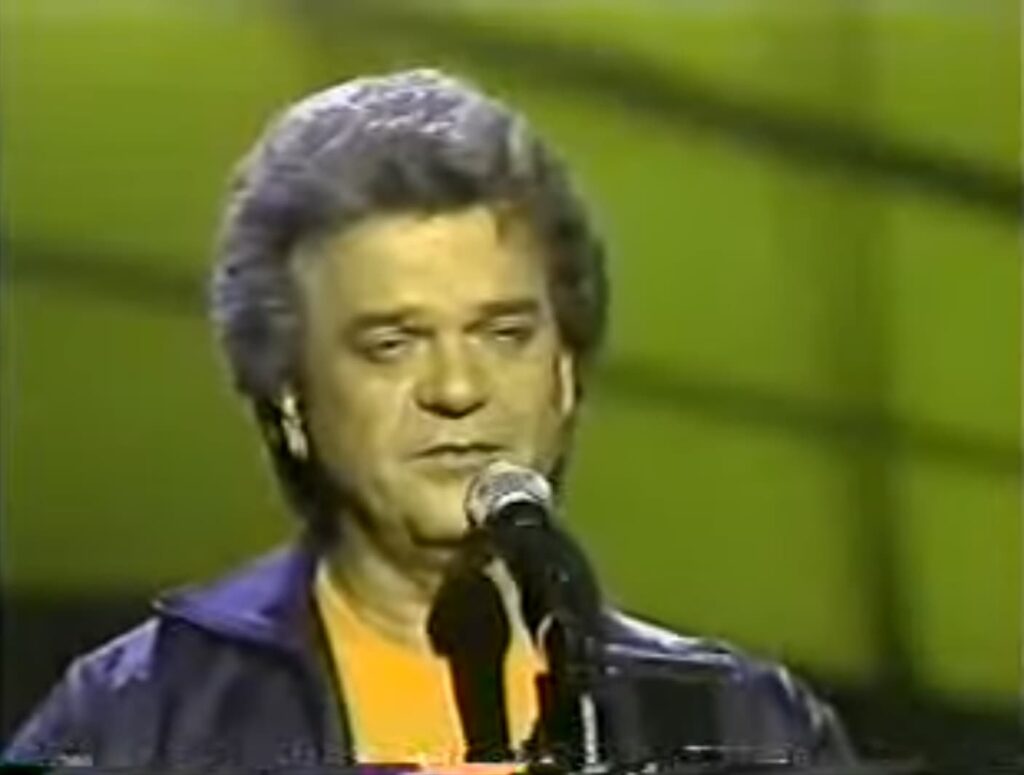
In mid-1987, Conway Twitty returned to one of the songs that first defined his place in country music, performing “The Image Of Me”, a composition by Wayne Kemp that had given him his first major hit back in 1968. By then, Twitty was no longer the rising voice of heartbreak, but a seasoned storyteller carrying decades of emotional weight into every line he sang.
The performance is striking in its restraint. There is no theatrical flourish, no attempt to modernize the arrangement. Instead, Conway Twitty leans into the song’s original sorrow, allowing the lyrics to unfold with a quiet, almost confessional tone. The narrative remains as devastating as ever: a man watching the woman he once loved lose herself, fully aware that he is the cause.
What sets this 1987 rendition apart is the passage of time etched into Twitty’s voice. When he reaches the line about shame and responsibility, it no longer feels like a young man’s regret, but something deeper, more permanent. The phrasing slows, the pauses linger, and the emotion settles into the spaces between words.
Originally released during a period when Twitty was transitioning from rock and roll into country, “The Image Of Me” marked a turning point in his artistic identity. By revisiting it nearly two decades later, he transforms the song from a story into a reflection. The character is no longer distant. It feels lived in.
The audience response, heard in the closing applause, carries a sense of recognition rather than surprise. This is not just nostalgia. It is acknowledgment of a truth that has only grown heavier with time.
In that brief performance, Conway Twitty does not simply revisit a hit. He reclaims it, reshapes it, and reminds listeners that some songs do not age. They deepen.