
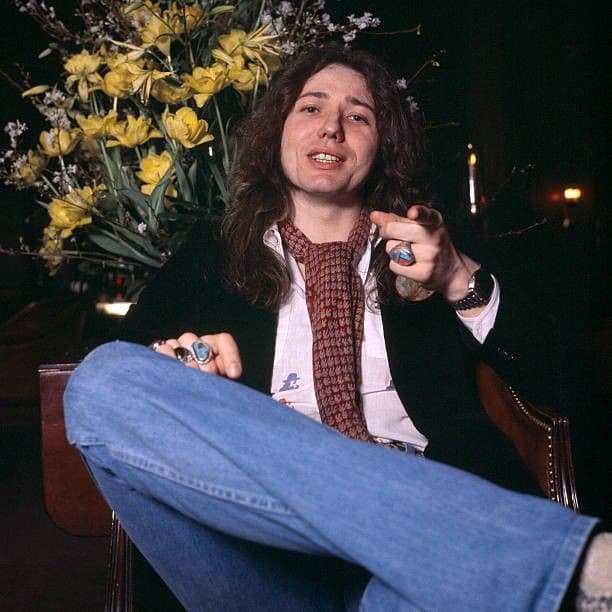
A Haunting Lament of Yearning and Liberation
“The Last Note of Freedom” by David Coverdale is more than just a rock ballad—it is a deeply emotional anthem of hope, resistance, and the unyielding desire for love and freedom.
In the world of rock music, this song occupies a modest but emotionally rich place. Released on 24 September 1990, it was part of the soundtrack for the Hollywood film Days of Thunder. When it entered the UK Singles Chart, it peaked at number 78, lingering for two weeks.
The Story Behind the Song
There is a poignant backstory woven into the very fabric of “The Last Note of Freedom.” The singer himself, David Coverdale, is best known as the frontman of Whitesnake and formerly of Deep Purple, but this track stands out as one of his few solo forays at that time.
What makes it even more special is the artistic team behind it. The music was composed by Hans Zimmer, an iconic film composer, and the lyrics were written by none other than Billy Idol, giving the song a cinematic weight that befits its source in a major motion picture. It was produced by Trevor Horn, adding a lush, atmospheric polish to the final sound.
One charming anecdote: Tom Cruise, star of Days of Thunder, personally requested Coverdale to record this song. At the time, Coverdale was in the midst of touring with Whitesnake for the Slip of the Tongue album. Yet he found a moment, while on tour in Los Angeles, to step aside and record this piece when his schedule permitted.
The B‑side of the single is interesting, too: it features “Gimme Some Lovin’” performed by Terry Reid, rather than the original Spencer Davis Group version used in the movie.
The Meaning & Emotional Resonance
At its heart, “The Last Note of Freedom” is a stirring meditation on longing, struggle, and redemption. Listeners often interpret the song as a call to transcend pain, to refuse a world where love is “beaten” and oppressed.
The lyrics conjure the image of a “burning man,” someone whose soul sings freely despite the cost—a powerful metaphor for sacrifice, burning passion, and unbreakable spirit. The title itself is symbolic: the “last note” suggests a final, climactic moment—when freedom rings out, cathartic and transformative.
There’s also an undercurrent of defiance. The repeated refrain that love must not be cheated, and the idea that suffering will end “when the last note of freedom is rung and heard throughout the land,” resonates with personal and collective liberation. This is not merely a romantic ballad—it’s an anthem for deeper human longing.
Why the Song Matters, Especially to Those Who Remember
For listeners who came of age in the late 1980s and early 1990s, “The Last Note of Freedom” may feel like a hidden gem—a song that didn’t top the charts in a big way, yet leaves a lasting mark on the soul. Its modest chart performance (peaking at No. 78) belies its emotional power and cinematic weight.
It speaks to a generation that remembers not just flashy hits, but songs that carry a deeper echo. The fact that Coverdale, known for his powerful rock voice, lent his voice to this deeply introspective piece gives it a special place in his catalog—especially as one of his rare solo works outside of Whitesnake during that period.
Also, for those who cherish the golden age of movie soundtracks, this song is a portrait of that era: a rock ballad written by Zimmer and Idol, produced by a top-tier producer, and connected to a Hollywood film driven by youthful ambition and high-speed passion.
Legacy and Reflection
Over time, “The Last Note of Freedom” has become something of a cult favorite—appreciated not for chart dominance but for its emotional depth. As some reviewers note, it has a “late‑80s movie soundtrack vibe” with sweeping synthesizers and a gradual build-up to Coverdale’s powerful, soaring vocals.
It reminds us that freedom isn’t just a political idea—it’s something deeply personal and often costly. That final note, when it comes, isn’t just about breaking chains; it’s about rising, loving, and being heard.