
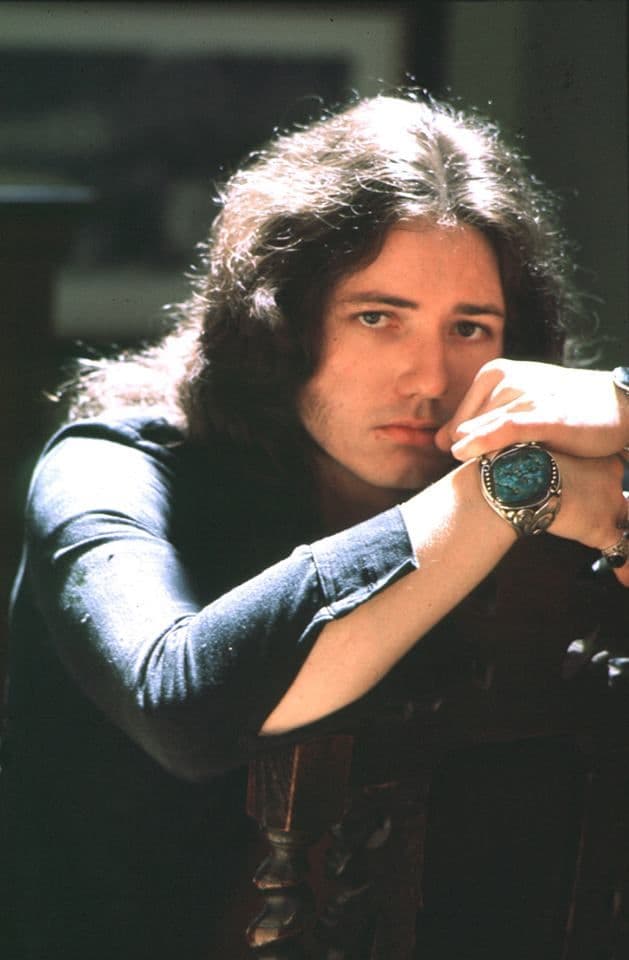
A soulful lament of lost love and regret — “Too Many Tears” by David Coverdale & Whitesnake
When it was released as a single from the Restless Heart album in 1997, “Too Many Tears” reached No. 46 on the UK Singles Chart, while climbing to No. 5 on the Rock & Metal Singles Chart, where it lingered for an impressive 34 weeks.
Listening to “Too Many Tears” is like opening a dusty box full of old letters — the voice of David Coverdale, warmed by years, trembles with the weight of longing and regret. It’s a ballad that seems written for someone who has aged with unspoken sorrow, someone who once gave their all and now wonders why the love slipped through their fingers.
A bit of background
This song was originally penned by David Coverdale together with guitarist Adrian Vandenberg during the early 1990s. It finally appeared on the Restless Heart album, which was released in March 1997 under the name David Coverdale & Whitesnake, rather than simply Whitesnake — a decision rooted in contractual obligations.
Restless Heart marked a return to a more blues-rock, soulful Whitesnake sound. Critics noted that Too Many Tears, alongside other tracks like “Crying” and “Stay With Me,” carried a nostalgic, old-school texture that brought Coverdale’s emotional voice to the fore.
In 2000, Coverdale revisited the song for his solo album Into the Light, re-recording it with a different sensibility — inspired in part by his admiration for Roy Orbison. Years later, in 2024, a 2024 Remix of this version was released as part of a lavish 6‑CD box set called Into The Light: The Solo Albums, where his solo and early Whitesnake works were remastered and reimagined with modern audio technology.
What’s the story behind the song?
At its heart, “Too Many Tears” is a confession of heartbreak and bewilderment. The narrator — in Coverdale’s haunting baritone — reflects on a relationship that once felt timeless: “I used to be the man for you / Did everything you wanted me to,” he sings, as though rehearsing memories with painful precision.
Yet, something went wrong. The lyrics ask: Where did I go wrong? This is not just regret — it is self-questioning, an ache that comes from loving so deeply he laid everything at her feet, and still, it wasn’t enough. The repeated lines, “There’ve been too many tears falling … too many hearts breaking in two,” capture a cycle of yearning and loss, as though each tear were a footstep farther away from what once was.
On a deeper level, the song explores guilt and accountability. It suggests a man who gave unreservedly, and now in his solitude wonders if his devotion blinded him to his partner’s pain, or his own mistakes. For those who listen with the ears of age, it may feel like the soul of a man who has lived and lost, who no longer has the luxury of time to pretend that everything will be fine.
Why this song matters, especially now
For longtime fans of David Coverdale — especially those who grew up with Whitesnake’s wild 80s energy — “Too Many Tears” feels like a gentle coming home. It’s not a stadium anthem; rather, it’s a quiet exhalation, a moment of reflecting on the roads taken and the ones not.
Its inclusion in Into The Light (2024 Remix) is particularly poignant. By reworking his older material with contemporary technology, Coverdale seems to be inviting us — and himself — to look back not with bitterness, but with care. It’s as though he’s saying: These feelings still matter. These songs still speak.
Moreover, the melody and orchestration — softer, warmer, more transparent — mirror the passage of time. What was once youthful regret has matured into something richer: a slow-burning wisdom, a soulful acceptance.
The legacy of Too Many Tears
While “Too Many Tears” may never have topped the charts like Whitesnake’s biggest hits, its emotional resonance has given it staying power. Listeners continue to return to it, drawn by its vulnerability and sincerity.
For Coverdale, the song seems to occupy a sacred place in his catalog: a bridge between his past as the soaring rock frontman and his more introspective, solo work. In revisiting it decades later, he honors the depth of his own journey — not just as a singer, but as a man whose voice carries not only power, but memory.