
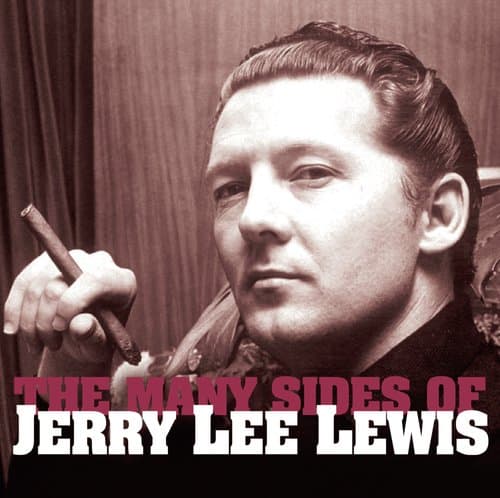
“Lewis Boogie” – When Jerry Lee Lewis Turned a Piano Into a Declaration of Identity
Released in June 1958 on Sun Records as Sun 301, backed with “The Return of Jerry Lee”, “Lewis Boogie” captured Jerry Lee Lewis at a pivotal moment in his career. Although the single did not achieve significant chart success in the United States and did not register on the major Billboard pop or country charts upon its original release, it remains an essential artifact of the Sun era. Recorded in 1956 during the same fertile period that produced “Whole Lotta Shakin’ Goin’ On” and “Great Balls of Fire,” the track stands as a self-portrait in sound. It was later reissued in 1979 as part of the Sun Golden Treasure Series, a testament to its enduring place within the label’s legendary catalog.
The importance of “Lewis Boogie” lies not in chart numbers but in its spirit. The opening line is almost disarmingly direct: “My name is Jerry Lee Lewis, come from Louisiana.” In that moment, he does not merely introduce a song. He announces himself. This is a declaration of identity, geography, and musical philosophy all at once. Born in Ferriday, Louisiana, Lewis carried the fervor of Southern Pentecostal gospel, the rolling rhythms of boogie woogie, and the defiant pulse of early rock and roll into Sam Phillips’ Memphis studio. What emerges in this recording is the sound of a young man who understood that the piano could roar just as fiercely as any electric guitar.
By 1958, Jerry Lee Lewis was already one of the most electrifying performers in American music. His earlier singles had stormed the charts, and his performances were notorious for their intensity. Yet “Lewis Boogie” feels more intimate than sensational. It is playful, almost conversational, as he references New Orleans and Memphis, weaving himself into the broader Southern musical map. When he nods to “that Presley boy” in Memphis, he acknowledges the presence of Elvis Presley, another Sun alumnus who had already reshaped popular culture. But Lewis does so without deference. His boogie is distinct. His method is his own.
The lyrics themselves are deceptively simple, built around repetition and rhythm rather than narrative complexity. But within that simplicity lies the essence of boogie woogie tradition. This is music designed for movement, for hips rocking and knees knocking. The piano does not merely accompany the vocal. It drives the performance, pounding out triplet figures with a percussive authority that borders on rebellious. Lewis had absorbed the styles of earlier pianists, yet he stripped away refinement in favor of raw propulsion. The result is music that feels alive in the room, almost reckless in its energy.
There is also a subtle historical poignancy in listening to “Lewis Boogie” today. By mid 1958, Lewis’ career faced turbulence due to personal scandal that temporarily derailed his mainstream popularity. In retrospect, this recording stands at the threshold between meteoric ascent and sudden backlash. It preserves the unfiltered exuberance of an artist who believed, perhaps rightly, that his piano could shake the very floorboards of American music.
For those who remember the crackle of a 45 spinning on a turntable, the sound of Sun Records carries a particular warmth. The production is lean, unvarnished, almost intimate. You can hear the room. You can feel the immediacy. “Lewis Boogie” embodies that aesthetic. It does not aspire to sophistication. It aspires to impact.
What lingers most is the sense of self assertion. In a musical landscape increasingly crowded with emerging stars, Jerry Lee Lewis chose to carve his name directly into the groove. He was not content to follow trends. He declared a style that bore his own name. The Lewis way.
More than six decades later, the song remains a reminder of rock and roll’s formative years, when identity and rhythm were inseparable. It is not merely a boogie number. It is a signature.
 Oldies Songs