
When Laughter In The Rain Became a Gentle Anthem of Love Rediscovered
Few songs capture the quiet beauty of companionship quite like Laughter in the Rain, the tender ballad that marked one of the most remarkable comebacks in pop history. Written and performed by Neil Sedaka, the song reached No. 1 on the Billboard Hot 100 in January 1975, and also topped the Easy Listening chart, while climbing to No. 15 in the UK Singles Chart. It appeared on Sedaka’s comeback album Sedaka’s Back, a record that reintroduced his melodic brilliance to an entirely new decade.
By the time the song was performed in concert in April 1975, Sedaka was not merely singing a hit—he was celebrating a second life in music.
A Comeback Written in Melody
To understand the significance of “Laughter in the Rain,” one must first remember the winding road that brought Sedaka there. In the early 1960s he had already been a pop phenomenon, delivering classics like “Breaking Up Is Hard to Do” and “Calendar Girl.” Yet by the late 1960s, musical tastes had shifted dramatically. Rock bands, psychedelic sounds, and singer-songwriters began dominating the charts. For a time, Sedaka seemed like a cherished memory from another era.
Then something remarkable happened in the early 1970s. Encouraged and supported by Elton John, who admired Sedaka’s songwriting craftsmanship, Sedaka signed to Rocket Records and recorded Sedaka’s Back. The album felt like a rediscovery of melodic pop itself—sincere, elegant, and emotionally direct.
Among its tracks, “Laughter in the Rain” stood out immediately.
Co-written with longtime collaborator Phil Cody, the song possesses an almost cinematic tenderness. It begins softly, as if the singer is recalling a memory rather than telling a story. The orchestration—strings, piano, and gentle rhythm—gradually expands, mirroring the emotional warmth of the lyrics.
A Love Song About Simple Joy
The theme of “Laughter in the Rain” is beautifully uncomplicated. Two people are caught in a storm, yet the moment becomes magical rather than inconvenient. The rain becomes a symbol of life’s unpredictability—something that might dampen plans but cannot diminish affection.
“Making love in the rain,” Sedaka sings, not with grand drama but with quiet gratitude.
The genius of the song lies in its humility. It does not describe a dramatic romance or heartbreak. Instead, it celebrates the kind of love that deepens over time—where even an unexpected shower becomes an opportunity to laugh together.
That simple image resonated deeply with listeners in the mid-1970s. In an era when music was exploring everything from political protest to flamboyant glam rock, Sedaka offered something timeless: the warmth of a shared moment.
The Song on Stage
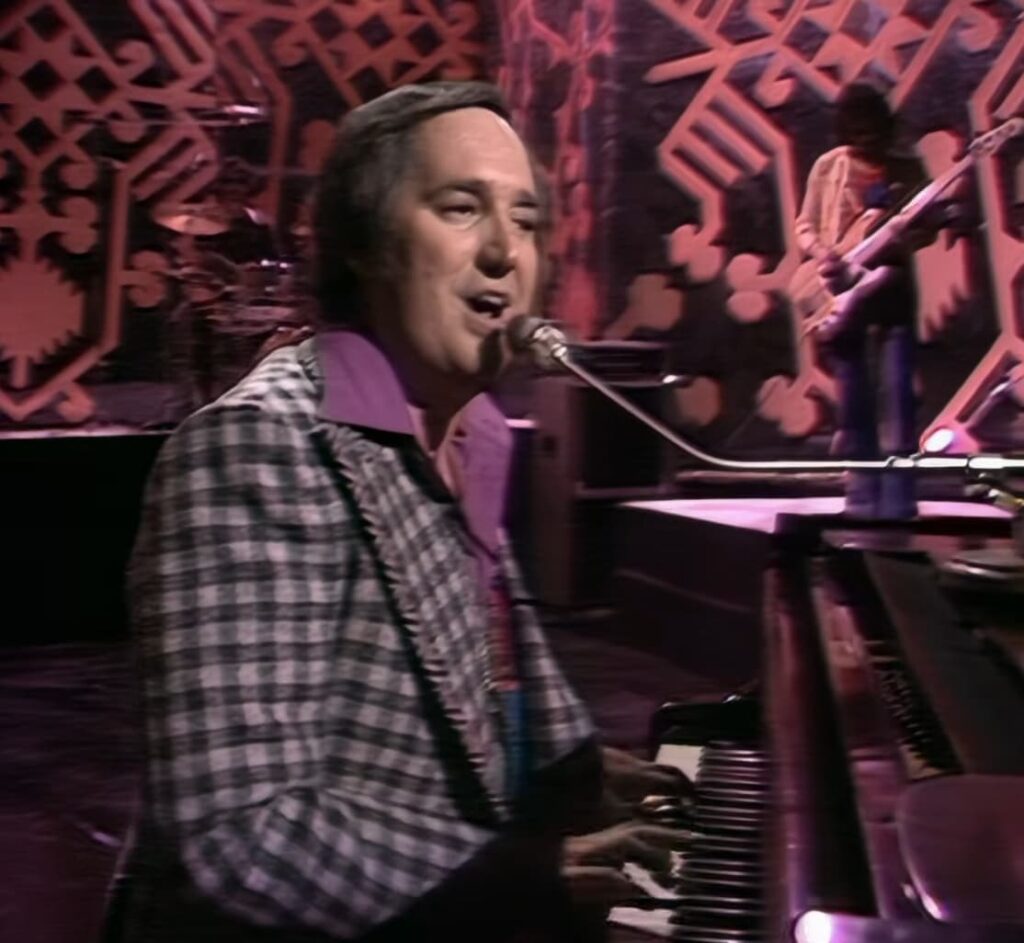
When Neil Sedaka performed the song in concert on April 26, 1975, audiences were witnessing more than a chart-topping single. They were witnessing vindication.
Sedaka had spent years writing quietly in the background, even composing songs for other artists during the lean period of his career. Now he stood before audiences again with a No. 1 hit—proof that melody and sincerity never truly go out of style.
Live performances of “Laughter in the Rain” carried a slightly different energy than the studio recording. Sedaka often leaned into the piano with visible joy, allowing the audience to sing the chorus with him. The crowd knew every word, and their voices turned the gentle ballad into a communal memory.
It was the sound of a songwriter reconnecting with the world that once adored him.
Why the Song Still Endures
Nearly half a century later, “Laughter in the Rain” remains one of Sedaka’s most beloved recordings. Its arrangement is elegant but never excessive; its melody flows naturally, almost like a conversation between heart and memory.
More importantly, the song reminds listeners that the greatest moments in life are often the smallest ones—a walk in the rain, a shared laugh, a fleeting instant when everything feels perfectly right.
In the long story of popular music, many hits flash brightly and disappear. But Neil Sedaka’s “Laughter in the Rain” continues to glow softly, like a cherished photograph tucked inside an old album—waiting to bring a smile whenever it is revisited.