
When Regret Speaks Softly Through a Country Song About Pride, Distance, and the Cost of Silence
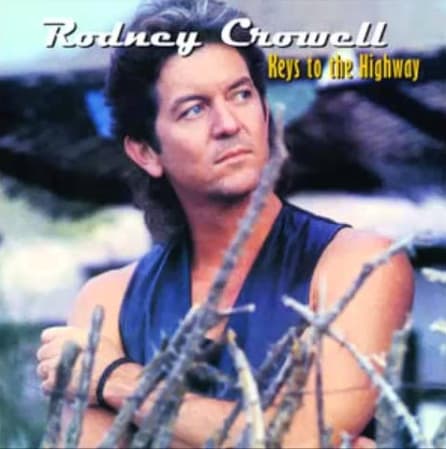
Released in January 1990, If Looks Could Kill stands as one of the most quietly devastating songs in the catalog of Rodney Crowell. Issued as the second single from his album Keys to the Highway (1989), the song climbed to No. 6 on the Billboard Hot Country Singles & Tracks chart in May 1990 and reached No. 4 on Canada’s RPM Country Tracks chart. Those chart positions matter, but they tell only part of the story. This was not a loud hit or a radio novelty. It was a song that earned its place by lingering, by speaking to listeners who understood that the deepest wounds are often inflicted without a word being spoken.
By the time Keys to the Highway arrived, Rodney Crowell was already a seasoned songwriter with a rare résumé. He had written hits for others long before the spotlight settled fully on him, and his own late 1980s run placed him among country music’s most thoughtful voices. The album itself marked a transitional moment. It came after a period of intense creative output and personal reckoning, and it reflected an artist moving away from commercial polish toward something more introspective and lived-in. If Looks Could Kill fits squarely within that emotional landscape.
At its core, the song is about emotional violence. Not the dramatic kind, but the subtle, accumulated damage caused by resentment, pride, and unresolved distance between two people who once mattered deeply to each other. The title is not a metaphor designed for cleverness. It is a quiet observation. A look, when filled with disappointment or cold recognition, can wound more deeply than anger ever could. Rodney Crowell does not dramatize this idea. He simply lets it exist, trusting the listener to recognize it from their own life.
Musically, the arrangement is restrained and deliberate. The production favors clarity over embellishment, allowing the lyric to remain front and center. Acoustic textures, steady rhythm, and Crowell’s calm, weathered vocal delivery create a sense of emotional honesty. There is no pleading in his voice, no theatrical sorrow. Instead, there is acceptance. The narrator understands what has been lost, and perhaps more painfully, understands that it cannot be repaired.
What makes If Looks Could Kill especially resonant for older listeners is its maturity. This is not a song about youthful heartbreak or sudden betrayal. It is about time doing its quiet work. About how years can pass, conversations can be avoided, and eventually two people can look at each other and see not love or anger, but the finality of emotional distance. That realization does not arrive with noise. It arrives with a glance.
The song also reflects Rodney Crowell’s strength as a writer who respects silence. He leaves space between lines, both musically and emotionally. That space allows listeners to bring their own memories into the song. Past relationships. Missed chances. Moments when pride spoke louder than affection. This is why the song has endured beyond its chart life. It does not tell listeners what to feel. It reminds them of what they already know.
Within Keys to the Highway, the track serves as an emotional anchor. The album’s title suggests movement, transition, and restlessness, but If Looks Could Kill pauses that motion. It looks backward, not with bitterness, but with clear-eyed understanding. It is a moment of stillness where reflection replaces momentum.
More than three decades later, the song remains a testament to Rodney Crowell’s ability to write country music for adults who have lived long enough to understand emotional consequences. It does not seek redemption or reconciliation. It offers recognition. Sometimes that is all a song needs to do.
In the end, If Looks Could Kill survives not because it once charted well, but because it continues to speak softly to listeners who recognize themselves in its quiet truths. It is the sound of experience, delivered without judgment, and remembered long after the final note fades.