
A Voice from the Coal Dust Where Pride, Struggle, and Survival Refuse to Fade
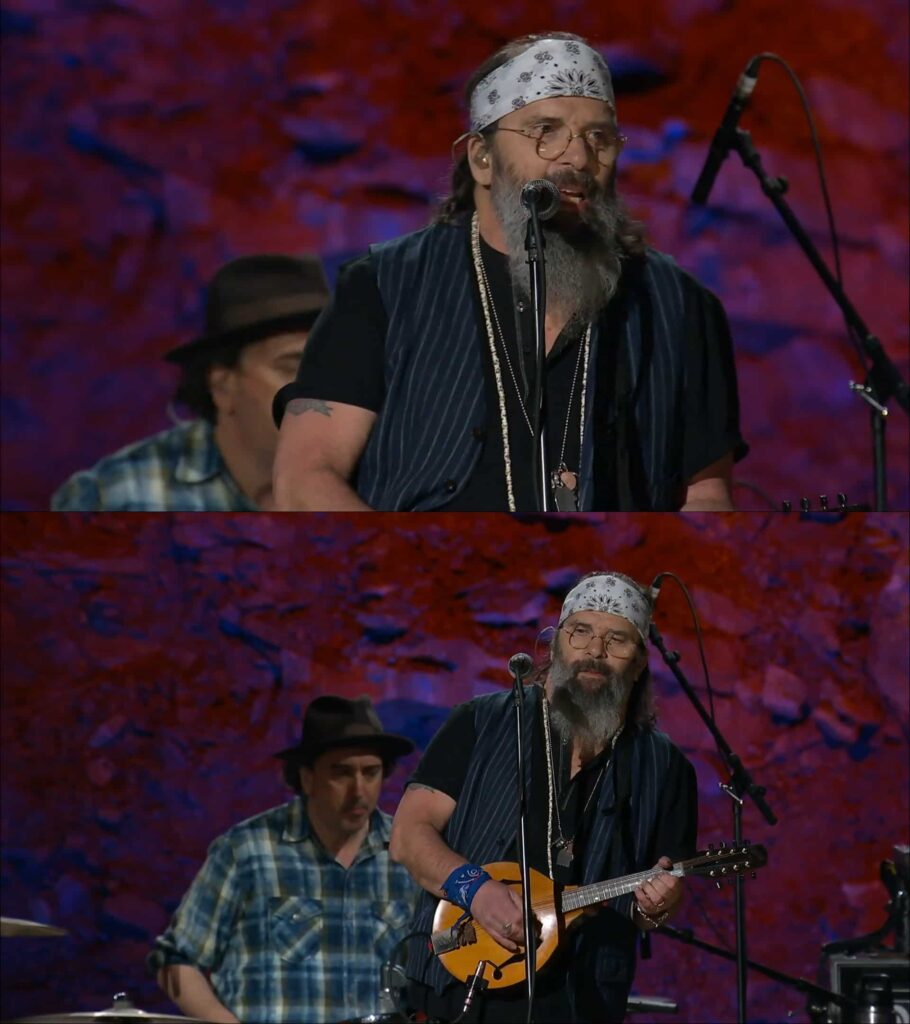
Deep beneath the earth, inside the echoing chamber of Bluegrass Underground, Steve Earle and The Dukes deliver “Harlan Man” with a gravity that feels almost geological. Recorded in a subterranean venue carved from stone, the setting itself becomes part of the story, amplifying every word about labor, identity, and the enduring spirit of eastern Kentucky coal country.
Written as a tribute to the people of Harlan County, a place long defined by mining and hardship, the song carries the weight of real history. Steve Earle, known for his unflinching narratives and working-class perspective, does not romanticize the life he describes. Instead, he presents it with clarity and respect, allowing the listener to feel both the pride and the burden that come with it.
From the opening lines, there is a sense of rootedness. The “Harlan man” is not just an individual, but a symbol of generations shaped by the same hills, the same mines, and the same unyielding conditions. Earle’s voice, rough-edged yet controlled, carries the authority of someone who understands the stories he is telling. There is no distance between singer and subject.
The Dukes provide a steady, grounded accompaniment, blending elements of country, folk, and bluegrass into a sound that feels both traditional and immediate. Nothing is overstated. The arrangement supports the narrative, allowing the lyrics to remain central. In that underground space, each note seems to settle into the rock itself, reinforcing the song’s connection to place.
What makes this performance especially compelling is its quiet defiance. There is hardship in every line, but also dignity. The song does not ask for sympathy. It demands recognition. The struggles of the “Harlan man” are not framed as tragedy alone, but as part of an identity forged through endurance.
By the final chord, the applause feels almost reverent, as if the audience understands they have witnessed more than music. “Harlan Man” becomes a bridge between past and present, a reminder that some stories are not meant to be softened or forgotten.
In that cavernous setting, Steve Earle does not just perform the song. He anchors it in the very ground it was written for, leaving behind a moment that resonates long after the sound disappears.