
A raw, electrifying declaration of desire that helped ignite the sound of modern rock — a song that captured youthful urgency in its purest form.
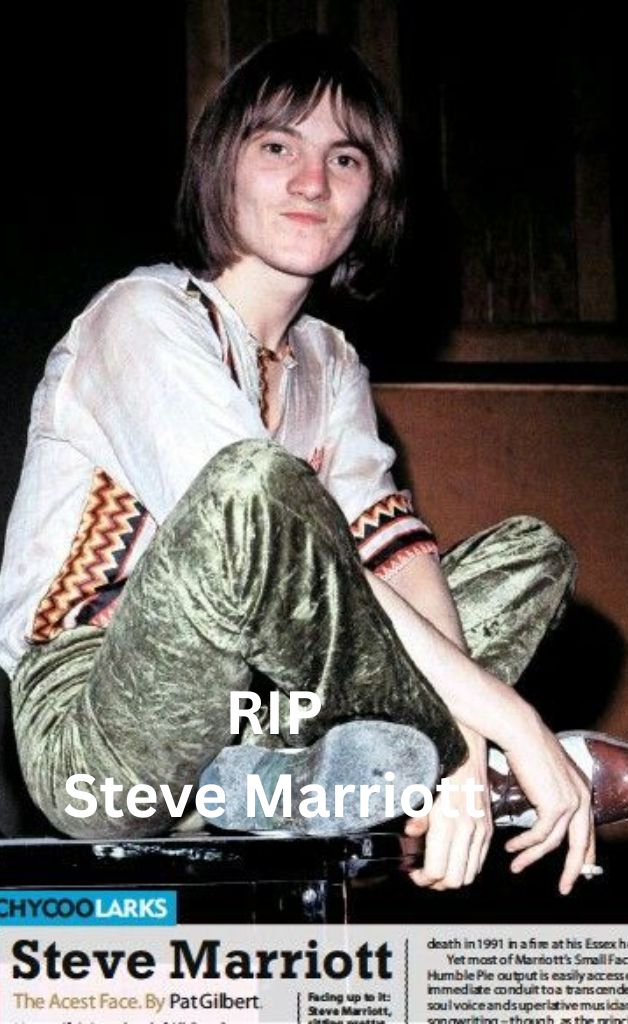
There is a small but important correction worth making before we step into the music itself: “You Really Got Me” is not originally a song by Steve Marriott, but by The Kinks, released in 1964 and written by the band’s leader Ray Davies. However, mentioning Steve Marriott in connection with this song is not entirely misplaced—because his own musical spirit, especially with Small Faces and later Humble Pie, carried that same raw, explosive energy that “You Really Got Me” helped pioneer.
Released as a single in August 1964, “You Really Got Me” quickly rose to No. 1 on the UK Singles Chart, and reached No. 7 on the Billboard Hot 100 in the United States. These were not just impressive numbers—they marked the arrival of a new kind of sound. At a time when much of British pop was still polished and melodic, this song came crashing in like a storm: distorted guitar, aggressive rhythm, and a vocal delivery that sounded less like singing and more like a confession shouted from the chest.
The now-iconic guitar riff—often credited to Dave Davies—was revolutionary. Legend has it that he achieved that gritty distortion by slashing the speaker cone of his amplifier with a razor blade. Whether myth or fact, the result is undeniable: a sound that would later echo through generations of rock, hard rock, and even heavy metal. You can hear the blueprint for bands that came years later, long before the genre itself had a name.
Lyrically, “You Really Got Me” is deceptively simple. There are no elaborate metaphors, no poetic abstraction. Just a young man overwhelmed by desire—“You really got me, you got me so I don’t know what I’m doing.” But that simplicity is precisely its strength. It captures a moment many remember: that first overwhelming pull toward someone, when logic fades and emotion takes control. It’s not refined love—it’s urgent, impatient, almost reckless. And in that honesty, it becomes timeless.
What makes the song endure is not just its structure or success, but its feeling. There’s a tension in it—a push and pull between control and surrender. It’s the sound of youth before it learns restraint. Listening to it today, one doesn’t just hear a hit single from 1964; one hears the beginning of something larger, a shift in how music could express intensity.
For listeners familiar with Steve Marriott, it’s easy to draw a line between his fiery vocal style and the attitude embedded in this track. Marriott, known for his powerful, soulful voice, would carry forward that same emotional directness. In a way, songs like this helped create the space in which artists like him could thrive—where imperfection, grit, and passion mattered more than polish.
Over the decades, “You Really Got Me” has been covered by numerous artists, most notably Van Halen in 1978, who brought a heavier, more flamboyant edge to it. Yet even in those reinterpretations, the core remains untouched—that primal spark that first made the world stop and listen.
Looking back, the song feels like a doorway. Before it, one kind of music; after it, another. It reminds us of a time when a three-chord riff and a surge of feeling were enough to change everything. And perhaps that’s why it still resonates—because beneath all the history and influence, it speaks to something simple and enduring: the moment when music, like emotion, refuses to stay quiet.