
A Quiet Anthem of Strength: “’Til I Can Make It On My Own” as a Portrait of Survival and Letting Go
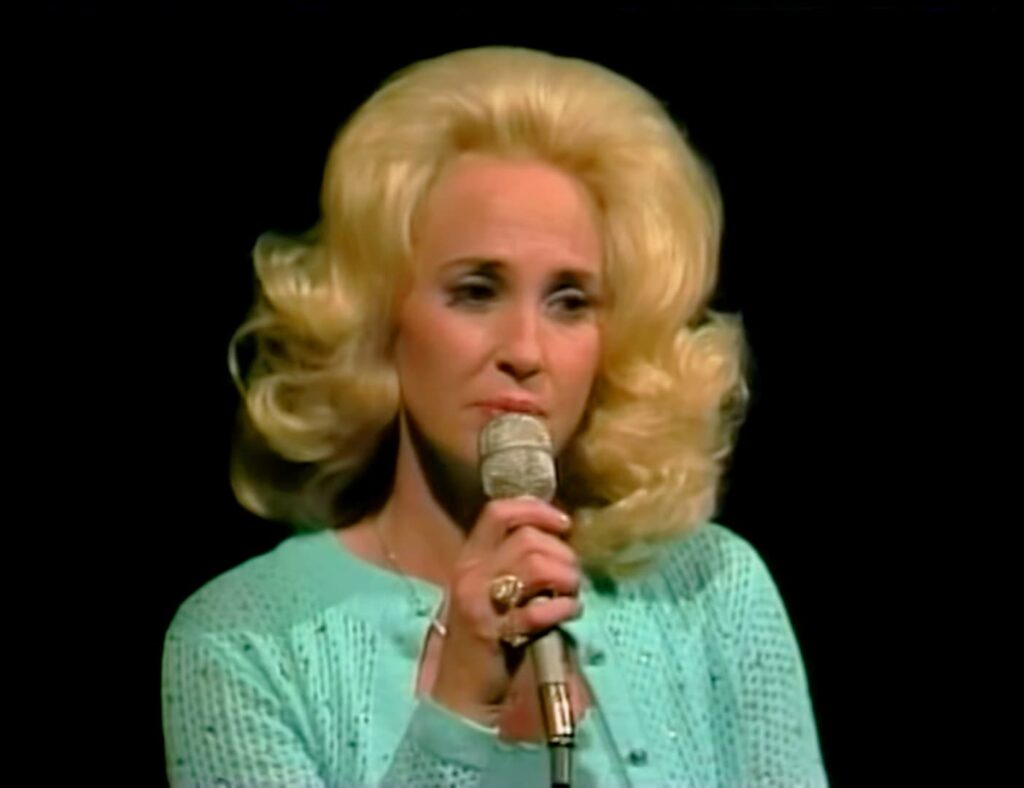
On an episode of The Jerry Reed Show, Tammy Wynette delivered one of the most intimate televised performances of her career with “’Til I Can Make It On My Own”, a song she co-wrote and released in 1976 as the title track of her acclaimed album. By the time she stepped onto that stage, the song had already reached No. 1 on the Billboard country chart, resonating deeply with listeners who recognized its fragile honesty. Yet this particular performance transformed a familiar hit into something even more personal, almost confessional.
Dressed simply, with no theatrical excess, Tammy Wynette stood under soft studio lights and sang as though she were speaking directly to someone just beyond the camera. Her voice, always known for its clarity, carried a slight tremble that evening, lending the lyrics an added weight. Lines about needing someone “just until I can make it on my own” no longer sounded like polished songwriting. They felt lived-in, drawn from real heartbreak and quiet resilience.
The setting of The Jerry Reed Show was informal by design, allowing artists to reveal more of themselves than in grand concert halls. In this environment, Wynette’s performance became less about technical perfection and more about emotional truth. Each pause, each breath between phrases, seemed to hold its own meaning. It was not just a song being performed, but a moment being relived.
What made this rendition unforgettable was its restraint. There were no dramatic gestures, no vocal acrobatics. Instead, “’Til I Can Make It On My Own” unfolded gently, like a private conversation overheard. For many viewers at the time, it echoed the unspoken realities of love, separation, and the slow process of healing.
Looking back, this performance stands as a reminder of why Tammy Wynette remains one of country music’s most enduring voices. In just a few minutes on a modest television stage, she captured a universal truth: sometimes strength is not found in moving on quickly, but in allowing yourself the time to stand again, even if you need someone’s hand along the way.
 Oldies Songs