
A Quiet Cry Against Loneliness in a World That Moves Too Fast
When John Prine released “Hello in There” on his self-titled debut album, John Prine (1971), he was only twenty-four years old. It remains one of the most astonishing facts in American songwriting: a young man barely into adulthood writing with the voice, compassion, and moral gravity of someone who had already lived a lifetime. The song was never issued as a major charting single, and it did not storm the Billboard Hot 100. Instead, it slowly became something rarer and far more enduring — a cornerstone of American folk songwriting, a song passed hand to hand, voice to voice, like a fragile letter that refuses to be discarded.
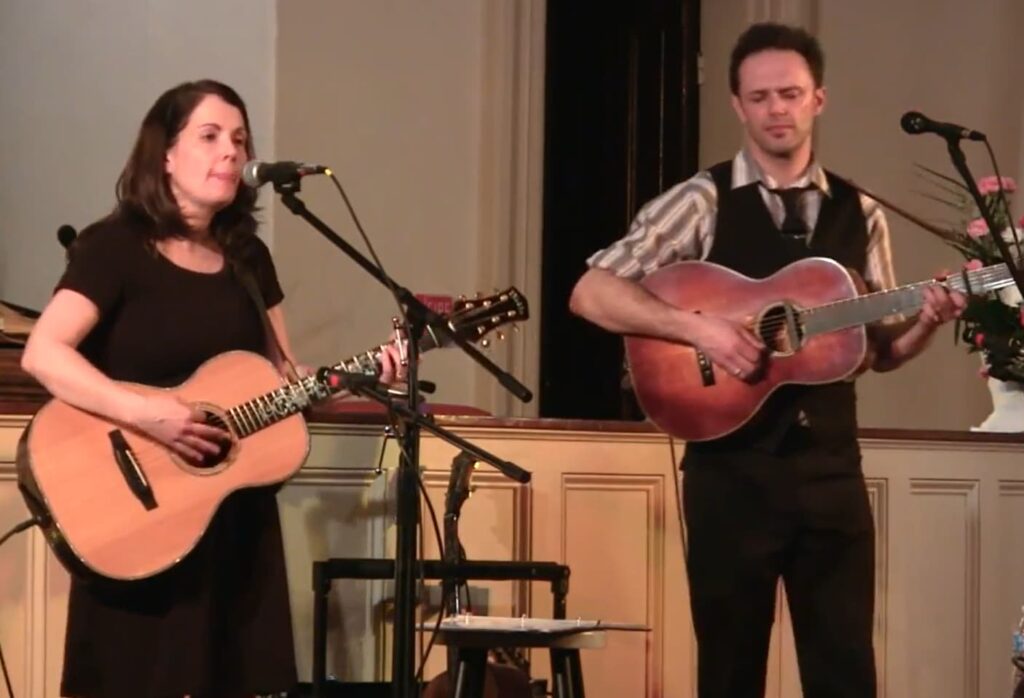
Over the decades, “Hello in There” has been covered by numerous artists — most notably Bette Midler, whose 1973 version introduced the song to a wider pop audience — and more recently by contemporary Americana artists such as Lori McKenna & Mark Erelli. Their interpretation does not attempt to modernize the song. Instead, it leans gently into its humanity, reaffirming what made Prine’s original so quietly devastating.
From its first lines — “We had an apartment in the city…” — the song unfolds not with drama, but with stillness. It tells the story of an aging couple whose children have grown and gone, leaving behind rooms full of silence and memories. There is no villain. No grand tragedy. Only time. And the small, daily erosion of connection that so often goes unnoticed.
The true power of “Hello in There” lies in its plea:
“Don’t just pass them by and stare / As if you didn’t care / Say, ‘Hello in there… hello.’”
Prine wrote the song after working as a mailman in Chicago, where he observed elderly residents living alone in quiet apartments. He later spoke about how those encounters stayed with him. The song was not written as protest, but it became one — a protest against indifference. At a time when popular music in the early 1970s was filled with political upheaval and generational rebellion, Prine chose instead to write about something far more intimate and, in many ways, more universal: the fear of being forgotten.
Musically, the original recording is spare. Acoustic guitar, subtle accompaniment, and Prine’s plainspoken vocal delivery allow the lyrics to carry the emotional weight. There is no theatrical flourish. That restraint is precisely what gives the song its dignity.
When Lori McKenna & Mark Erelli approach the song, they do so with reverence rather than reinvention. McKenna, long respected as one of Americana’s finest songwriters, brings a warmth and emotional clarity that feels deeply aligned with Prine’s sensibility. Her voice does not dramatize the sorrow; it absorbs it. Mark Erelli’s harmonies provide gentle support, creating the sense of shared witnessing rather than performance.
Their version underscores the song’s enduring relevance. The arrangement remains understated, honoring the folk tradition from which the song emerged. Yet there is an added layer of tenderness in their interpretation — perhaps informed by the decades that have passed since Prine first recorded it. What was once a young man imagining old age now feels like a mature reflection on time’s steady passage.
It is worth remembering that John Prine (1971) also included future standards such as “Angel from Montgomery” and “Sam Stone.” Though the album did not dominate mainstream charts, it became one of the most critically acclaimed debut records of its era. Over time, it solidified Prine’s reputation as one of America’s great songwriters — a craftsman whose empathy equaled his wit.
“Hello in There” stands apart even within that extraordinary catalog. It is not flashy. It does not demand attention. It asks for something simpler and more difficult: awareness.
In revisiting the song, McKenna and Erelli remind us that its message has not aged. If anything, it has grown heavier. The world moves faster now. Lives are busier. Yet the song’s central question lingers with uncomfortable clarity: how often do we really see the people around us?
More than fifty years after its release, “Hello in There” remains less a composition and more a gentle moral reckoning. Its absence from the top of the charts seems almost fitting. Some songs are meant to climb. Others are meant to endure.
John Prine gave the world many gifts. This one may be the quietest — and the one that echoes longest.