
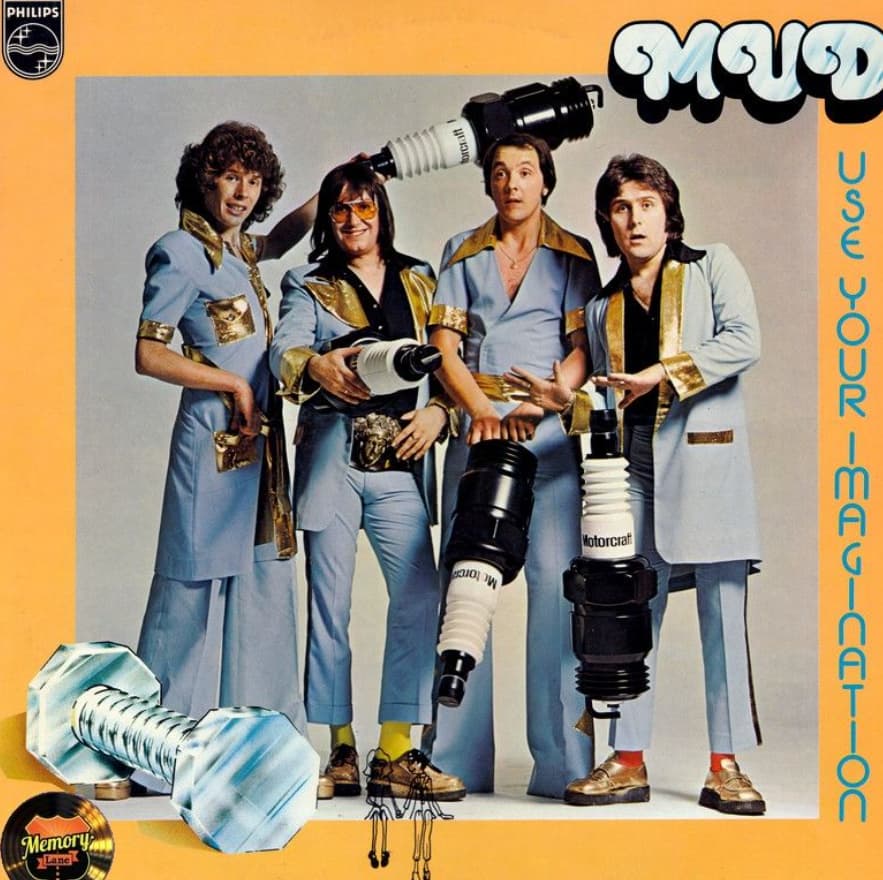
A fragile tale of love undone—where beauty fades, and truth quietly rises beneath the gloss
Released in 1975, “Painted Nails” by Mud stands as one of those understated gems that never quite stormed the charts, yet lingers in memory with a peculiar emotional weight. While the band had already secured their place in British pop culture with chart-toppers like “Tiger Feet” and “Lonely This Christmas,” this particular track did not achieve major chart success upon its release as a single. It remained more of a reflective piece within their catalog—an intimate moment tucked behind the glitter and stomp of glam rock’s more exuberant façade.
By the mid-1970s, Mud had become synonymous with catchy hooks, polished production, and a distinctly British sense of charm. Guided by the songwriting and production team of Nicky Chinn and Mike Chapman, the band often balanced commercial instincts with moments of surprising depth. “Painted Nails” belongs firmly to the latter category. It trades in spectacle for subtlety, offering instead a quiet, almost melancholic observation of a relationship that has lost its authenticity.
At its heart, the song tells a story not of dramatic heartbreak, but of slow emotional erosion. The titular image—“painted nails”—becomes a delicate metaphor for appearances maintained at the expense of truth. It suggests a kind of surface beauty, carefully constructed yet ultimately concealing something more fragile underneath. This was a recurring theme in the 1970s, an era when pop music often reflected the tension between outward glamour and inward vulnerability.
Musically, the track leans into a softer arrangement than many of Mud’s more upbeat hits. There’s a restraint in the instrumentation, allowing the vocal delivery—particularly that of Les Gray, the band’s unmistakable frontman—to carry the emotional nuance. Gray’s voice, often playful and buoyant in other songs, here takes on a more reflective tone, hinting at resignation rather than confrontation. It’s not a song that shouts; it quietly confesses.
What makes “Painted Nails” particularly compelling is how it captures a very human realization: that sometimes love doesn’t end with a single moment of rupture, but rather fades through small, almost imperceptible changes. The gestures remain, the routines persist—but something essential has slipped away. In this sense, the song resonates less as a narrative and more as a feeling, one that listeners may recognize long after the final note has faded.
Though it never became a defining hit, its value lies precisely in that quietness. It reveals another side of Mud, beyond the glam and chart success—a band capable of introspection, of stepping back from the spotlight to explore something more delicate and enduring. For those who revisit their music today, “Painted Nails” feels less like a forgotten track and more like a private conversation, preserved in time.
And perhaps that is its lasting gift: a reminder that beneath every polished surface, there is always a deeper story waiting to be heard.