
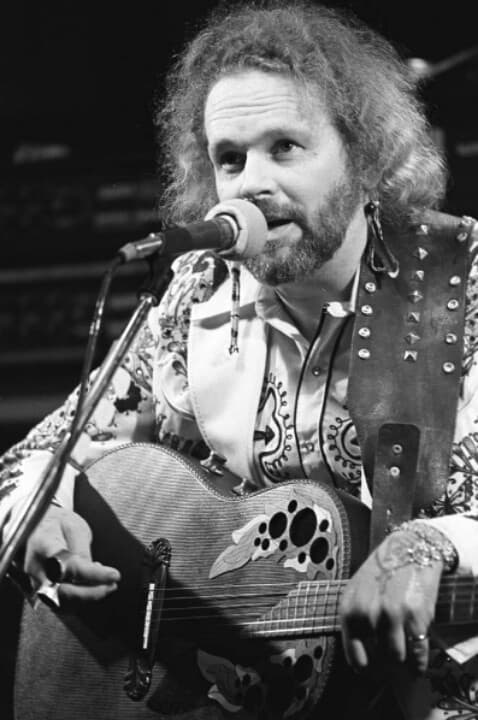
A song that turns heartbreak into humor—where pride, pain, and country tradition meet in one unforgettable name
When David Allan Coe released “You Never Even Called Me By My Name” in 1975, he wasn’t simply adding another track to the rich tapestry of country music—he was, in many ways, holding up a mirror to the genre itself. Featured on the album Once Upon a Rhyme, the song climbed to No. 8 on the Billboard Hot Country Singles, securing its place not just as a commercial success, but as a cultural statement that still resonates decades later.
At first listen, the song feels deceptively simple—a man lamenting a failed relationship, wounded not by betrayal or abandonment, but by something far more intimate: the absence of recognition, of being called by his own name. Yet beneath that plainspoken sorrow lies a clever, almost playful self-awareness. This was not just another heartbreak ballad; it was a commentary on what makes a “perfect” country song.
The story behind the song adds another layer of quiet brilliance. Though performed and popularized by David Allan Coe, it was written by Steve Goodman and John Prine, two master storytellers known for their wit and humanity. Legend has it that Goodman sent the song to Coe, who initially dismissed it as incomplete—missing the essential elements of a true country song. In response, Goodman penned the now-famous final verse, humorously listing those “required” ingredients: mama, trains, trucks, prison, and getting drunk. It was a tongue-in-cheek moment that turned the song into something larger than itself—a loving satire wrapped in sincerity.
And that is precisely where the song’s enduring power lies. It walks a delicate line between irony and authenticity, never mocking the genre it celebrates. Instead, it embraces the familiar themes of classic country music while gently nudging listeners to recognize their patterns. There is affection in its humor, respect in its simplicity. It feels like a conversation—one that understands both the clichés and the truths behind them.
Musically, the arrangement is understated, allowing the narrative to take center stage. Coe’s voice carries a rough-edged honesty, the kind that doesn’t need polish to be convincing. There’s a sense that he isn’t just singing the song—he’s living inside it, reliving each quiet disappointment, each moment of realization. And when that final verse arrives, it doesn’t break the mood; it deepens it, adding a layer of reflection that lingers long after the song ends.
For many listeners, “You Never Even Called Me By My Name” becomes more than just a piece of music. It becomes a memory—of late-night radio, of long drives on empty roads, of moments when humor and sadness seem to coexist in the same breath. It speaks to the idea that even in heartbreak, there is room for a smile, for a knowing glance at life’s small ironies.
Over time, the song has taken on an almost mythic status within country music circles. It’s often referred to as “the perfect country & western song,” not because it follows the rules, but because it understands them so deeply that it can bend them without breaking their spirit. That balance—between tradition and self-awareness—is rare, and it’s what gives the song its timeless quality.
Looking back now, nearly half a century later, the song feels like a gentle reminder of what country music has always done best: telling stories that are both deeply personal and universally understood. And in doing so, it leaves us with a quiet, lingering thought—that sometimes, the smallest details, like a name left unspoken, can carry the greatest weight.